IN BREVE
- Sicily en Primeur 2026 positions itself as a “mini Vinitaly” of wine tourism, emphasizing wine, territories, and hospitality.
- The event shifts focus from simply tasting new vintages to an integrated experience that combines wine and Sicilian culture.
- The wine tourism report presented at the opening of the event highlights the economic importance for Sicilian wineries.
- The role of digitalization is central, including in the experiential engagement of new generations with wine.
- The goal is to transform wine tourism into a strategic pillar for the competitiveness of Sicilian wine.
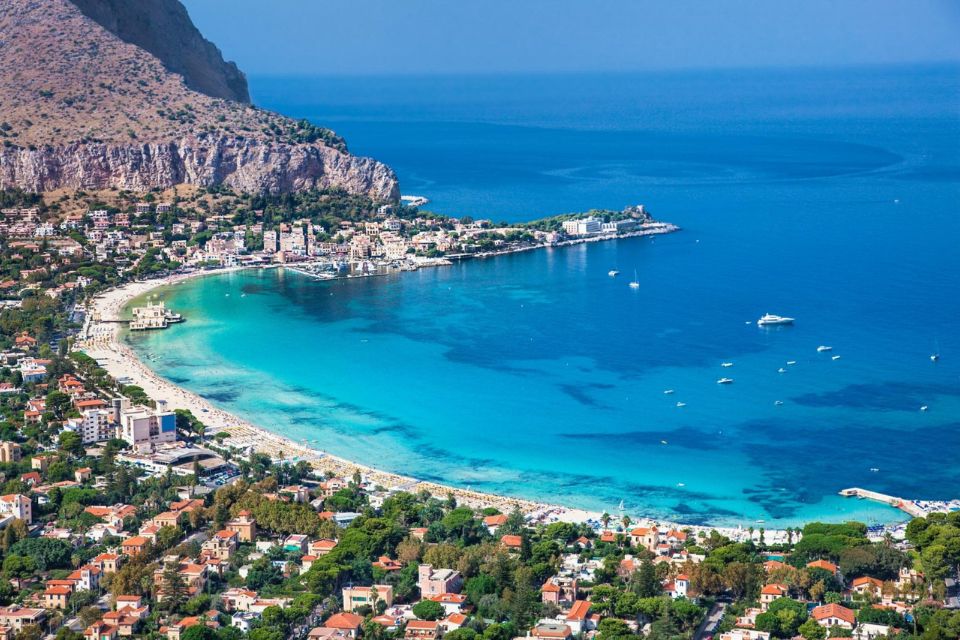
Sicily en Primeur 2026 aims to become a “mini Vinitaly” of wine tourism. Not in size, naturally. But in approach, ambition, and reading of the moment. The twenty-second edition of the event created by Assovini Sicilia, which opened yesterday in Palermo, shifts the focus from wine previews to a broader vision: wine, territories, hospitality, training. And also: digitalization and artificial intelligence.
It’s the same change of pace seen at Vinitaly 2026, where wine tourism became a permanent part of the fair’s structure. In Verona, the theme was transformed into a strategic asset, with Vinitaly Tourism, specialized buyers and tour operators, business points, conferences, research, best practices, digital services, and experience packages.
In Palermo, on a Sicilian scale, Sicily en Primeur 2026 follows a similar path, in line with the premises with which Assovini presented itself “away from home,” in Verona. Bringing together—back on the island, with the year’s flagship event, par excellence—wineries, national and international journalists, tastings, winery visits, iconic city locations. And a report dedicated to wine tourism.
The result is an event that no longer just tells the state of the art of Sicilian wine. It also tells how Sicily intends to sell and organize its wine tourism experience.
SICILY EN PRIMEUR 2026 AS A “MINI VINITALY” OF WINE TOURISM
The parallel with Vinitaly 2026 is concrete. In Verona, wine tourism was included among the central themes of the event, alongside topics such as NoLo, spirits, digitalization, and new business formats. Vinitaly Tourism brought to the fair a program of meetings, tastings, research, and operational tools for businesses, with the goal of connecting supply and demand in wine tourism.
Sicily en Primeur 2026 replicates this approach on a territorial scale. The scale is smaller. But the logic is the same. Instead of Veronafiere’s exhibition center, there’s Palermo, the city chosen as the flagship of the island continent for this edition of the Assovini event. And instead of the large international market for Italian wine, there’s the Sicily system. Instead of tourism buyers and specialized operators, there are over a hundred journalists from around the world. Called to discover wines, wineries, territories. And to live experiences.
The event involves 56 member wineries and over a thousand labels for tasting. But the point isn’t just the quantity of wines presented. The point is the way Assovini Sicilia tries to build an integrated narrative, in which wine becomes a gateway to the landscape, to culture. To gastronomy and the island’s identity.
PALERMO AND THE “OFF-SITE” MODEL SICILIAN STYLE
The choice of Palermo should also be read in this light. Vinitaly 2026 strengthened the connection between fair and city through Vinitaly and the City, with experiences throughout Verona’s center and a direct connection to winery visits and tastings. Sicily en Primeur 2026 uses Palermo in a similar way, transforming the city into part of the story.
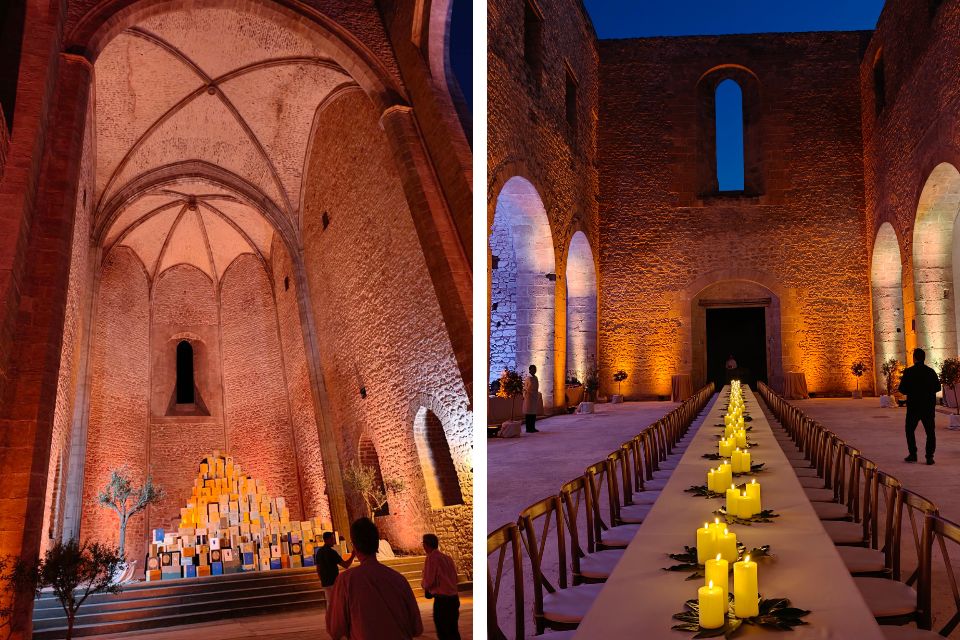
The national and international press, from May 11 to 15, has been and will be taken to less obvious places in the Sicilian capital. These include the Real Albergo delle Povere, recently renovated and home to tastings with producers and the technical tasting, the Church of Santa Maria dello Spasimo, and Palazzo Sant’Elia.
It’s a choice that shifts the event from a simple tasting counter to an urban and cultural experience. Wine is not presented as an isolated product, but as an element of a broader system. A system made of architecture, history, landscape, cuisine, hospitality, and welcoming capacity.
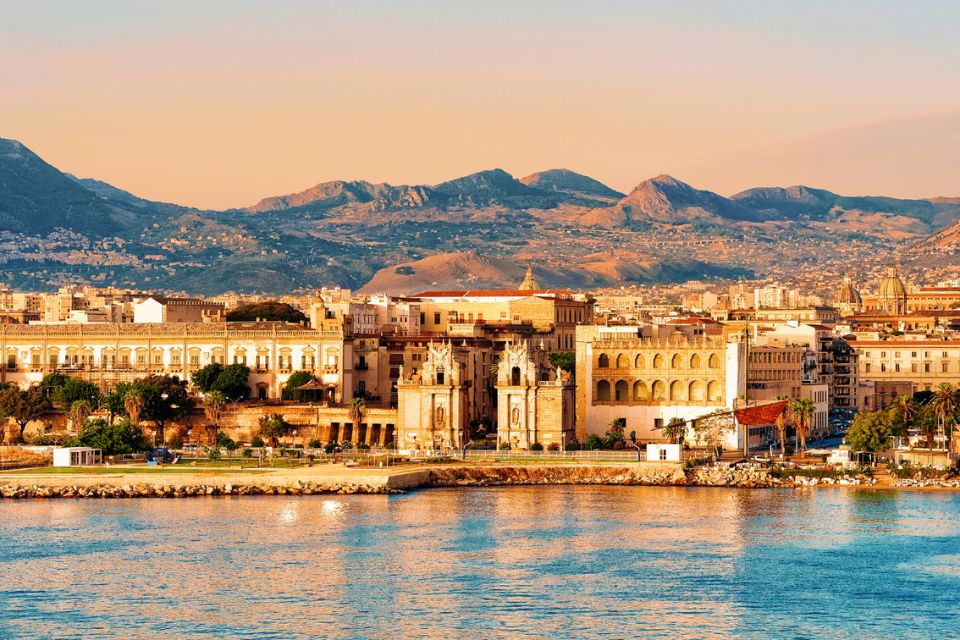
SICILY EN PRIMEUR 2026: AN URBAN AND CULTURAL EXPERIENCE, BEYOND WINE
Opening the proceedings yesterday afternoon was Mariangela Cambria, president of Assovini Sicilia. “Talking about wine in Sicily,” she explained, “inevitably means talking about travel. A journey that goes beyond tasting and becomes a cultural experience, an encounter with territories, communities, and the island’s deep identities.”
“We chose Palermo for this edition of Sicily en Primeur because it perfectly represents this layering of history, cultures, and visions that makes our land unique. Today, wine tourism is a fundamental strategic lever. Not just an economic opportunity for businesses, but a powerful tool for telling the story of wine through landscape, gastronomy, art, and Sicily’s human heritage. This is the meaning of our invitation: taste the island, live the story.”
SICILY WINE TOURISM, DATA FROM THE LUMSA-CESEO REPORT
The opening conference, hosted at the Oratorio dei Bianchi, focused on the report on Sicilian wine tourism produced by Lumsa-Ceseo, the Center for Wine and Olive Oil Tourism Studies. The data confirms that wine tourism in Sicily is no longer an accessory activity.
In 2025, 61.4% of the wineries involved in the survey recorded an increase in visitors. 74.7% indicate a prevalence of foreign clientele, mainly from Europe and the United States. Wine tourism also weighs on wineries’ accounts. For 58.3% of wineries, it accounts for about 10% of total revenue, excluding direct wine sales. Guided tours and tastings are therefore not just image tools. They become commercial levers, relationship channels, and sales opportunities.
It’s a development in line with what also emerged at Vinitaly Tourism 2026, where wine tourism was viewed as a competitive asset of the wine system. In Verona, the focus was national. In Palermo, it becomes regional, with an international demand already present and an evident need: to transform flows into stable value for businesses and territories.
SUSTAINABILITY AND HOSPITALITY IN SICILIAN WINERIES
Among the strengths of the Sicilian model is sustainability. Again according to the Lumsa-Ceseo report, 86.7% of wineries produce energy from renewable sources. 56.2% cover at least 40% of their energy needs through green energy.
88% of wineries have eliminated single-use plastic in hospitality, while about seven out of ten wineries use lightweight bottles (an idea from former Doc Sicilia president Antonio Rallo, recently replaced by Alessio Planeta). These are numbers that strengthen Sicily’s positioning as a wine tourism destination linked not only to the beauty of places but also to environmental responsibility.
The report also notes a now structured offering, though improvable, along with infrastructure connecting tourist sites and wineries, as well as airports and train stations. Tasting rooms, wine shops, tour routes, and dedicated staff are widespread. Nearly six out of ten wineries say they have already planned new experiences for 2026. The goal is to build more articulated offerings, with greater perceived value and more premium positioning.
DIGITALIZATION, WINE CLUBS, AND ARTIFICIAL INTELLIGENCE
The comparison with Vinitaly 2026 also becomes evident on the digital front. In Verona, Vinitaly Plus was presented—years ago—as an online platform capable of connecting producers, buyers, and consumers year-round, albeit with some hiccups mainly related to database updates. In Palermo, the report on Sicilian wine tourism shows a system already digitalized in basic functions, but still lagging on more advanced tools.
Websites, e-commerce, and mailing lists are now widespread. However, structured Wine Clubs and artificial intelligence remain more limited. Only 20% of wineries have an organized Wine Club. 30.6% say they use artificial intelligence, mainly in marketing and communication.
THE CESEO ANALYSIS ON WINE TOURISM IN SICILY
This is where the bet on Sicilian wine tourism becomes more concrete. Sicily has flows, landscapes, identity, and international demand. However, it must strengthen tools, skills, and commercial conversion capacity. In other words, it must transform visitor interest into bookings, purchases, loyalty, and economic return.
“The report we worked on,” highlighted Antonello Maruotti, CESEO scientific coordinator and Statistics professor at Lumsa University Rome, “returns the image of a dynamic and already structured ecosystem, in which the quality of the wine tourism experience is accompanied by growing attention to sustainability and innovation. The challenge emerging from the data no longer concerns only the attractiveness of wineries, but the ability to transform an already present international demand into stable and widespread economic value across the territory.”
YOUNG PEOPLE AND WINE, THE WINERY AS A PLACE OF CONNECTION
The theme of new generations reinforces another common point between Vinitaly and Sicily en Primeur 2026: wine can no longer limit itself to the bottle. It must create opportunities for contact, content, and relationships.
Vincenzo Russo, full professor of Consumer Psychology and Neuromarketing at IULM University in Milan, presented the results of the Young People & Wine Observatory. The research indicates that 51% of young Italians between 20 and 24 years old consume wine. It’s the highest figure ever recorded for this age group.
Direct experience at the winery emerges as one of the main drivers of engagement. Young people don’t seem distant from wine. However, they seek a different access: less formal, more experiential, more connected to relationships and cultural content.
“Today,” Russo explained, “increasingly wine communication and marketing must be flexible and intergenerational, knowing how to modulate strategies, products, and winery activities based on the target audience. A further professional effort to also intercept the new peculiarities of Generation Z’s brain plasticity.”
ARTIFICIAL INTELLIGENCE AND PREDICTIVE WINE TOURISM
Artificial intelligence is another element that brings Sicily en Primeur 2026 closer to the themes that emerged in the Vinitaly system. Not as a technological fad, but as a possible tool for managing data, profiling demand, and building customized experiences. In Palermo, the theme was addressed by Edoardo Colombo, president of Turismi.AI, with a presentation on smart and predictive destinations.
“Artificial intelligence,” he emphasized, “can represent for Sicilian wine tourism an opportunity to transform an already extraordinarily attractive heritage into a smarter, more personalized, and competitive system, which thanks to data and predictive tools can better intercept visitors to respond to the demand for customized experiences. In this perspective, Sicily can become an advanced laboratory of wine tourism, capable of combining identity, sustainability, and digital innovation.”
The keyword is “laboratory.” If Vinitaly 2026 provided a national framework for the theme, Sicily en Primeur 2026 can become a regional testing ground. Sicily has a rare combination: strong identity, viticultural biodiversity, international attractiveness, and a network of wineries oriented toward modern hospitality.
TRAINING AND HOSPITALITY IN WINERY STRATEGIES
Training closes the circle. Without skills, wine tourism remains a sum of visits, tastings, and good intentions. With adequate skills, it can become a structured channel for economic development.
Filippo Galanti, co-founder of Wine Suite, addressed the theme of hospitality as a lever for generating value in direct sales. This too is a point that recalls Vinitaly Tourism 2026, where technical meetings touched on administration, wine clubs, direct-to-client, human resources, digitalization, and tools for guest management.
“Sicily,” he noted, “is one of the Italian wine territories with the highest potential in wine tourism. The use of technological and digital tools can also contribute to generating, over time, a significant impact on both wineries’ revenues and margins, and on the overall development of the territory. Also fundamental is the role not only of wineries but also of associations like Assovini Sicilia, engaged in coordinating and promoting the entire system.”
The point is crucial. Wine tourism doesn’t grow just by increasing the number of visitors. It grows if wineries know how to welcome them, read their needs, offer coherent experiences, sell better, and maintain a relationship after the visit.
ASSOVINI SICILIA AND THE BET ON WINE TOURISM
Sicily en Primeur 2026 confirms Assovini Sicilia’s role in the debate on the future of regional wine. The event doesn’t just showcase new vintages and new labels. It tries to bring order to a theme that for years has often been addressed in a fragmented way. The bet is clear: to make wine tourism one of the pillars of Sicilian wine’s competitiveness. Not as an activity parallel to production, but as part of business and territorial strategy.
“Sicily’s wine sector,” Mariangela Cambria concluded in her speech, “now possesses all the elements to establish itself among the great international wine tourism destinations: authenticity, biodiversity, culture, and hospitality capacity. The challenge is to continue building a common vision that transforms this heritage into sustainable growth for the entire island.”
A “mini Vinitaly,” in this sense. Sicily en Primeur 2026 doesn’t imitate Verona. It takes up some of its trajectories, moreover dictated by the same southern Italian region: centrality of wine tourism, use of data, involvement of communication professionals, attention to digitalization. And also: enhancement of the city and connection between wine, territory, and experience. For Sicily’s wine sector, it’s a bet. But also a necessity. Because international demand is already there. Now it’s a matter of organizing it.