IN BREVE
- Ten years after the harvest, Bordeaux 2016 is examined in a masterclass at Wine Paris 2026.
- The 2016 Bordeaux vintage was characterized by a rainy winter and a dry summer, which rebalanced the aromatic profile of the wines.
- Bordeaux 2016 wines show freshness, classic structure, and harmonious texture after ten years of aging.
- According to Derenoncourt Vignerons Consultants, the future of Bordeaux lies in reducing concentration and gentler aging.
- With climate change, winemakers are focusing on plant resilience and balance between alcohol, acidity, and tannins.
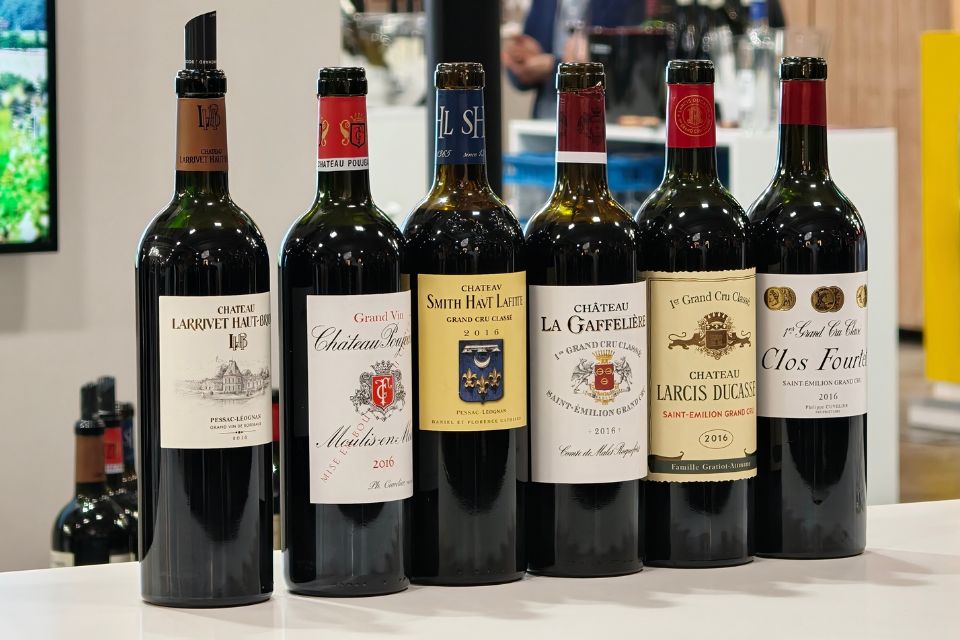
Ten years after the harvest, Bordeaux returns to examine one of the most celebrated vintages of the last decade. The Wine Paris 2026 masterclass “Bordeaux: ten years later, what has become of the promises of the 2016 vintage?” focused on six great Bordeaux 2016 wines, revisited in light of their evolution in bottle. A dive into the past but also the future of a wine region that—like many internationally—is facing the wine consumption crisis.
Leading the session were Bastien Debono, Head Sommelier of the French Michelin-starred Maison Bleue Yoann Conte, and Julien Lavenu, partner consultant at Derenoncourt Vignerons Consultants, an international team with Bordeaux roots and over 25 years of field experience. The objective: to understand what remains today of the promises of Bordeaux 2016. A vintage immediately considered among the most complete and classic of recent years.
2016 VINTAGE: RAINY WINTER, HOT BUT BALANCED SUMMER
“The winter was very cool and spring equally cool, while summer was very dry and very hot, but this rebalanced the situation,” explained Julien Lavenu. Between January and February, about half the rain that normally falls in an entire year came down. The soils at the start of budbreak were therefore saturated with water. A fundamental reserve for facing a dry summer without excessive stress, provided the vines had deep root systems capable of exploiting that moisture.
The heat did not compromise aromatic quality. “The aromas weren’t ‘burned,'” Lavenu emphasized, recalling how the strong temperature swings in August—very high temperatures followed by cooler phases—preserved freshness and definition.
The 2016 stood out for very low pH levels and therefore beautiful natural acidity. “It’s a vintage with very broad aromatic potential,” Julien Lavenu emphasized, “and a very classic structure on the palate, well-balanced, deep, and fresh.” A warm harvest, but not excessive. Sugars under control, complete ripening. And a texture that today, after ten years, shows precision and harmony in the six Bordeaux 2016 wines tasted at Wine Paris 2026.
CLOS FOURTET 2016 – SAINT-ÉMILION 1ER GRAND CRU CLASSÉ
Famille Philippe Cuvelier. Blend: 90% Merlot, 8% Cabernet Sauvignon, 2% Cabernet Franc. Expression of the great limestone plateau of Saint-Émilion on marine fossils (astéries). Aging in underground cellars. Nose of blue fruits and lavender, fleshy and silky palate, saline finish with a distinct limestone imprint.
CHÂTEAU LA GAFFELIÈRE 2016 – SAINT-ÉMILION 1ER GRAND CRU CLASSÉ
Famille de Malet Roquefort. Blend: 70% Merlot, 30% Cabernet Franc. Increased proportion of Cabernet Franc to approach the historic balance of the 1940s and ’50s. Complementarity of hillside exposures. Aristocratic nose of noble vegetal notes, chiseled and vertical palate.
CHÂTEAU SMITH HAUT LAFITTE 2016 – PESSAC-LÉOGNAN GRAND CRU CLASSÉ
Famille Cathiard. Blend: 65% Cabernet Sauvignon, 30% Merlot, 4% Cabernet Franc, 1% Petit Verdot. Cabernet Sauvignon from the Günz gravels, Merlot on clay-limestone soils. In-house cooperage. Complex and deep nose. Palate combining power, depth, and sensuality.


CHÂTEAU POUJEAUX 2016 – MOULIS-EN-MÉDOC
Famille Philippe Cuvelier. Blend: 55% Cabernet Sauvignon, 35% Merlot, 5% Petit Verdot, 5% Cabernet Franc. Heart of the vineyard on the Poujeaux plateau, exemplary heritage of old vines. Dark and fresh nose, “classic” palate, dynamic and soaring.
CHÂTEAU LARRIVET HAUT-BRION 2016 – PESSAC-LÉOGNAN
Famille Gervoson. Blend: 62% Cabernet Sauvignon, 30% Merlot, 8% Cabernet Franc. Vinification with stem presence and diversity of élevage. Luminous nose with oriental nuances. Vertical and soaring palate, fruit-driven.
CHÂTEAU LARCIS DUCASSE 2016 – SAINT-ÉMILION 1ER GRAND CRU CLASSÉ
Famille Gratiot-Attmane. Blend: predominantly Merlot with significant Cabernet Franc presence. Vineyards on the south slope of the Saint-Émilion limestone plateau, between fossil-rich limestone and red clays. Aroma of dark fruit and fine spices. Dense and vertical palate, sculpted tannins. Long and savory finish with limestone imprint.
THE FUTURE OF BORDEAUX ACCORDING TO JULIEN LAVENU
Looking ahead, the key formula is to reduce concentration. “We no longer need concentration, but less,” Julien Lavenu confirms to Winemag. With increasingly high phenolic maturity, it’s no longer necessary to push extraction to the extreme. Bordeaux wines are looking toward a future with fewer days of maceration and gentler extractions: only what’s needed for balance.
Aging is also evolving. “Less new oak, barrels of different sizes,” continues the Derenoncourt Vignerons representative, “broader use of concrete or alternative vessels. Not all wine necessarily needs to go through barrique.”
And in the vineyard? “Here too the approach is changing. If twenty years ago we did a lot of leaf removal and thinning to concentrate,” Lavenu responds, “today we tend to protect the clusters from sun and excesses. In some cases we reduce planting density: too many vines per hectare increase competition and therefore concentration. Today the goal is balance.”
THE FUTURE OF BORDEAUX ACCORDING TO Derenoncourt Vignerons: WATCHWORD “BALANCE”
“Fundamental,” Julien Lavenu summarizes, “is maintaining brightness and balance between alcohol, acidity, fruit, and tannin. And working parcel by parcel, year by year. We must not forget, however, that every year is different. With increasingly extreme weather events, such as frosts, concentrated rainfall in just a few days, and very hot summers, it becomes central to strengthen plant resilience and preserve freshness and precision.”
A future not so different or distant from what (and how) Bordeaux 2016 wines appear today. Marked by depth without excess. By intact acidity. By defined structure. A vintage that today speaks more of balance than power. Yet another demonstration that the future, in viticulture as in life, is built yesterday. Not tomorrow.