IN BREVE
- The Mosel Riesling crisis is caused by the absence of an effective commercial strategy to promote German wines abroad.
- Martin Foradori Hofstätter denounces Germany’s lack of willingness to exploit EU funds for the promotion of its wines.
- Many producers depend on direct sales to an aging clientele, without attracting younger consumers.
- Growing competition and rising costs are putting even high-quality producers in difficulty.
- Hofstätter emphasizes that the crisis is a matter of positioning, communication, and business model, not wine quality.
The Mosel Riesling crisis does not depend on wine quality, but on the absence of a commercial strategy capable of promoting German production abroad. This is the reading of Martin Foradori Hofstätter, who speaks out after the in-depth analysis published by Winemag on the region’s economic difficulties and the 11% drop in exports recorded in the first four months of 2026.
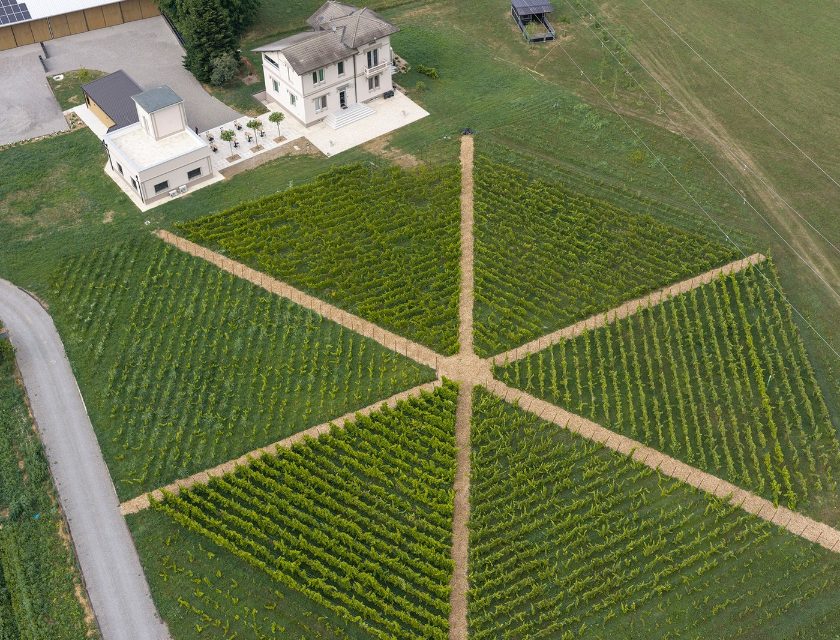
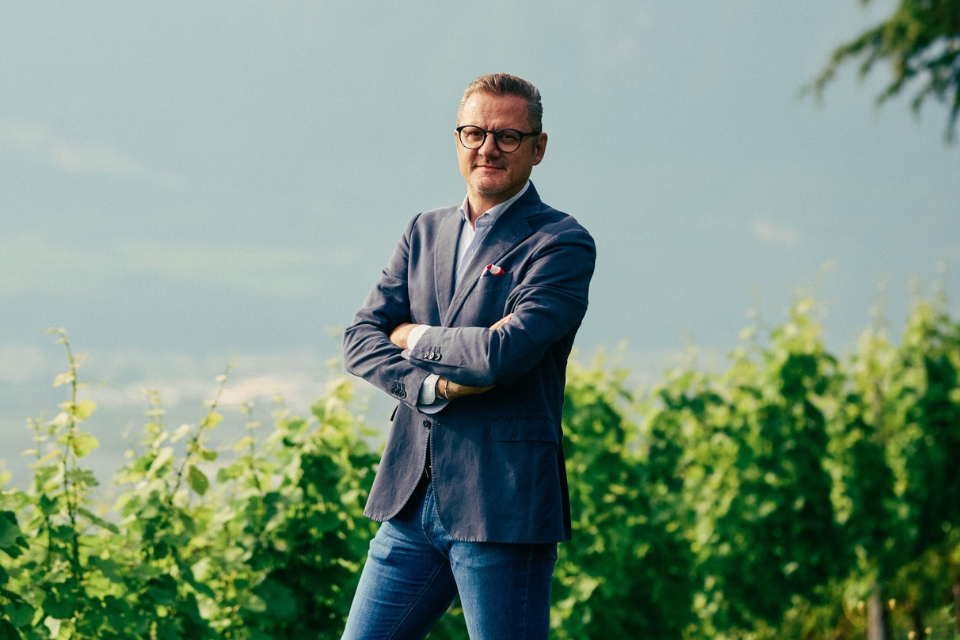
The Alto Adige producer leads with Beatrix Foradori Hofstätter and their children Niklas and Emma the J. Hofstätter Estate in Termeno, Alto Adige. In 2014 he invested in the Mosel, relaunching the historic Dr. Fischer winery. And dedicating himself to Riesling production in the Saar vineyards.
GERMANY AND THE PROMOTION THAT ISN’T THERE
“I believe the real issue is: what has Germany done, and what is it doing, to promote its wines and territories abroad? The answer, unfortunately, is simple: too little, or rather, nothing.” Hofstätter speaks as a producer directly involved in German viticulture, as well as an observer of the Italian and international market.
“I say this as someone directly involved and, to date, still the only Italian wine producer to have believed in the Mosel by investing capital and labor in that territory. Quality is not lacking, quite the opposite. What’s lacking is a valorization strategy.”
The comparison with Italy also concerns EU instruments intended for promotion outside the European Union. “In Italy, thankfully, we also have OCM funds for promotion in foreign markets. Germany could use them too, but bureaucracy and the lack of willingness to exploit these tools have ended up limiting, or rather eliminating, their effectiveness.”
BEYOND EGON MÜLLER AND JOH. JOS. PRÜM
The international reputation of German wine remains concentrated around very few estates. A visibility that, according to Hofstätter, presents a partial picture of the real situation.
“Moreover, international recognition concerns only a very narrow elite of producers: Egon Müller, Joh. Jos. Prüm and a few other iconic estates. But German wine is not that. The vast majority of wineries remain virtually unknown outside their borders.”
Many estates continue to depend on direct sales through established relationships with an increasingly aging private clientele. “Most producers simply sell their wines ab Hof – Martin Foradori Hofstätter explains – that is, directly to private customers, a clientele that, in many cases, is progressively disappearing for demographic reasons, without any concrete effort being made to attract and retain younger consumers.”
GENERATIONAL TRANSITION AND VINEYARD ABANDONMENT
Added to the contraction in consumption is the difficulty of ensuring continuity for family businesses. A particularly serious problem in areas where viticulture requires much manual labor and offers limited margins.
“To this is added another structural problem, which is still talked about too little: generational transition. In many estates there is no family succession and more and more young people are choosing not to continue the wine business.”
The consequences are already visible along the Mosel and in other German regions. “As a result, numerous wineries are closing, vineyards are being rented or sold and, in the worst cases, the most difficult parcels are simply abandoned.”
THE WEIGHT OF BULK WINE AND THE ECONOMY SEGMENT
For Hofstätter, the current difficulties are also rooted in the positioning chosen for decades by a substantial part of German wine.
“For decades the system focused mainly on exporting bulk wine and economy-segment wine, just think of ‘Liebfraumilch’ or ‘Blue Nun,’ precisely the segment that is suffering most today. It was inevitable that a model based on price, rather than value, would show all its limits.”
This is the segment most affected by rising costs, reduced consumption and competition from wines produced in more easily mechanizable territories. A different situation from that of Rieslings tied to individual vineyards, a recognizable estate identity and distribution built on direct relationships with the market.
THE DR. FISCHER MODEL
“In our case, with ‘Dr. Fischer,’ the situation is different. We produce exclusively high-quality wines – the Alto Adige producer emphasizes – not Fasswein. And we have the advantage of being able to communicate directly with our customers, building a relationship that valorizes the territory, the work in the vineyard and the identity of our Rieslings.”
A more solid commercial structure makes it possible to limit dependence on large bottlers and price competition. It does not, however, eliminate the effects of a crisis affecting the entire territory.
“This – Martin Foradori Hofstätter adds – makes us more resilient compared to those who depend exclusively on large commercial channels. But it does not make us immune to the difficulties affecting the entire Mosel.”
EVEN THE GRAND CRUS ARE SLOWING DOWN
The top of the pyramid continues to achieve very different results compared to bulk and economy-segment bottles. Hofstätter, however, cautions against confusing the prices reached by a few rare labels with the overall performance of high-end Rieslings.
“And be careful: even the market for grand crus and GGs is not as brilliant as is often claimed. The most sought-after labels continue to find buyers, but talking about a market that ‘is booming’ would be an oversimplification.”
The pressure therefore also reaches well-known producers and estates positioned in the upper segments. Sales times are lengthening. Inventories are increasing. And prestige does not always translate into sufficient demand.
CRACKS IN THE VDP SYSTEM
Martin Foradori Hofstätter then touches on another sore point of the German wine system: “Too often the VDP is cited as the stronghold of German viticulture, the bastion capable of resisting any crisis. The reality, however, is more complex.”
The Verband Deutscher Prädikatsweingüter brings together numerous estates considered part of the national production elite. Even within the association, Hofstätter observes, there is no shortage of signs of difficulty.
“Even within what is considered the elite of German wine obvious cracks are emerging, as demonstrated by the closure of historic estates. But also – he adds – recent changes of ownership. These are signs that demonstrate how the difficulties do not only concern lesser-known producers, but affect the entire system.”
LESS SELF-REFERENTIALITY, MORE STRATEGY
Germany retains vineyards of absolute value, a recognized viticultural history and production capable of expressing some of the best white wines in the world. According to Hofstätter, these elements are not sufficient without a shared ability to face market changes.
“Germany is a great country, with an extraordinary viticultural tradition and producers of absolute excellence. But I have the impression that, when the wind changes and the market becomes more difficult, too often there is a struggle to face problems head-on.”
The response cannot be limited to defending achieved prestige or celebrating a few symbolic estates: “Today we need less self-referentiality and more ability to question ourselves, to work as a system. And to promote German wine with a modern and shared vision.”
Hofstätter’s summary brings the discussion back to the relationship between value produced and value perceived by the market. “The Mosel crisis is not a quality crisis. It is a crisis of positioning, communication and business model. And until these aspects are addressed decisively, it will be difficult to reverse course.”
No post found!