IN BREVE
- Mosel Riesling recorded an 11% drop in exports in the first four months of 2026, performing worse than other German PDO wines.
- Riesling’s difficulties are concentrated mainly in bulk and low-end wines, while high-quality wines continue to maintain good prices.
- The crisis does not depend on quality, but on an unsustainable economic model that does not adequately remunerate producers’ work in difficult conditions.
- The Zukunftsinitiative Deutscher Weinbau invites consumers to choose German wines over imported ones, to try to support the sector.
- The current situation threatens the Mosel’s image and the sustainability of micro wineries, with many already forced to close.
Mosel Riesling loses 11% in exports in the first four months of 2026. The data from Nomisma Wine Monitor, published by Winemag, signals a sharper decline compared to the -5.5% recorded overall by German PDO wines. A result that also runs counter to the greater resilience shown, at European level, by still white wines compared to red wines.
The data does not allow us to distinguish between Riesling Trocken, Feinherb, Kabinett or Spätlese, nor to break down exports by price range. However, information gathered in Germany allows us to narrow the field. The crisis primarily concerns bulk and low to mid-range bottled wines, while great single-vineyard wines and collectible rarities continue to sustain high prices.
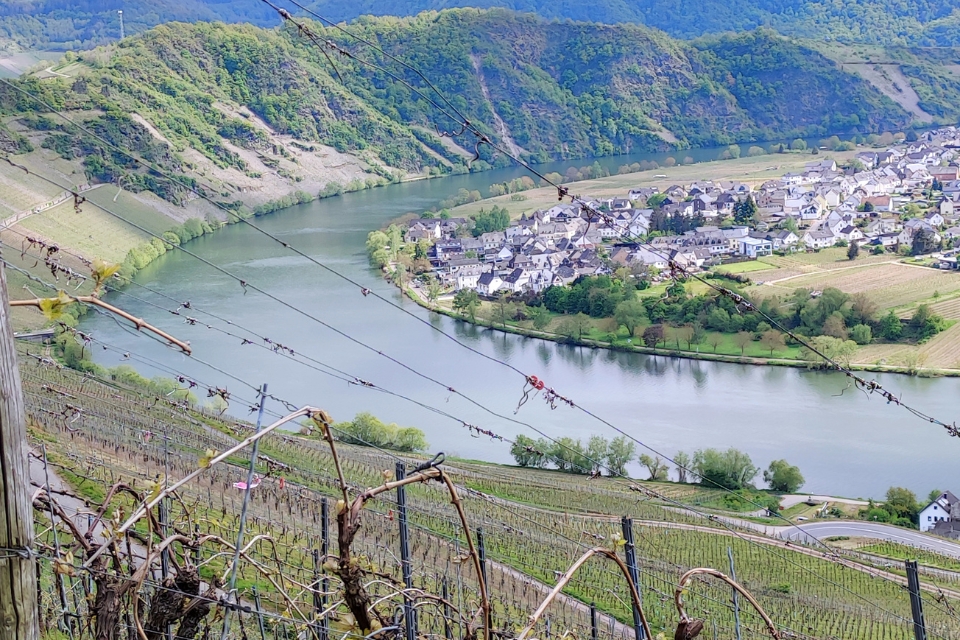
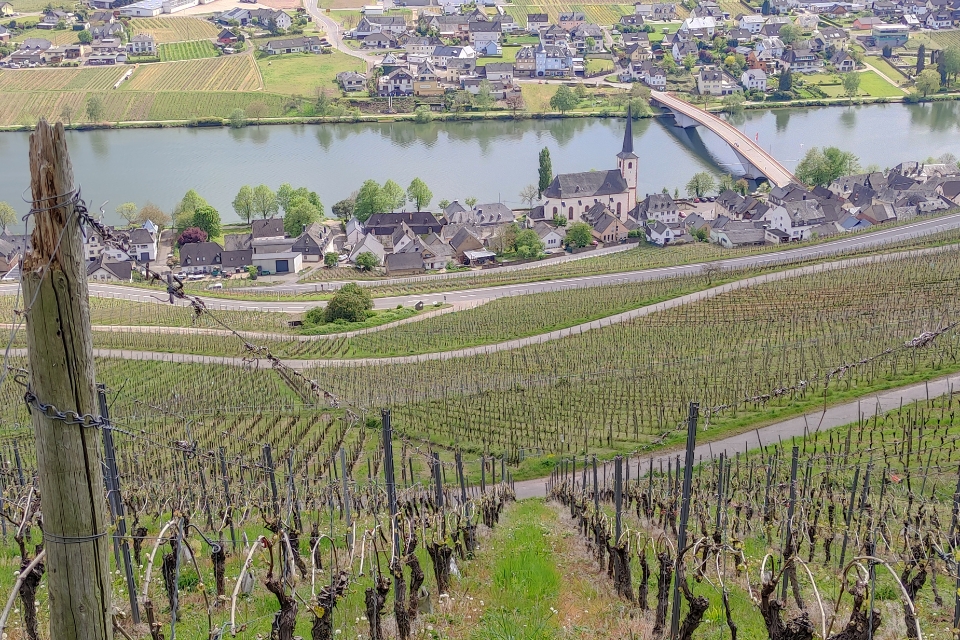
The Mosel’s difficulty stems from the growing gap between the cost of heroic viticulture on the slopes and the price recognized by the market. The international prestige of Riesling is no longer enough to guarantee profitability to the broadest part of the production system, made up of small estates, parcels difficult to mechanize and sales still tied to private customers.
NOT ALL RIESLING IS IN CRISIS
The most fragile segment is that of Fasswein, bulk wine sold to merchants, bottlers and operators who supply supermarkets and discount stores. In some cases it is paid just 60-70 cents per liter, while production costs are at least double. A dynamic already unsustainable on the plains and even more penalizing in the Steillagen, where pruning, vineyard management and harvesting require heavy labor input.
The Mosel is partially protected by direct sales and average revenues higher than Germany’s large bulk areas, such as Rheinhessen and Pfalz. However, even this defense is weakening. According to a Mittelmosel producer interviewed by the SWR television broadcaster, selling a bottle for less than 7-8 euros ex-cellar makes it almost impossible to make a living cultivating exclusively steep vineyards. On the final market, after logistics, distribution and commercial margins, the price would necessarily have to be higher.
The pressure therefore mainly affects Rieslings under 15 euros and part of the mid-range: often valid wines, but lacking the notoriety necessary to transfer the cost of production to the price. Estates without consolidated distribution end up accumulating stocks or selling as bulk batches initially destined for bottling.
More difficult to attribute the decline to a precise style. Inexpensive Riesling Trocken suffers from competition from simpler and less expensive white wines. Kabinett, Feinherb and versions with residual sugar depend more on foreign markets, where the complexity of German classifications continues to represent a commercial obstacle. The crisis therefore appears linked mainly to price and sales channel, rather than to degree of sweetness.


THE TOP OF THE PYRAMID CONTINUES TO SELL
The VDP auctions dedicated to Mosel, Saar and Ruwer wines exceeded 1.5 million euros in gross revenues in 2025. Demand remains high for rare Rieslings, single-vineyard selections and Prädikatswein from the best-known producers.
However, the success of the auctions concerns minimal quantities compared to regional production. The prices reached by Egon Müller, Joh. Jos. Prüm and other leading names do not describe the situation of the hundreds of families selling Riesling between 8 and 20 euros.
SevenFifty Daily has defined Germany’s as an “invisible crisis”: wines celebrated by professionals and international tastings often sold out coexist with estates unable to cover increased costs, production surpluses and a saturated bulk market. According to experts consulted by the American publication, two-thirds of German independent producers are in difficulty.
The paradox is also known to the British trade. Riesling is considered a wine that operators love to drink, but struggle to sell. Critical reputation and commercial success continue to proceed on different tracks.
THE COST OF STEEP VINEYARDS (STEILLAGEN)
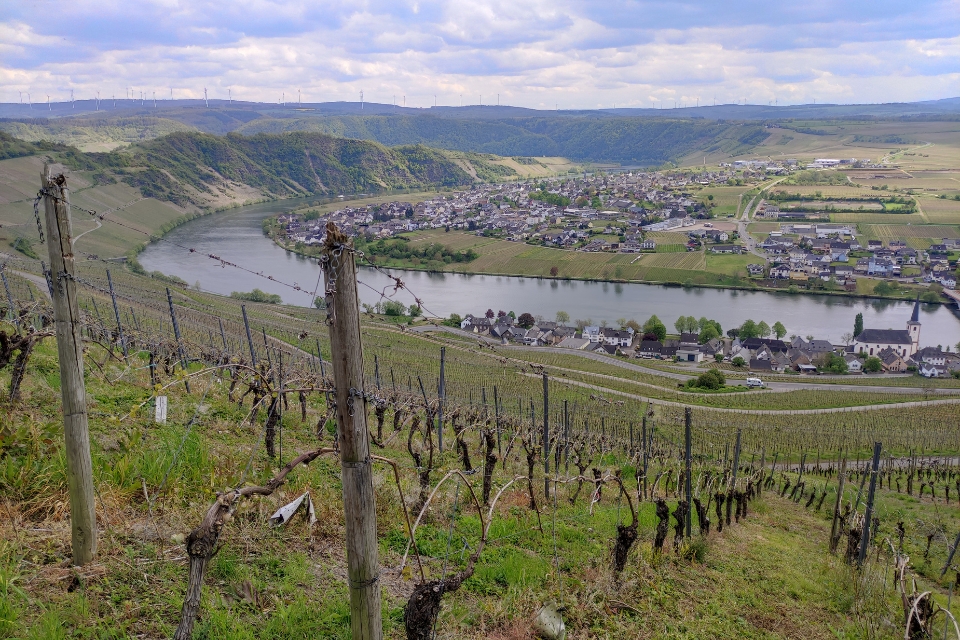
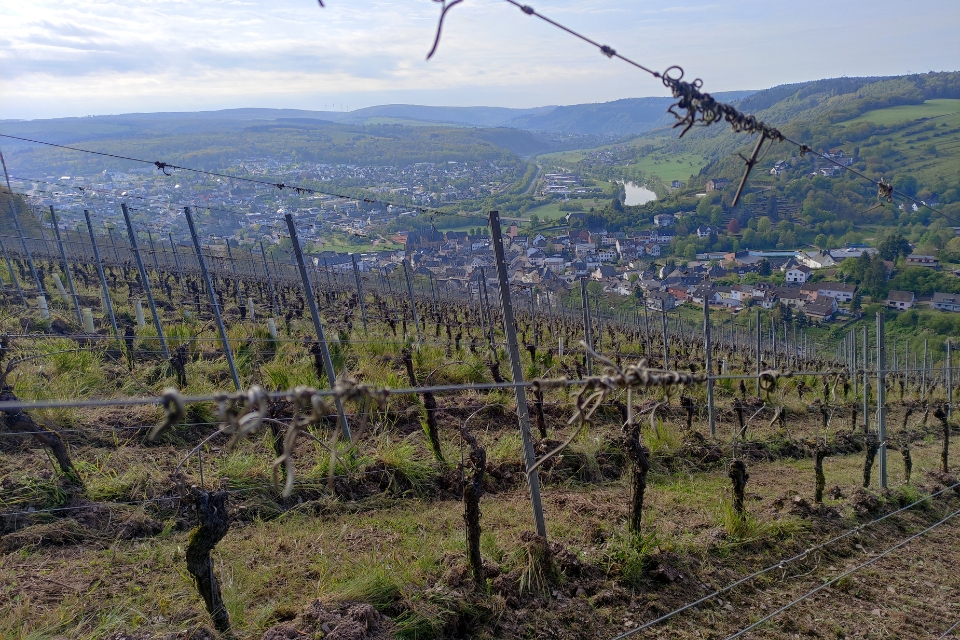
The economic crisis is directly reflected in the landscape. Along the Mosel, abandoned steep parcels are increasing because they are no longer profitable. Vineyards become overgrown with vegetation, terraces deteriorate. And slope maintenance becomes more complex. At stake is not only wine production, but the very image of the region and its tourist appeal.
According to Simone Loose, professor of wine economics at Geisenheim and a familiar face from the Prowein Business Reports, approximately one thousand micro-estates with fragile prospects operate in the Mosel. Less than half could remain economically sustainable. In several villages in the region, closures are already evident: in Kröv, eight or nine estates ceased operations in one year, while in Mehring five other producers have expressed their intention to stop.
Even estates that sell directly now operate with the handbrake on. A producer from Longen, with approximately 60,000 bottles marketed each year, recorded a sales decline close to 10%. The most loyal clientele is composed mainly of elderly people, while younger generations buy less wine, change labels more frequently or give up alcohol altogether.


DECLINING CONSUMPTION AND EXCELLENT CLOSURES
The Mosel is affected by a contraction involving all German wine. Generational turnover does not compensate for the progressive exit from the market of older consumers, responsible for over two-thirds of purchases. According to Geisenheim projections, over the next twenty years German demand could shrink to half of current levels.
Competition from imported wines adds pressure. About 60% of wine consumed in Germany comes from abroad, while domestic production stops at around 40%. Italy, France and Spain have volumes, production structures and costs that are difficult to replicate on the Mosel slopes. This is also why German estates are closing.
In spring 2025, the historic estate Dr. Wagner of Saarburg gave up bottling the 2024 vintage, selling the wine in bulk and leasing most of the vineyards. At the beginning of 2026, Weingut Von Hövel also closed, an estate in the Saar founded in 1803 and a historic member of the VDP. In the latter case, economic difficulties were compounded by family and corporate issues.
“DEIN WEIN VON HIER”: THE WINEMAKERS’ MOBILIZATION
The severity of the situation has favored the birth of the Zukunftsinitiative Deutscher Weinbau, or “Initiative for the Future of German Viticulture“. Founded in May 2025, the association brings together 172 members and is supported by hundreds of other families. Estates that collectively produce approximately 85 million liters, which have given a representation mandate to winemaker Thomas Schaurer.
The “Dein Wein von hier” campaign, “Your wine from here”, does not ask for new public subsidies. Instead, it invites citizens to replace just one imported bottle each year with a German bottle. It does not aim to increase alcohol consumption, but to shift a small part of purchases toward domestic production. Today, of the approximately 20 liters of wine consumed annually per capita in Germany, only eight are German.
The mobilization will culminate on August 30, 2026 with the first “Tag des Deutschen Weins”, the “German Wine Day“. The initiative invites people to buy one more domestic bottle, or non-alcoholic wine or grape juice. An appeal addressed directly to consumers, after some producers declared they did not feel adequately represented by traditional organizations.
- European PDO wine exports falling: Italy, -6.2% in the first four months of 2026
- Riesling under 10 euros Alsace-Mosel: who wins at the supermarket?
- “Virgola Zero” Alcohol Free Sparkling, Dr. Fischer: from Esselunga a Mosel Riesling without alcohol
- Luigi Moio in Gavi: “The longevity of wine is identity, not simple duration”
- VDP, member wineries rise to 202 with Sektgut Reinecker and Weingut Dr. Hermann
- Aldi launches Zerozecco: part “Prosecco” and part “alcohol free sparkling”