IN BREVE
- Slovenia’s new wine law, approved on February 18, 2026, requires organoleptic evaluation even for wines without PDO and PGI.
- The evaluation is carried out by a commission of experts and affects the marketing of the wines.
- Criticism is emerging regarding the risk of penalizing natural wines, as the judgment is based on conventional standards.
- The petition from the Santei winery asks the Ministry of Agriculture to restore market access based only on chemical-physical analysis.
- Producers highlight a disparity compared to imported natural wines that do not undergo the same evaluation in Slovenia.
- Meanwhile, in Wales, the first PGI entirely focused on natural wines could be born.
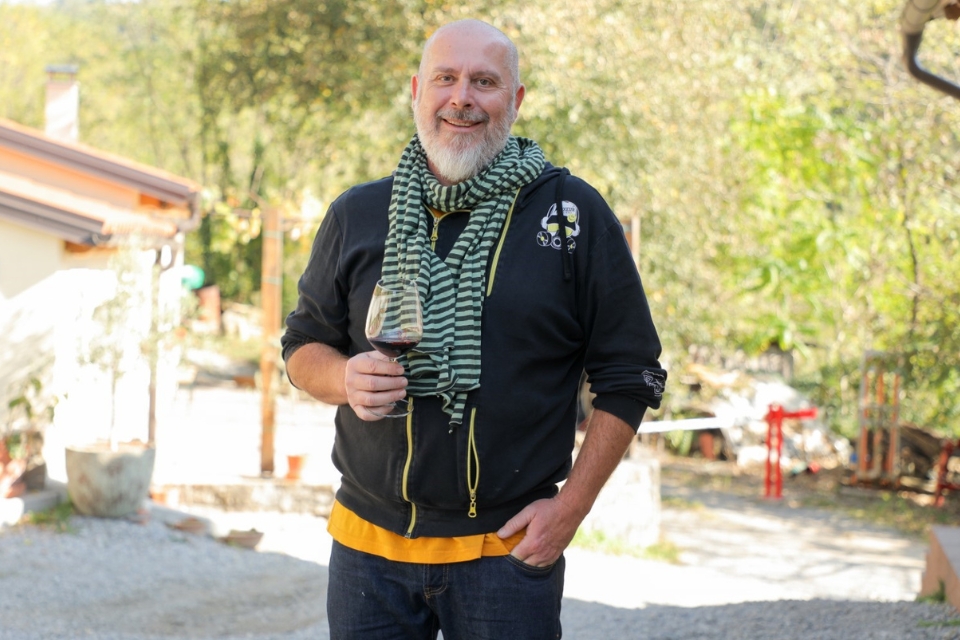
The new Slovenian wine law and the mandatory organoleptic evaluation even for wines without PDO and PGI are at the center of an online petition promoted by the Santei winery. The company, based in the Vipava Valley, produces organic and biodynamic wines from regenerative agriculture and is one of the symbolic wineries of the Slovenian natural wine movement.
The measure was approved by the Slovenian Parliament on February 18, 2026, published in the Official Gazette on February 27, and entered into force on March 14. This is the first organic revision of national wine legislation in almost twenty years.
NEW WINE LAW IN SLOVENIA: WHAT CHANGES
Article 24 of the new Slovenian wine law establishes that the evaluation of products obtained in the country includes laboratory analysis and organoleptic examination. The provision also concerns wines without a geographical indication, a category that corresponds to the old “table wines“.
The tasting is entrusted to a five-member commission, composed of producer representatives and viticulture and oenology experts. The outcome contributes to establishing the wine’s suitability for marketing. If the product is judged non-compliant, it cannot be placed on the market.
Under the previous regime, the petition’s promoters explain, producers could waive geographical indications and market the wine based on chemical-physical analysis alone. The new law eliminates this possibility.
NATURAL WINE PRODUCERS CHALLENGE THE ORGANOLEPTIC EXAMINATION
According to Santei and the organizations Bon Vino and Natura Vino, the latter still being formed, the system risks penalizing natural wines in particular. Turbidity, unconventional colors, and aromatic profiles far from the most common standards can result from specific production choices, provided they remain within the limits set by the regulations.
The challenge therefore concerns the use of a sensory evaluation built, in the opinion of the signatories, on the characteristics of conventional wines. An approach that could result in the exclusion from the market of products that are regular from an analytical point of view, but far from the stylistic models expected by the commissions.
The petition launched by Sandra and Matej Bizjak, owners of Santei, also points out a disparity compared to imported natural wines. Bottles coming from Italy, France, or Georgia are not subjected to the same preventive evaluation required for wines produced in Slovenia, while remaining subject to normal national and European controls.
THE REQUESTS OF THE PETITION LAUNCHED BY SANTEI
The initiative asks the Slovenian Ministry of Agriculture to restore, for wines without PDO and PGI, the possibility of accessing the market through chemical-physical analysis alone. The exemption should also include the 2025 vintage, which was already completed from a production standpoint before the law came into force.
If the rule is not modified, the promoters are asking by the end of 2026 for a state-funded plan for the conversion of companies that base their business on natural wines, along with compensation for loss of income and the possible abandonment of vineyards. Finally, they urge a formal dialogue with producers, associations, market experts, and export entities.
TABLE WINES: COMPARISON WITH ITALY AND FRANCE
The parallelism indicated in the petition is reflected, with some distinctions, in the rules applied in Italy and France. In Italy, the decree of March 12, 2019 provides for analytical examinations for PDO and PGI wines. While tasting commissions concern PDO wines. Generic wines without a geographical indication therefore do not have to pass a preventive organoleptic examination of this type.
In France, the former “vins de table” fall under the Vin Sans Indication Géographique category, often marketed as Vin de France. When they list the grape variety or vintage, they must be certified by FranceAgriMer through documentary traceability and spot checks. However, there is no systematic passage before a tasting commission. Furthermore, wines without indication of grape variety or vintage remain outside the specific FranceAgriMer certification system.
The difference highlighted by Slovenian producers is therefore concrete. Countries like Italy and France maintain controls, registers, and analytical obligations. But they do not subordinate the marketing of all wines without geographical indication to the preventive judgment of an organoleptic commission. The debate seems to be only at the beginning.
FROM WALES, THE PROJECT FOR A NATURAL WINE PGI
And while in Slovenia natural producers challenge a law that could limit their market access, in Wales a group of winemakers is attempting the opposite path. The Natural Wine of Wales project, led by Paul Rolt of Hebron Vineyard, aims to obtain recognition as a British PGI for wines produced with Welsh grapes, spontaneous fermentations, and without synthetic chemicals, industrial yeasts, additives, or processing aids. Sulfites would be allowed in limited quantities only at bottling.
The application submitted to Defra – the UK government department responsible for agriculture and the environment – is still under evaluation and the final production specifications have not been published. If approved, it could become the first geographical indication built specifically around natural wines.
A signal in the opposite direction to the concerns raised today in Slovenia. Where, however, the government’s focus is on “table wines”, without any implicit reference to “natural wines”. A detail that could make the difference.