IN BREVE
- The 2026 early harvest is influenced by high nighttime temperatures that stress the vines, adding to the hottest hours of the day.
- The heat causes malic acid to be consumed more quickly, reducing acidity and increasing the potential alcohol content of the grapes.
- Despite the early ripening, the grapes can easily show immature characteristics, such as coarse tannins and under-ripe skins.
- Night harvesting helps keep the clusters cool, but it cannot compensate for the lack of cool nights during ripening.
- To understand the phenomenon of early harvesting, it is important to consider minimum temperatures and grape pH, not just the days compared to the historical average.
Maximum temperatures make the news. Minimums, often, decide the harvest. When the heat stays in the vineyard even after sunset, the grapes cannot slow down. They continue to breathe. They consume acids. And they arrive at dawn like someone who has spent a sleepless night. This is one of the backstories of the much-discussed “2026 early harvest”, which is actually in line with the increasingly early trend of recent years.
The afternoon sun matters for the clusters. But a scorching day followed by a cool night produces different effects than twenty-four hours without respite. In the second case, the cluster finds no relief. And the ripening risks losing balance. To truly understand what happens to the vines under stress, in short, it’s not enough to put on a pair of Ray-Bans.
GRAPES BREATHE AT NIGHT TOO
The vine produces energy through photosynthesis during the day, but respiration continues even in the dark. The higher the nighttime temperature, the more intense this activity can be. After veraison, when the berries change color and begin the decisive phase of ripening, malic acid becomes one of the fuels for respiration. Cool nights slow down its consumption. Hot ones make it decrease more rapidly.
The result? The grapes gain sugar (and, therefore, potential alcohol content) while losing acidity. The pH can also increase. And the producer thus sees the time available to choose the moment of harvest shrink. The grapes’ hot nights present the bill directly in the cellar.
SUGARS AHEAD, AROMAS BEHIND
Ripening is not an orderly race. Sugars, acids, aromas, tannins, skins, and seeds proceed at different speeds. The heat can break the synchronization. The refractometer signals harvest values, but tasting the berries can tell a different story. Seeds still green. Coarse tannins. Under-ripe skins. And aromas not fully formed. The grapes seem adult in the numbers. But in other aspects, they are still teenagers.
Water loss can also increase sugar concentration without indicating truly complete ripeness. Waiting means risking more alcohol and further loss of acidity. Harvesting early can therefore become an obligatory choice.
MALIC ACID AND PH: THE NUMBERS TO WATCH
Malic acid is among the components most sensitive to heat. Its decrease reduces the freshness of the grapes and leaves less margin to wait for full aromatic or phenolic ripeness. Total acidity, on its own, is not enough to describe the situation.
pH is also needed. The ratio between malic and tartaric acid. The weight of the berries and the tasting of skins and seeds. Every grape variety reacts differently. Just like every soil, exposure, and water availability.
A high pH makes microbiological management more delicate and can reduce tension and precision in the glass. The cellar can correct some parameters. It cannot give back to the grapes the cool nights they didn’t have.
NIGHT HARVESTING: USEFUL, BUT NOT MIRACULOUS
Harvesting at night allows for cooler clusters to be brought into the cellar. It is a useful practice for whites, aromatic varieties, and sparkling wine bases, because it limits heating during transport and reduces the work needed to cool the grapes.
But harvesting at night does not mean having had cool nights during ripening. The shears, at four in the morning, do not restore the malic acid consumed in the previous weeks. They do not lower the potential alcohol content. And they do not complete a ripening that has fallen behind. Night harvesting is a good logistical refrigerator. It is not a time machine.
To truly understand what “early harvest” means, therefore, it is not enough to count the days compared to the historical average. One must observe the minimum temperatures, the duration of hot nights, the pH trend. And the overall state of the grapes.
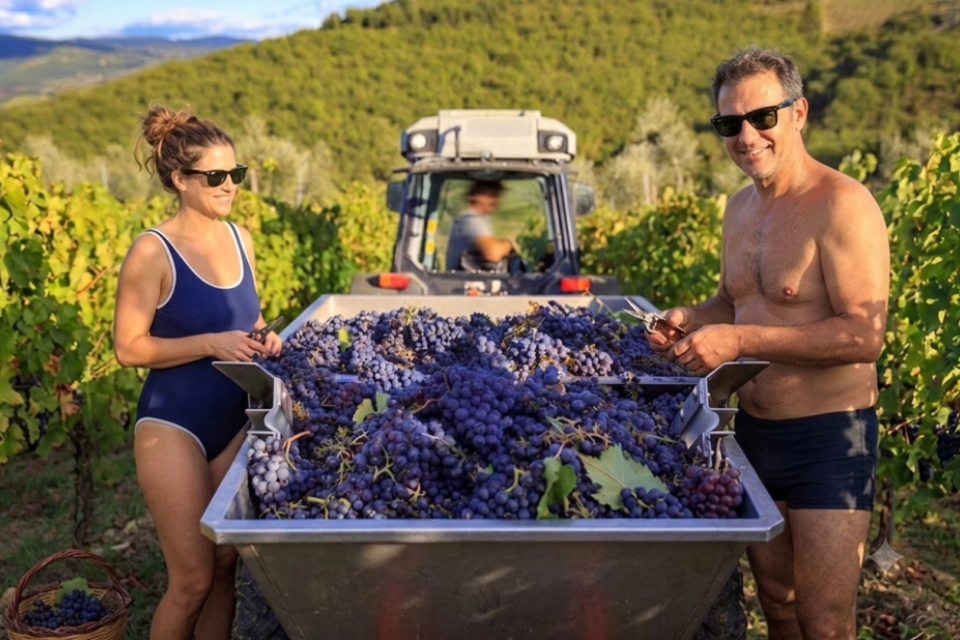
The thermometer at three in the afternoon continues to make noise. And imagining winemakers in swimsuits, intent on harvesting their precious clusters, is a hyperbole that works. But it is the temperatures at three in the morning, quieter, that better explain why the 2026 harvest has already begun. A bit like someone tossing and turning in bed, cursing the heat and mosquitoes. Certain to wake up more tired than when they went to sleep. Ready to put the Ray-Bans back on at breakfast. To cover the dark circles.
2026 Harvest: Earliest in Alto Adige History
IN BREVE The 2026 Alto Adige harvest has already begun with an unprecedented lead due to high spring and summer temperatures. The first grapes harvested are intended for sparkling wine base wines, with the Consortium reporting good cluster health. The vegetative cycle was accelerated, and careful vineyard management protected the grapes from heat stress. Weather conditions will influence the harvest of other…

Gironde Fires, Union des Grands Crus de Bordeaux: “2026 Harvest Saved”

Opus One, Michael Silacci to retire after the 2026 harvest
Opus One, Michael Silacci, Napa Valley, and the 2026 harvest: four keywords that mark the end of a long technical era for one of the iconic wineries of Californian wine. The Oakville winery has announced the planned retirement of its winemaker at the end of the next harvest. Silacci will retire after twenty-five years at Opus One. He joined the company in…