Italian wine crisis, record stocks, slowing exports, falling consumption, promotion funds under pressure, downgrading, and generational turnover: the keywords of recent months are all here. But perhaps the most uncomfortable one is missing: leadership. The question is no longer just how scary the wine crisis is. It is whether those who should solve it are more frightening.
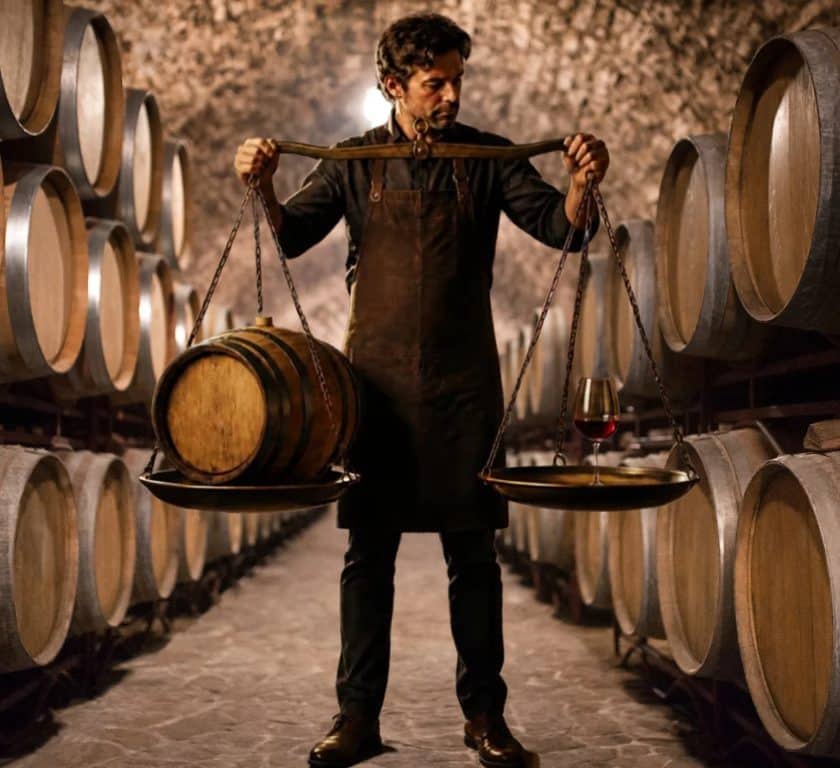
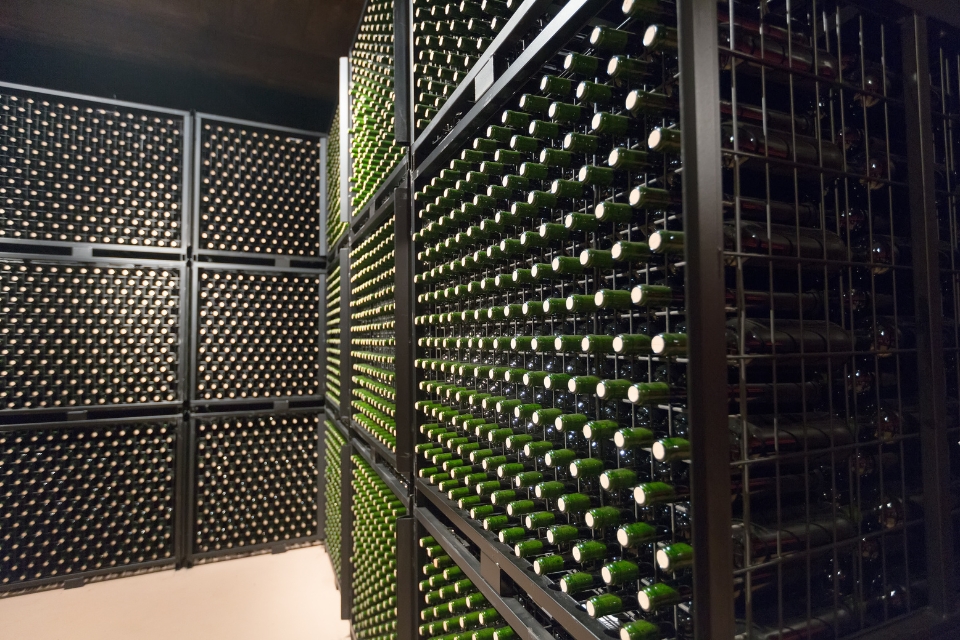
Italian wine has approximately 42 million hectoliters of wine and must sitting in cellars. It is the highest level since 2022. But back then, the figure was the result of a bountiful harvest. Today it comes after three smaller production campaigns: a sign that it’s not just a matter of overproducing. It’s a matter of under-selling.
Numbers that no longer describe a cyclical difficulty, but a system that has filled itself with product while the market changed direction.
STAGNANT WINE
Between January and May 2026, Italian large-scale retail lost 2% in wine purchases. Still wines are performing even worse. In the first quarter alone, exports dropped 4% in volume and 8.3% in value. The United States, the primary market for Italian wine, is no longer the automatic safety net for a sector used to thinking that, whatever happens, someone abroad will drink what can no longer be sold in Italy.
The issue is not just quantitative. It is cultural. One in five bottles is downgraded. In 2025, according to UIV, 6.6 million hectoliters of PDO and PGI wines changed category. Of these, 4.9 million ended up as common wine, with an estimated value erosion of over 516 million euros. The system continues to describe itself as a quality pyramid, but when the market stalls, it rapidly drops in level.
Downgrading is not a scandal in itself: it can be a useful tool. However, it becomes a signal when it reaches these proportions. It indicates that too many denominations have built theoretical rather than real value. And that protecting the name has often been confused with building demand.
THE CRISIS IS NOT A PASSING STORM
There are still those who speak of the wine crisis as a passing phenomenon. But the data tells a different story. OIV estimates 2025 global consumption at 208 million hectoliters, down 2.7% from 2024. Global production has barely risen to 227 million hectoliters, remaining near historic lows.
We are not facing a temporary phase, but a structural change. People are drinking less and differently. Wine is no longer a social reflex: simply being there, or having a DOC or DOCG, is not enough to guarantee a market.
To face a crisis involving demand, language, and generations, the sector often continues to rely on a leadership class raised in another era: one where the problem was producing enough, not selling better.
THE PERFECT STORM OF PROMOTION
Making the picture more fragile is a less visible but decisive element: promotion funds. Italian wine has built part of its international presence thanks to CMO wine tools. For the 2026/2027 campaign, the Ministry has allocated over 98 million euros, confirming the strategic weight of the measure.
But while stocks grow and exports slow, an opposite signal is coming from Europe: in the next multi-annual budget, the CAP risks losing centrality and resources. It is not a final decision yet, but the message is clear. The sector is entering its most complex phase just as one of its main tools could be reduced.
It is a critical combination: full cellars, more selective markets, more distant consumers, and public promotion under pressure. Yet the system often continues to treat these funds as an entitlement rather than a lever to be evaluated and optimized.
For years, internationalization has been discussed as if financing events, missions, and masterclasses were enough. If resources decrease, a clear distinction will emerge: those who have learned to sell will continue to do so; those who have only learned to manage funds will be left behind.
- Wine crisis, Centinaio’s three-step recipe: “I have written to Lollobrigida”
- Wine crisis, OIV leads the way in Moldova: stage, dance floor, and DJ sets
- Wine crisis, Frescobaldi: “Uprooting vineyards? A social risk, not a solution”
- Valoritalia 2026: Liantonio, Liberatore, and Pantini analyze the Italian wine crisis
- Piedmont wine in crisis: politicians finally take notice
- Wine and luxury: showcase publications for joke investments
THE COUNTRY OF ROUNDTABLES
The Italy of wine loves roundtables: technical, institutional, supply chain. The roundtable is often the response to change. In the sense that people sit down. The problem is the perspective. Can a sector that needs to speak to new consumers be led by those who observe those worlds from afar?
According to Confagricoltura Lombardia, the average age of farmers is 60 in Italy, compared to 57 in the European Union. The figure concerns agriculture as a whole, but it also mirrors the viticulture context.
If decision-makers consider Gen Z uninterested due to a lack of education, no-low alcohol a fad, or new languages irrelevant, then the crisis is no longer external: it is internal to the system.
PRODUCING LESS IS NOT ENOUGH
The president of Unione Italiana Vini, Lamberto Frescobaldi, stated that even a 44-million-hectoliter harvest is no longer sustainable. This is an important shift: Italian wine can no longer measure itself solely in volumes.
But producing less is not enough. Without a change in mindset, there will only be less unsold product. We need to define what Italian wine wants to be in the next twenty years. An agricultural product, a cultural asset, a tourist experience, a symbol of Made in Italy: perhaps all together, but not in the same way for everyone. This is the choice that is often avoided, because it implies selection and sacrifice.
OUT OF TOUCH
Many reactions to the crisis show a self-referential system. There are complaints about young people, but communication continues as if the audience were unchanged. There are complaints about large-scale retail, but it was handed products without identity. There are complaints about tariffs, but a heavy dependence on a few markets was built.
Meanwhile, the consumer is changing. They buy less, choose more, or look elsewhere. Wine continues to question its own prestige, while the public evaluates whether that bottle still makes sense.
THE CRISIS AS AN ALIBI
Thus, the crisis can become an alibi. To ask for aid without changing. To defend funds as acquired rights. To protect outdated models. Instead, it should be an opportunity to clean house: in numbers, strategies, languages, and governance.
The sector does not need “symbolic youth,” but real skills in decision-making roles. And a leadership class aware that public funds do not replace the market: they can support it, not create it.
WHO IS MORE FRIGHTENING
Is a full cellar scary? Yes. Are slowing exports scary? Yes. Is widespread downgrading scary? Very much so. The prospect of a reduction in promotional funds is also scary. But a system that thinks it can respond with insufficient tools and without changing its approach is even more frightening.
The wine crisis is serious, but manageable. It requires less rhetoric, more data, more selection, and more adaptability. Above all, it requires the courage to renew those who decide. Italian wine can overcome a difficult phase. It will be more complicated to do so without a real change in leadership, just as public support risks being reduced, along with the umbilical cord between politics and production, which has fueled territorial crises more than it has solved them. Every cloud has a silver lining.