IN BRIEF
- In the 2012-2025 period, the share of red wines fell from 52% to 43%, while that of sparkling wines increased from 8% to 13%.
- The Colli di Conegliano Consortium, led by Princess Isabella Collalto de Croÿ, aims to relaunch the denomination’s still wines.
- The production code for Colli di Conegliano Rosso includes varieties such as Merlot, Cabernet, and Marzemino.
- The production code for Colli di Conegliano Bianco is under revision: currently a blend, the idea is to produce it as a monovarietal Incrocio Manzoni.
- The future of Colli di Conegliano DOCG wines depends on communication capacity and market presence to establish themselves alongside Prosecco.
Sparkling wines have not yet overtaken red wines in global consumption. However, the market direction is clear: between 2012 and 2025, the share of reds fell from 52% to 43%, while that of sparkling wines rose from 8% to 13%. It is in this scenario that, in the Prosecco Superiore di Conegliano Valdobbiadene DOCG area, a group of producers led by Princess Isabella Collalto de Croÿ is betting on Colli di Conegliano DOCG still wines.
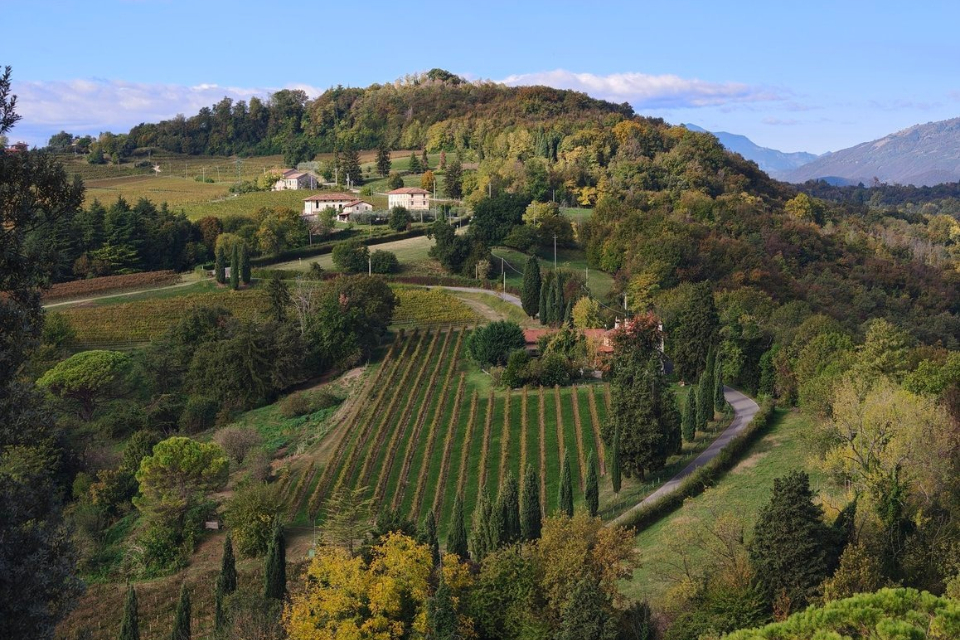
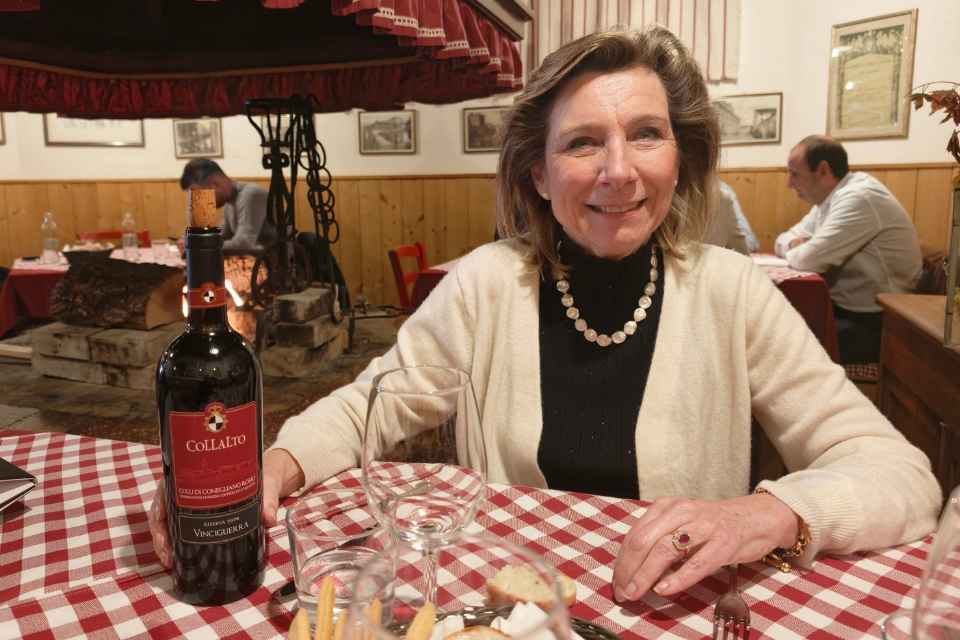
At the helm of the Consorzio Colli di Conegliano since December 2025 and owner of Conte Collalto in Susegana, Collalto de Croÿ has launched a new phase to relaunch the denomination, which counts 24 member wineries. The choice is counter-current: to give greater visibility to hillside reds with a Bordeaux-style imprint; and to make Manzoni Bianco the benchmark for a new era of still white wines.
This is not an absolute novelty. Rather, it is a puzzle still in its box. The wind of history is indeed blowing in favor of the DOCG. The first production code dates back over 30 years to 1993. The Consortium was founded in 1998 and led in recent years by Sante Toffoli: the spark for the organization’s rebirth is thanks to him. The denomination obtained DOCG recognition in 2011. In 2026, the time seems to have come to put the pieces together.
STILL REDS IN THE LAND OF PROSECCO
The Colli di Conegliano Rosso production code mandates Merlot, Cabernet Sauvignon, Cabernet Franc, and Marzemino, with at least 10% for each variety and a maximum of 40% Merlot. Incrocio Manzoni 2.15 and/or Refosco can also contribute up to 20%. It is a blend with a recognizable structure, but not a pure “Bordeaux blend.” Marzemino is a mandatory component and gives the wine a specific link to the territory.
The Manzoni Bianco project is equally identity-driven but must be distinguished from the current situation. Today, Colli di Conegliano Bianco DOCG must contain at least 30% Incrocio Manzoni 6.0.13, alongside Pinot Bianco and/or Chardonnay. Sauvignon and Riesling (Renano) are permitted up to 10%. The Consortium’s goal is to enhance Incrocio Manzoni with greater autonomy and recognizability. A pure Manzoni Bianco, however, is not a category provided for by the current regulations: to reach this, the Consortium has initiated a modification process that should conclude positively without hitches.
«Strengthening the denomination’s identity,» comments Princess Isabella Collalto de Croÿ, «is also a way to involve young people and create a system with wine, landscape, and tourism. In 2025, the Consortium obtained institutional recognition with erga omnes functions. A step that allows us to carry out protection and promotion activities even toward non-member producers.»
THE EXCLUSIVE WINEMAG TASTING
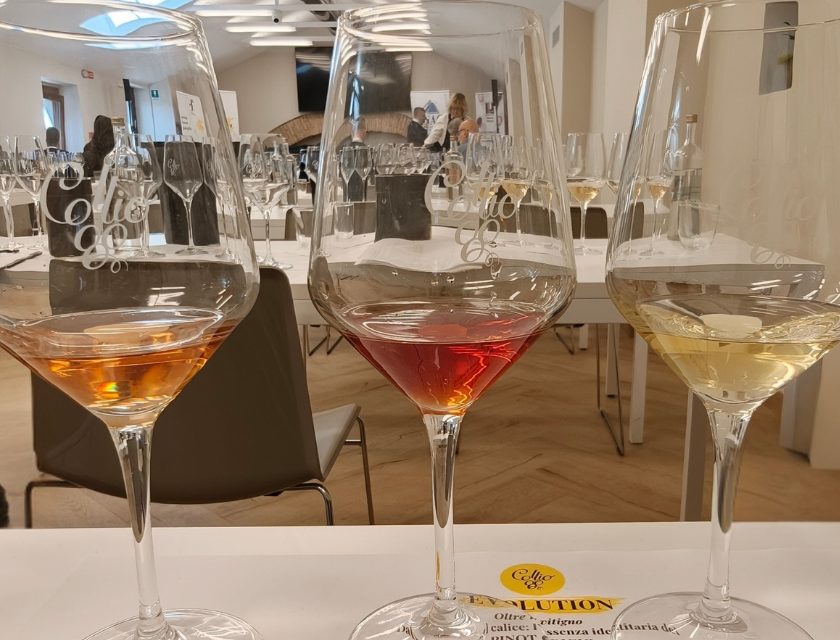
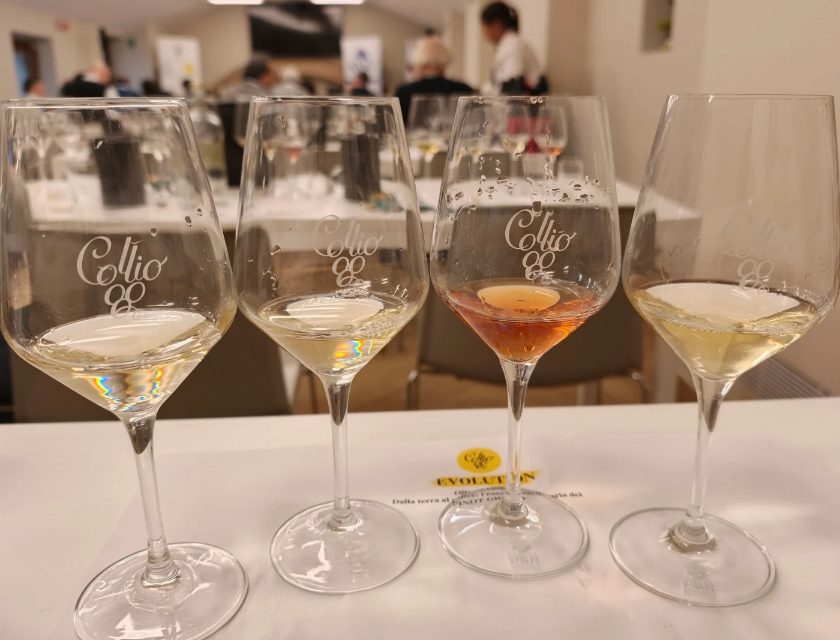
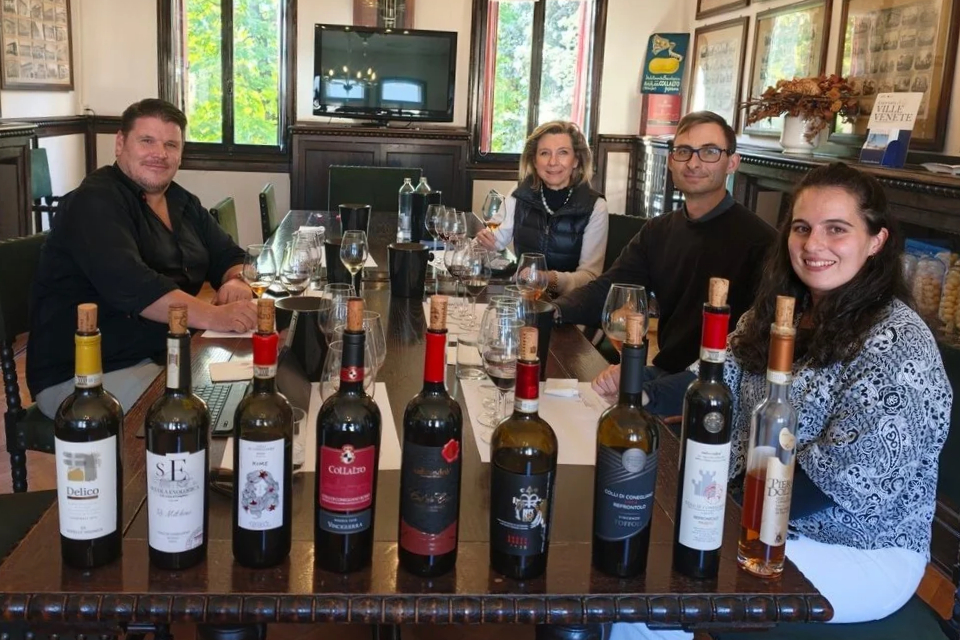
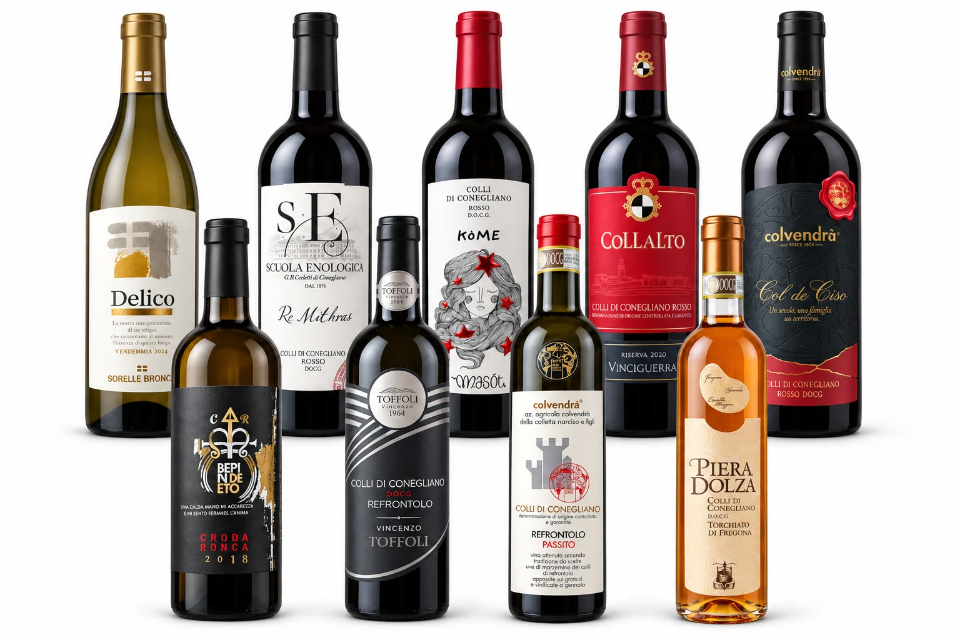
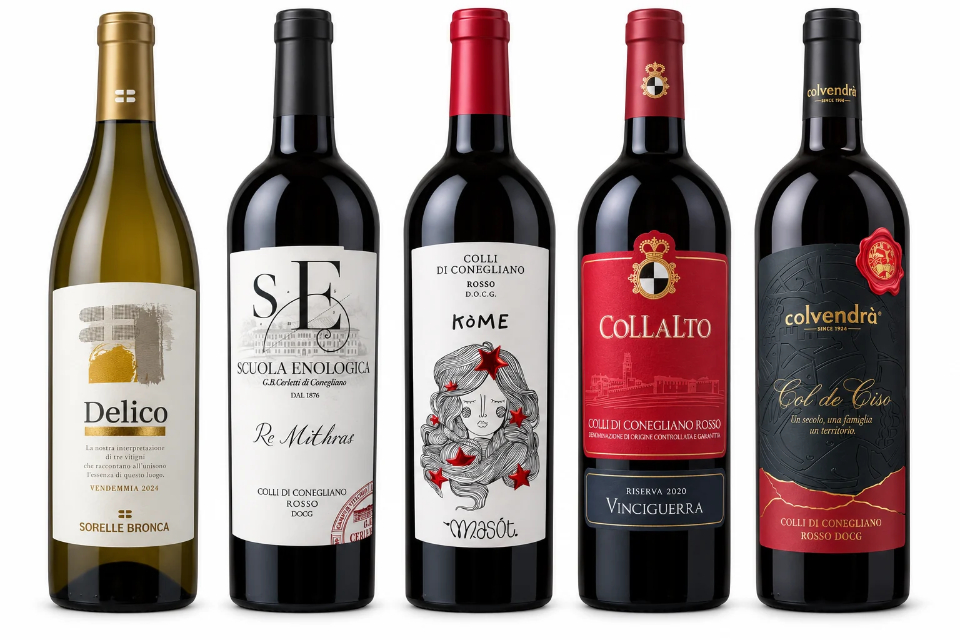
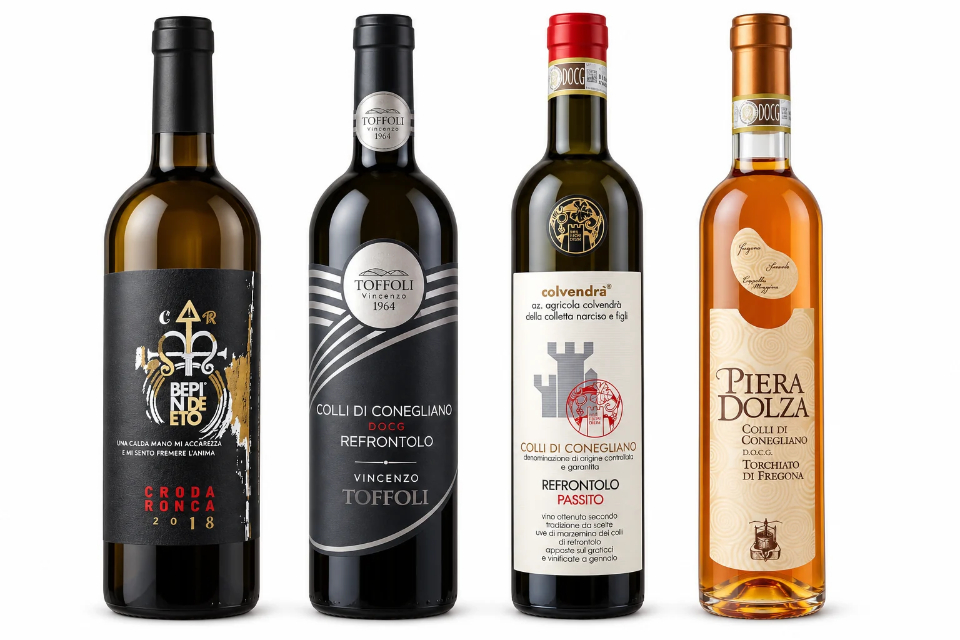
The selection of Colli di Conegliano DOCG wines prepared by the Consortium for Winemag, at the Conte Collalto headquarters in Susegana, included nine wines from eight producers. Certainly not a census of the entire production, but a unique opportunity for a concrete reading of the types present: one Bianco, five Rossi, one dry Refrontolo, one Refrontolo Passito, and one Torchiato di Fregona.
The Delico 2024 by Sorelle Bronca, Colli di Conegliano Bianco, earns 92/100. Manzoni Bianco, Pinot Bianco, and Riesling provide a broad profile with citrus notes, light toastiness, and hints of salted butter: drinkability and gastronomic appeal in excellent balance.
Among the reds, the Re Mithas 2023 from the Scuola Enologica di Conegliano is awarded 89/100: clean fruit, freshness, and measured tannin. Kome 2021 by Masot (89/100) follows the same line of lightness and drinkability, maintaining an agile, sapid sip.
COLLI DI CONEGLIANO DOCG: FRESH AND SAPID REDS, IDENTITY-DRIVEN WHITES, AND UNIQUE SWEET WINES
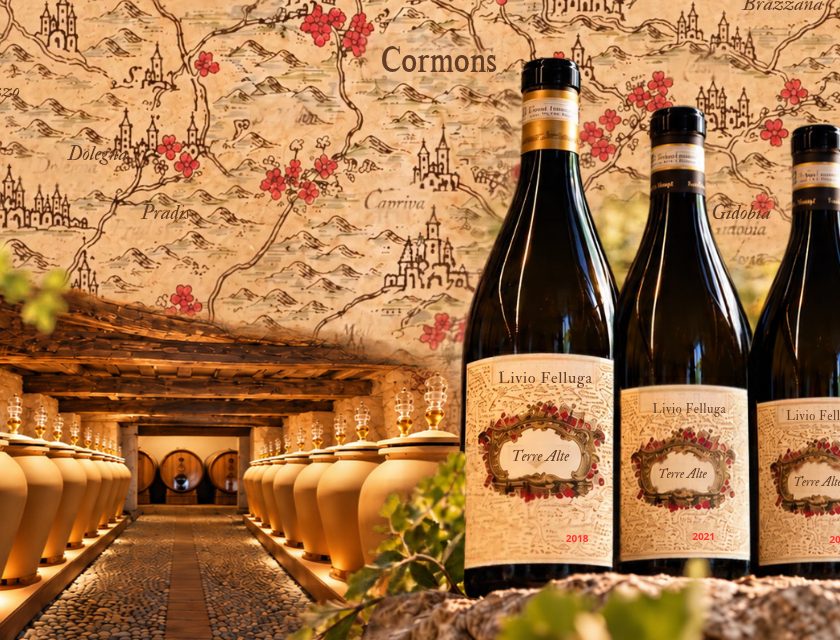
The Vinciguerra 2020 by Collalto, already featured in the Winemag Guide 2027, reaches 94/100 thanks to balance, drinkability, and gastronomic appeal. Col De Ciso 2018 by Colvendrà also sits at 94/100: freshness, purity of red fruit, and well-integrated wood stand out. The highest score among the reds goes to Croda Ronca 2018 by Bepin De Eto, 95/100: more concentrated than the others, but capable of combining flow and pleasure.
The DOCG’s variety expands with the Refrontolo 2022 by Toffoli, 93/100, from dried Marzemino grapes: ripe fruit, spices, and a sip that is never heavy. The Refrontolo Passito 2017 by Colvendrà, 92/100, weaves raspberry and currant with a freshness that supports the sweetness and accompanies a finish marked by wood.
Closing the tasting is the Colli di Conegliano DOCG Torchiato di Fregona Piera Dolza 2020 from Cantina Produttori, with 95/100. This is a white passito wine from Glera, Verdiso, and Boschera: in the glass, the sweet component finds support in freshness and sapidity.
THE CHALLENGE IS RECOGNIZABILITY
The nine samples span different styles and occasions, from gastronomic whites to age-worthy reds and passitos. The excellent quality-price ratio of the labels should be noted, all priced between 12 and 30 euros. The tasting confirms that Colli di Conegliano has the substance to stand out in the landscape of Italian wines, thanks to a structure supported by natural freshness and sapidity.
The Consortium’s bet is to bring out a still wine denomination alongside the global Prosecco brand, without being absorbed by the narrative of the world’s most famous Italian bubbles. The Rosso already offers a concrete path. Manzoni Bianco is an identity-driven lever to be built.
And the sweet wines constitute a useful completion of the range, with the added value of the uniqueness of Torchiato di Fregona. The future of Colli di Conegliano DOCG wines will depend on the ability to transform this direction into shared communication and a stable market presence. All the pieces are there. Now the puzzle must be built.