IN BRIEF
- Livio Felluga’s iconic wine label was born in 1956
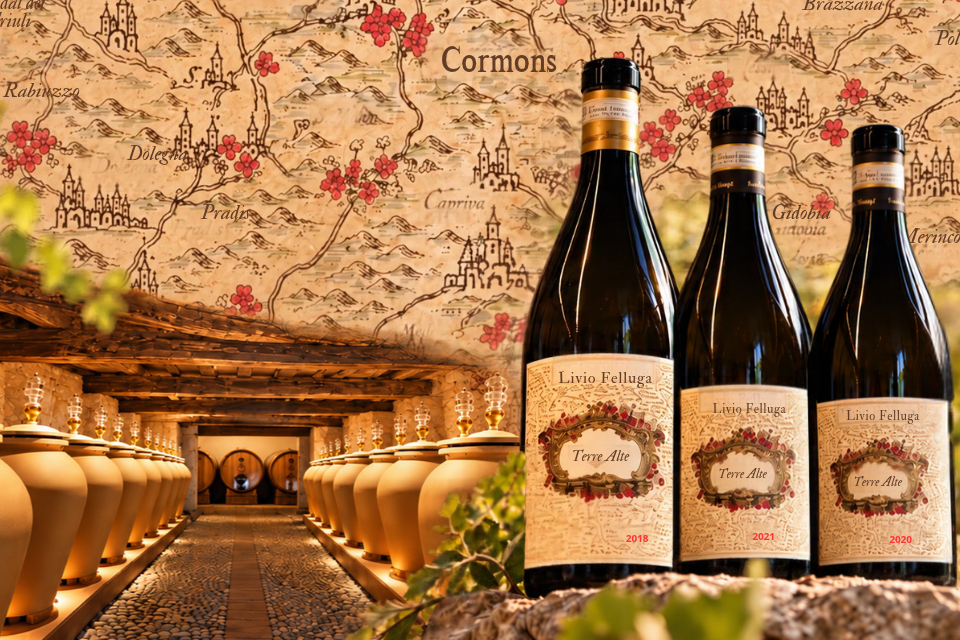
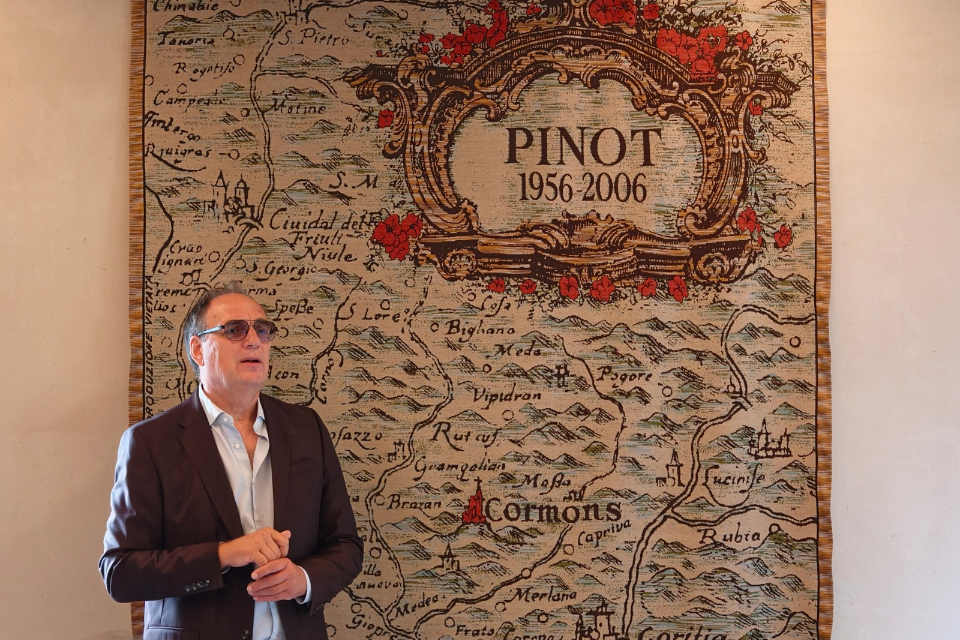
- Livio Felluga’s map invites exploration of the Friulian hills, highlighting the bond between wine and territory.
- Wine cannot be separated from place; the production is a tribute to the Friulian hills abandoned after the war.
- Terre Alte is born from the union of selected grapes and presents different vintages that offer complexity and freshness, maintaining the terroir’s balance.
- Seventy years later, the Carta Geografica continues to tell the story of a place, with the wine reflecting the different harvests and the passing of time.
A map is the promise of a destination. That of Livio Felluga, present for 70 years on wine labels that have become world icons of Italian winemaking, is an invitation to reach the Friulian hills, traced one after another with short, dark marks. Around the Abbazia di Rosazzo, the map becomes a landscape of ponca, vineyards, and memory. It was here that Felluga bought his first vineyards, back in the 1950s. In the glass, a vertical tasting of Terre Alte turns into liquid geography, from 1999 to 2021. But first, a step back.
A MAP BEFORE THE WINE
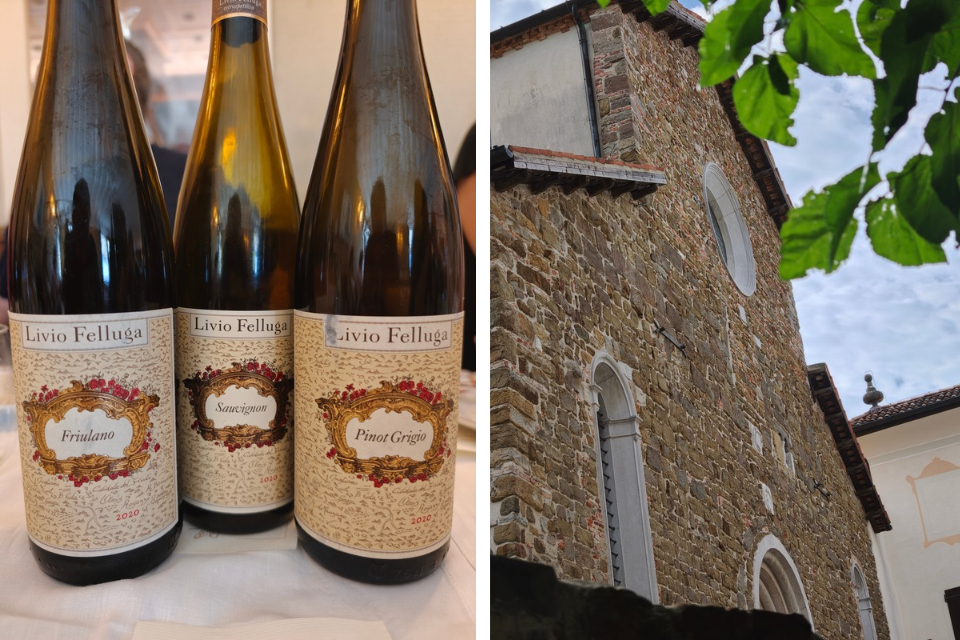
In 1956 Livio Felluga chose an antique representation of Friuli-Venezia Giulia for his labels, purchased at an antiques shop. It was no simple drawing, but a genuine Napoleonic-era map that brought the territory to the forefront. A Copernican revolution, at a time when wine was not yet told through its origin, but mainly through the name of the producer and the grape variety.
That choice anticipated an idea now familiar: wine can be the reflection of the place it comes from. For Felluga, it meant restoring value to the Friulian hills, many of which had been abandoned after the war. Not only that. The label also brought the vine back to the center of the landscape. In seventy years, the geography has changed. But the direction has stayed the same.
Today the estate cultivates 187 hectares of vineyard, within a 242-hectare property with over 320 parcels across Rosazzo, Colli Orientali del Friuli, and Collio. Each parcel carries its own exposures, altitudes, winds, and microclimates. To read them properly, one must accept the label’s invitation and visit those hills, where viticulture can require up to 500 hours of manual labor per hectare.
LIVIO FELLUGA AT ROSAZZO, BETWEEN PONCA AND MEMORY
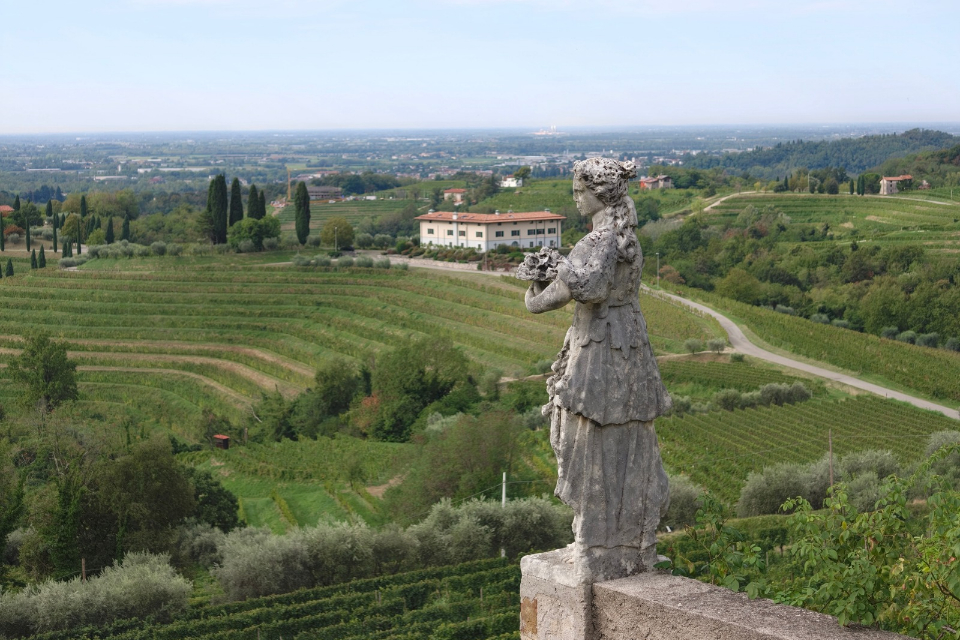
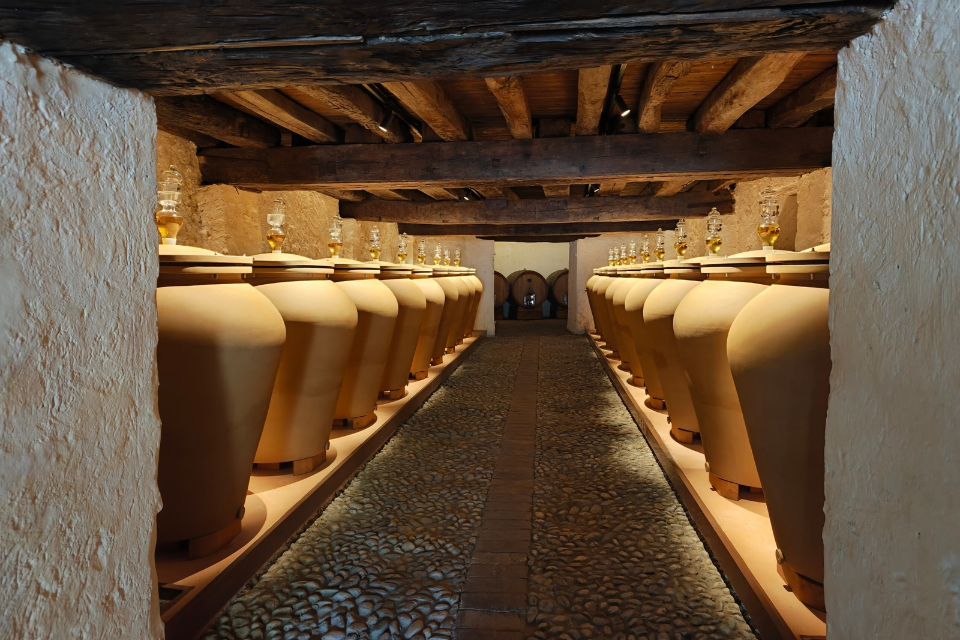
At Rosazzo, the map meets a history that predates the label by many centuries. The Abbazia di Rosazzo, whose origins date back to the 11th century, was one of the centers from which vine and olive cultivation spread, and from which the very story of Livio Felluga the entrepreneur began. The hills face the Adriatic and are shielded from cold northern winds. Temperature swings contribute to the aromatic complexity of the wines.
Beneath the vineyards lies ponca, an alternation of marl and sandstone formed roughly 55 million years ago. The soil drains water while retaining a reserve of it, allowing the roots to dig deeper. But Rosazzo cannot be summed up by geology alone. The slopes, the ronchi, and the rows are also the result of the work through which man has shaped and cared for the land.
At the top of one of the estate’s hills, the Vigne Museum translates that same relationship into architecture. Conceived by Yona Friedman with artist Jean-Baptiste Decavèle, it is an open structure of metal circles, threaded through by a hundred vine shoots planted in 2014. The vegetation and the changing seasons continually transform its appearance. Here too, time is not just a backdrop. It becomes part of the work. Which is part of the geography.
TERRE ALTE, SIX VINTAGES ON THE SAME COURSE
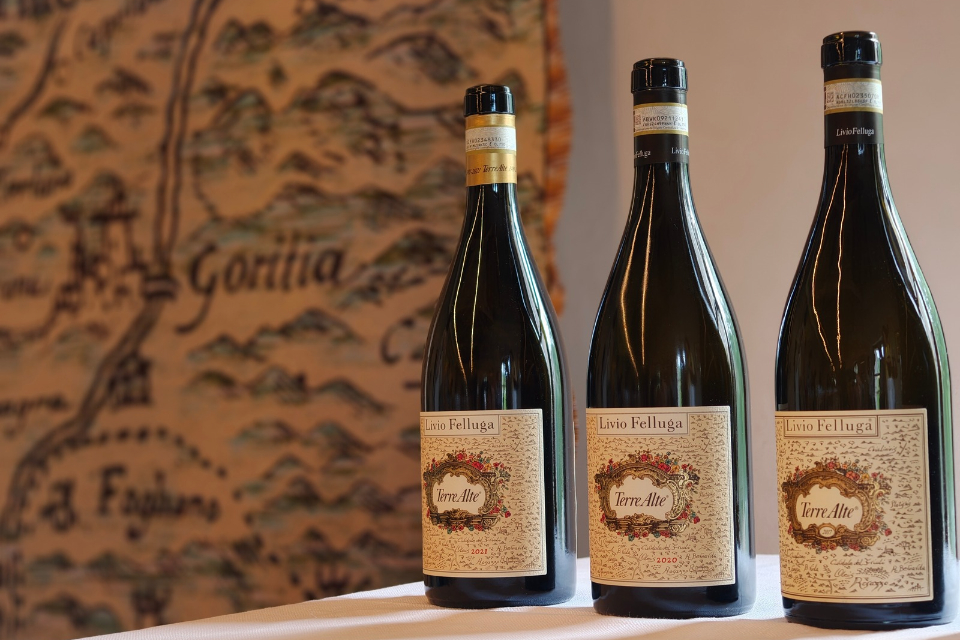
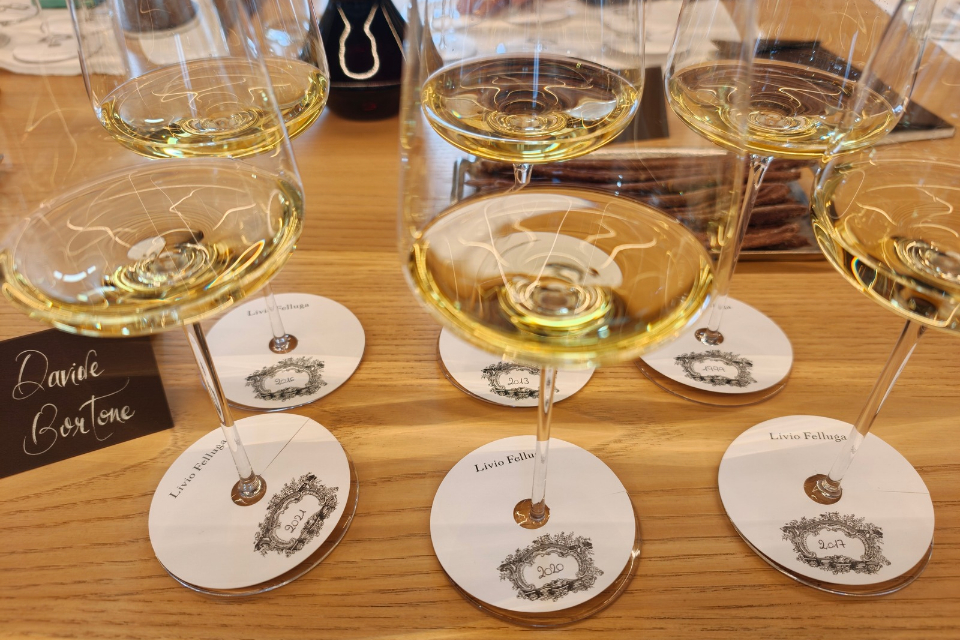
But it’s in the glass that the map becomes even simpler to decode. Even when time marks the rhythm of the seasons, as in the 1999-2021 vertical tasting of Terre Alte. A wine born in 1981 from the union of grapes sourced from the most prized parcels of Friulano, Pinot Bianco, and Sauvignon at Livio Felluga. It is a widespread «cru», built across multiple sites and conceived as a blend, in pursuit of complexity. The oak, introduced in the early 2000s, accompanies the wine without erasing its texture.
The 2021, celebrating the label’s fortieth anniversary, shows yellow and exotic fruit, herbs, and balsamic accents. The palate surprises with freshness and sapidity. The oak is already well integrated. It is a layered wine, yet still young. Complex, as Terre Alte should be: but already highly enjoyable.
The 2020 moves along a rounder, broader register, with candied and mentholated notes. The 2017 narrows its focus to citrus: mandarin and grapefruit, followed by a palate that is broad, mouthwatering, and precise, carried by its sapidity. The tension holds the different components together and invites the next sip.
THE MORE MATURE VINTAGES OF THE TERRE ALTE VERTICAL TASTING
In the 2016, the Sauvignon emerges more decisively, with ripe fruit, white pepper, and early hints of saffron. Its voice extends the wine without breaking the blend’s balance. The 2013, a difficult vintage, instead shows a more dominant Sauvignon. Freshness and sapidity remain lively nonetheless, sustaining an evolution that is still open.
The leap to 1999 does not take it off course. The fruit is still intact, with almost candied nuances, white pepper, and a hint of umami. The wine retains precision and purity: it is not merely a testament to longevity, but proof that time can add depth without erasing its origin.
Seventy years after its appearance, the Carta Geografica continues to point to a place. Terre Alte adds the dimension that a map cannot contain: the time needed for that place to tell its story. Harvest after harvest. In different forms. All great in their own way. Like the vision of the man who set that journey in motion. Bound for infinity.