IN BRIEF
- Champagne Day is celebrated tomorrow, October 23, 2026, bringing together enthusiasts from all over the world for a toast.
- The Bureau du Champagne Italia has chosen rice as the main pairing, showcasing the versatility of Champagne.
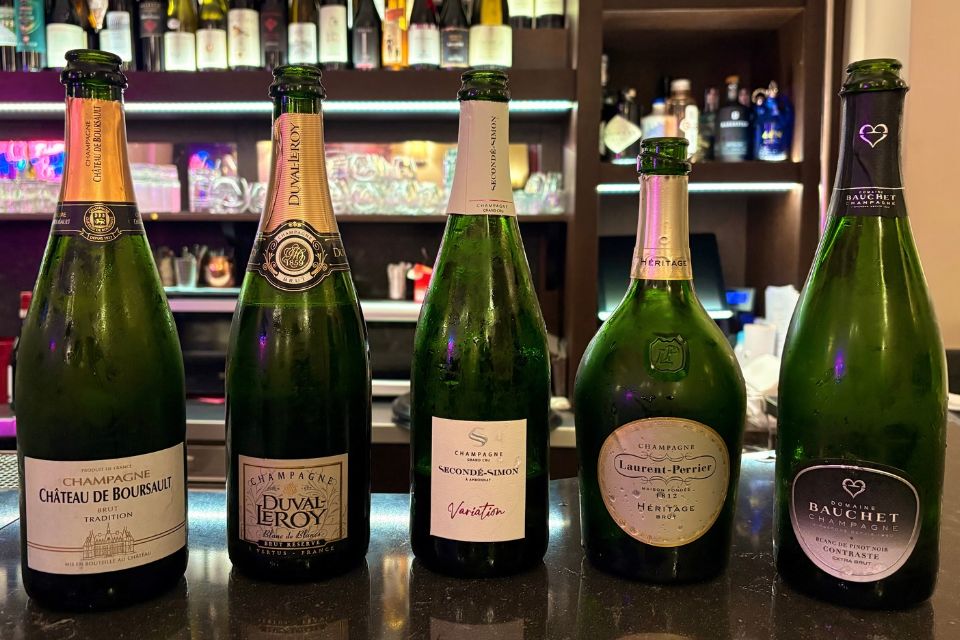
- Five proposed pairings: supplì with Champagne Château de Boursault, risotto with Champagne Duval-Leroy, riso al salto with Champagne Secondé-Simon, risotto alla milanese with Laurent-Perrier, and porcini mushroom risotto with Champagne Bauchet.
- Each pairing enhances the characteristics of the dish and the Champagne, proving that Champagne can be enjoyed even on everyday occasions.
- The only good reason to open a bottle of Champagne is simply wanting to.
We could use a Champagne Day every day, or at least every time one feels like uncorking a bottle. Because, while it is true that Champagne has an aura of royalty built over centuries, it is equally true that this same royalty turns into haughtiness due to certain hard-to-break prejudices. It would be enough to bring it to the table more often to realize how versatile Champagne can be without losing, for this reason, its elegance.
The Comité Champagne has been working on this message for some time, celebrating Champagne Day 2026 on October 23 (an anniversary born in 2009 and set for every fourth Friday of October) to ideally unite enthusiasts from all over the world around a toast.
After the cheeses of previous editions and the cured meats featured in 2025, this year the Bureau du Champagne in Italy has chosen rice, continuing the “liberation” of Champagne from the obligation of grand occasions. These naturally remain its chosen ground, but they do not exhaust the possibilities of a wine capable of accompanying an entire dinner or lunch. From frying to mantecatura, from shellfish to mushrooms, five pairings put as many labels to the test.
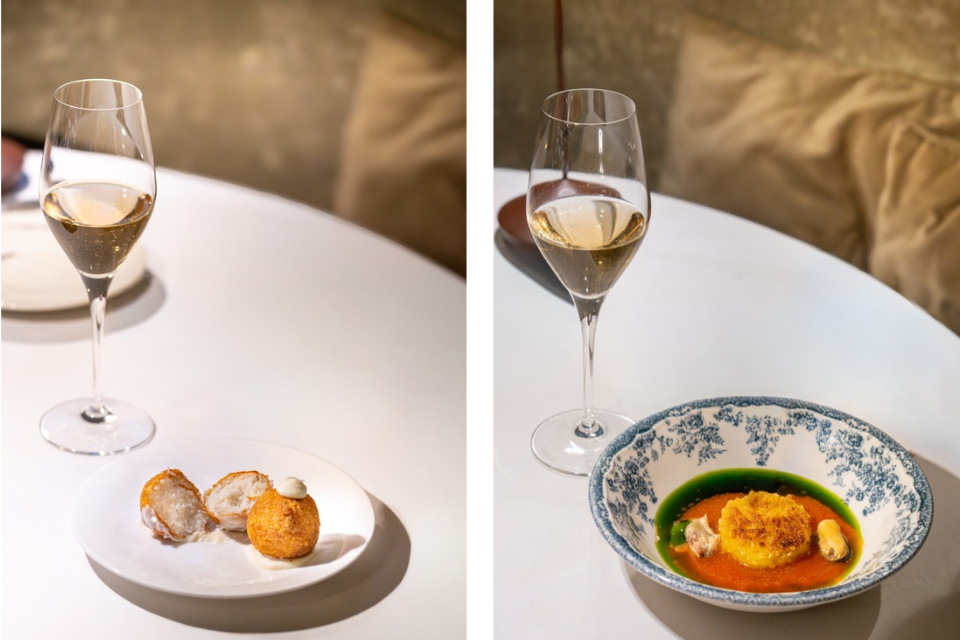
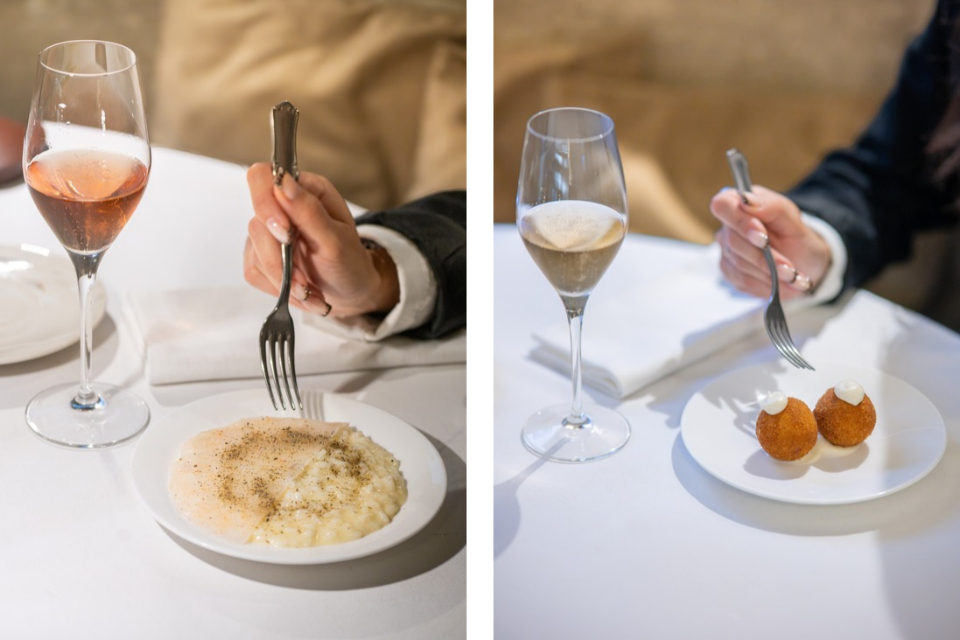
The supplì is a small concentrate of contrasts: the crunchy breading gives way to soft rice, the pecorino leaves a sapid and persistent sensation, and the pepper adds a pungent note that remains long on the palate. Accompanying it is Champagne Château de Boursault Tradition Brut, from the left bank of the Marne, a blend of Pinot Meunier (40%), Pinot Noir (30%), and Chardonnay (30%).
On the nose, it is still a very primary Champagne, with pear and a curious suggestion of shell, a marine hint. In the mouth, it strikes more for its freshness than for actual acidity, a characteristic that allows it to accompany the frying without stiffening the confrontation with the pecorino. The bubbles lighten the fatty component of the supplì, the fruit softens the sharpness of the pepper… and the palate is ready for the next bite.
Duval-Leroy Blanc de Blancs Brut Réserve and lemon risotto, caper powder, and pink shrimp
The risotto alternates the creaminess of the mantecatura with the liveliness of the lemon, the sapidity of the capers, and the sweetness of the pink shrimp. In the glass, Champagne Duval-Leroy Blanc de Blancs Brut Réserve, 100% Chardonnay from organic viticulture, has a nose of butter with a hint of acid and a chalky scent.
The butter also returns in the mouth, but without the wine being particularly acidic: the dominant sensation is rather that of a creamy and enveloping texture. The pairing thus works on structural affinities, with the softness of the Champagne accompanying that of the rice, interrupted only by the decisive entry of the caper powder.
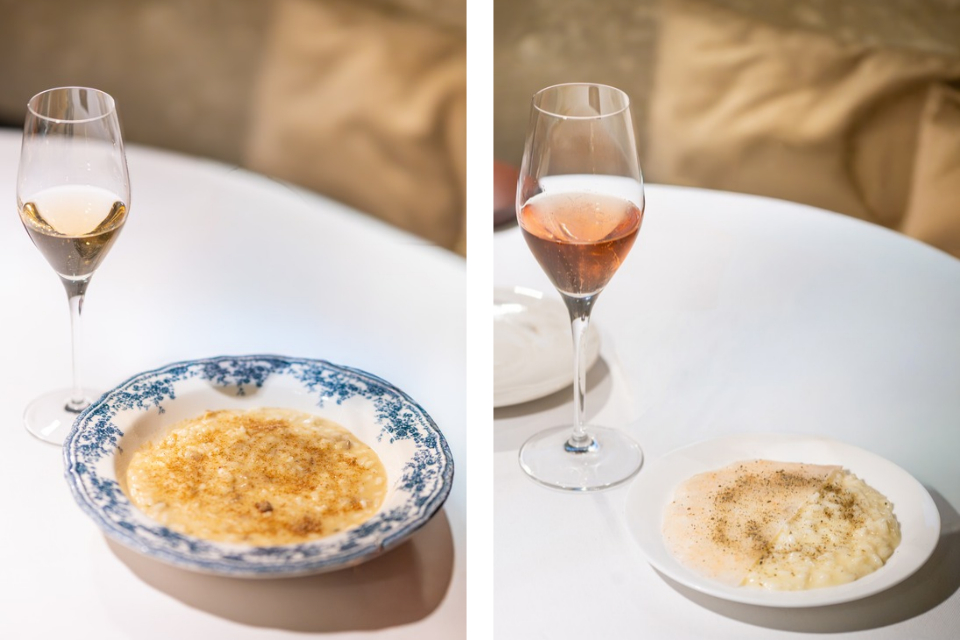
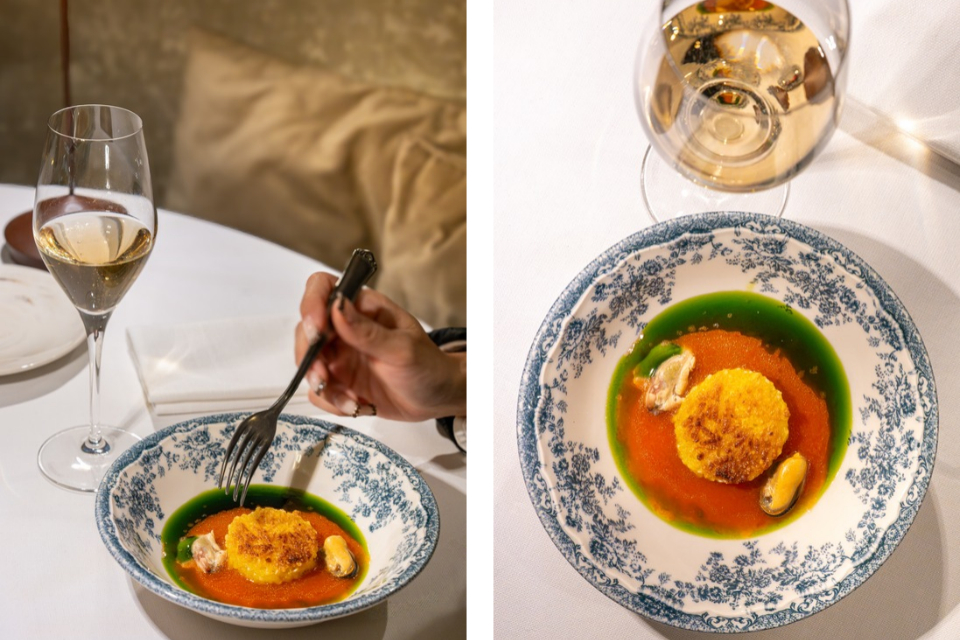
It is perhaps the most curious pairing, even from a chromatic point of view. Champagne Secondé-Simon Variation Rosé Brut, obtained from 60% Pinot Noir and 40% Chardonnay, with 10% of the Pinot Noir component vinified as red wine, has a pink hue reminiscent of flamingo plumage—that pink which in nature derives from the pigments of the small crustaceans they feed on. This is why this Champagne, in tasting, also holds up well to the previous dish in the list.
In the pairing proposed here, it instead meets the riso al salto, with its golden crust, the sapidity of the mussels, and the green note of the parsley. The fruity component of the Rosé supports the iodized taste of the mollusks, although it is then the structure that holds up the toastiness of the rice.
Laurent-Perrier Héritage Brut and saffron risotto
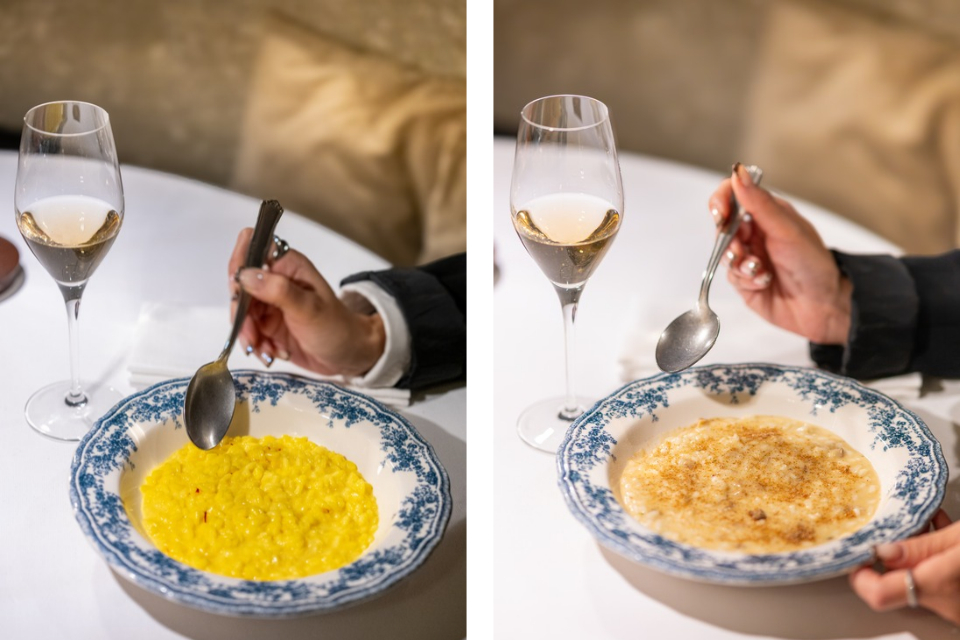
Risotto alla milanese is not an easy dish for wine. The mantecatura envelops the palate, the saffron is very aromatic, and the persistence of the bite requires a glass that is slow to disappear. Laurent-Perrier Héritage Brut, a blend of Chardonnay (55%) and Pinot Noir (45%), is born entirely from reserve wines, a heritage the Maison has built through its own practices of elaboration, conservation, and management of different vintages.
The bubbles are very fine and accompanied by aromas of lemon, toasted bread, and toasted almonds. The citrus takes the lead, the evolved notes follow the oiliness (in a very good sense, we are talking about marrow here) and the aromatic depth of the saffron.
Bauchet Contraste Blanc de Pinot Noir Extra Brut and porcini mushroom risotto
For the final pairing, we venture among the dry leaves of an autumnal forest. The porcini risotto brings with it scents of damp earth, leaves, roots, and undergrowth—an almost wild component of red fruits. Champagne Bauchet Contraste Blanc de Pinot Noir Extra Brut, obtained exclusively from Pinot Noir, has exactly the same, identical character, with suggestions of undergrowth and roots.
The most successful aspect of this pairing is the aromatic affinity: the red fruits dialogue with the wilder soul of the Pinot Noir, the porcini with the deep earthy notes. The dryness of the Extra Brut leaves room for the flavors of the dish, without superimposing sweetness on their intensity. A picture to hang in a country house.
Five pairings for a single moral: the only good reason to open a bottle of Champagne is wanting to.