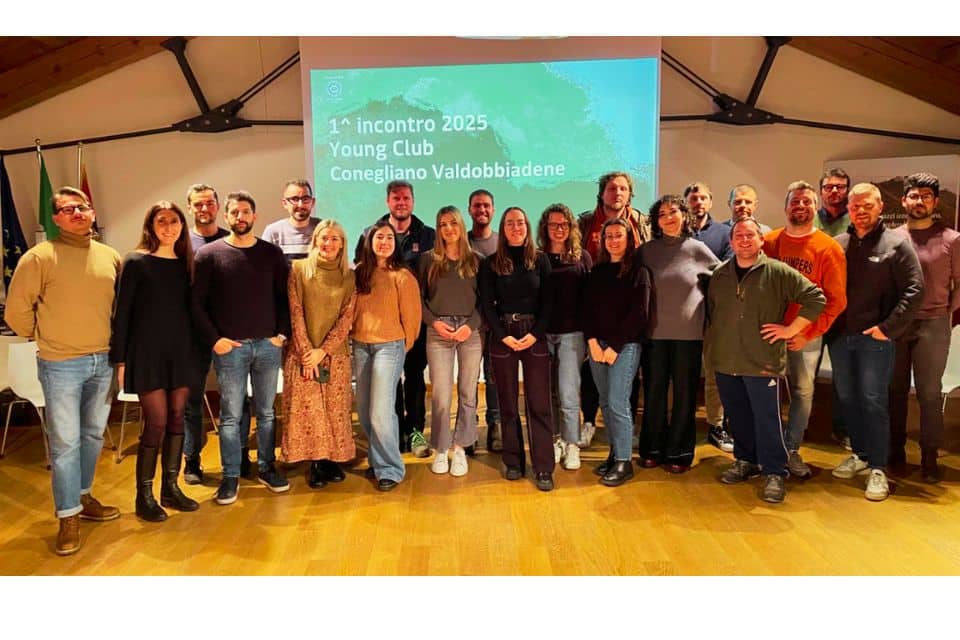
The project, created to involve the denomination’s Under-35s, has led to new ideas and international collaborations. There is growing focus on training, sharing experiences, and dialogue with other European organizations. Meanwhile, Consortium figures confirm production is stable but lower than in the past.
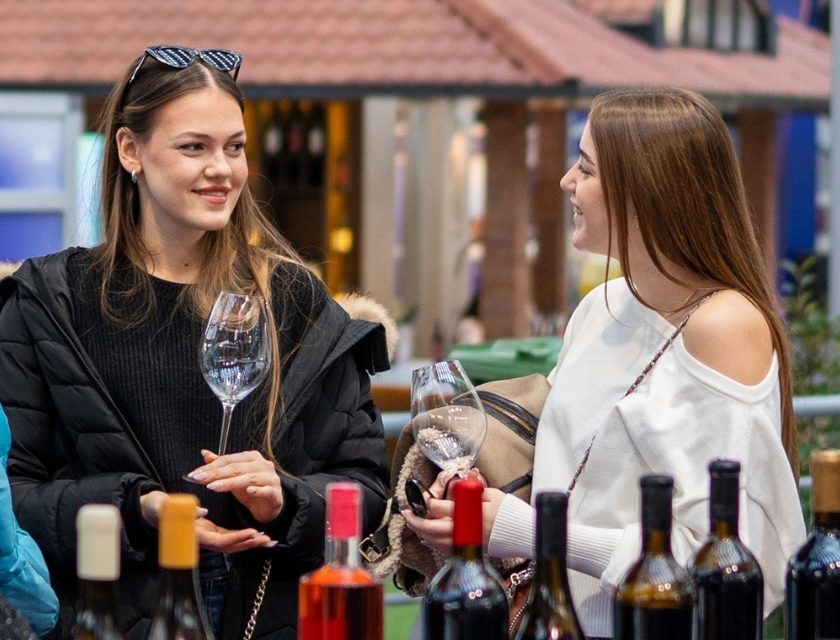
“Young people don’t appreciate and don’t drink wine” is one of the most frequent complaints in the industry. To address this, the Consorzio di Tutela del Prosecco di Conegliano Valdobbiadene launched the Young Club Conegliano Valdobbiadene. Within two years, the project has engaged young people between 25 and 35 years old working in member companies.
“Training is one of our strengths: as young people, we need tools and opportunities for discussion to grow stronger together,” stated Martina Dal Grande, supplier and president of the young farmers of Confagricoltura. “The Young Club also offers the chance to speed up problem-solving. We learn from existing positive experiences.”
The exchange is not limited to the local area. In May, members of the Young Club Conegliano Valdobbiadene met the Jeunes Vignerons de Champagne in France to discuss techniques and market strategies. “On that occasion, we discovered that many of them use Italian technology,” highlighted Filippo Trevisan, operations manager at Duca di Dolle, “which is a sort of indirect compliment for us.”
THE NUMBERS OF THE CONEGLIANO VALDOBBIADENE PROSECCO SUPERIORE CONSORTIUM
With 63 years of history, the Consorzio di Tutela del Prosecco di Conegliano Valdobbiadene remains one of the most solid in the Italian landscape. The territory has 8,712 hectares of vineyards, of which 107 are reserved for Valdobbiadene Superiore Cartizze Docg, compared to the 30,000 hectares of Prosecco Doc.
The difference between the two denominations is not just about surface area: 90.5 million bottles of Conegliano Valdobbiadene Prosecco Superiore Docg versus 600 million bottles of Prosecco Doc. Vines are between 150 and 550 meters for the Docg, and between 2 and 150 meters for the Doc. Manual harvesting for the Docg, mechanical for the Doc.
In 2024, production stood at 90 million bottles, a slight decrease compared to 2023 and a more marked decline compared to 2021 and 2022, when over 100 million units per vintage were produced. “The recognition of the Rive del Conegliano Valdobbiadene Prosecco Docg has sparked further interest,” commented the Consortium director, Diego Tomasi. “There are 43 areas differentiated by microclimate and partly by soil, each capable of offering a distinct expression of the wine.”
THE HISTORIC WINERIES
Conte Collalto
The estate, based at San Salvatore Castle, works exclusively with estate-grown grapes for approximately 850,000 bottles per year. It is the only one to produce the entire range of Incrocio Manzoni, developed right in these vineyards. Labels include: Isabella Brut Rive Docg, Violette Rosé Incrocio Manzoni Moscato Extra Dry, San Salvatore Brut Millesimato Docg, and Ottaviano Brut Nature “Sui Lieviti”.
La Farra
Managed by siblings Adamaria, Innocente, and Guido Nardi, the estate spans 20 hectares in Farra di Soligo. Notable wines include: Rive di Farra di Soligo Millesimato Extra Brut, from the Rive dei Nardi vineyard, and Rive di Farra di Soligo Millesimato Extra Dry. This winery also supports the Young Club Conegliano Valdobbiadene projects for young winegrowers.
Gregoletto
Founded by Luigi Gregoletto in Premaor di Miane, the winery maintains a 17th-century structure with original porticos and well. In addition to Conegliano Valdobbiadene Prosecco Superiore Docg, it produces a particular Prosecco Docg vinified as a white wine, traditionally served in local bars. The range is completed by the Manzoni Bianco dei Colli Trevigiani Igt.
The Young Club Conegliano Valdobbiadene is changing the future of Prosecco Superiore. https://www.prosecco.it/en/young-club-applications-open-for-the-new-season/.