IN BREVE
- Native grape varieties of Mallorca include Manto Negro, Callet, Fogoneu, Gorgollassa, and Prensal Blanc.
- Mallorca has approximately 2,000 hectares of vineyards. The designations of origin are DO Binissalem and DO Pla i Llevant, in addition to IGP Mallorca.
- IGP Mallorca represents 69.1% of the wine marketed on the island, highlighting the importance of local varieties in an international context.
- IGP Mallorca therefore has a greater stylistic breadth compared to DO Pla i Llevant and DO Binissalem.
- Restaurants like Tomeu Caldentey Cuiner and Ca’n Tauleta offer unique culinary experiences, from innovative cuisine to traditional paella.
Manto Negro, Callet, Fogoneu, and Gorgollassa for reds. Prensal Blanc, also known as Moll, Giró Ros, and Malvasia for whites. These are the varieties that distinguish the island of Mallorca from the rest of the Mediterranean wine world, alongside international grapes such as Chardonnay, Viognier, Syrah, Cabernet Sauvignon, Merlot, and Pinot Noir.
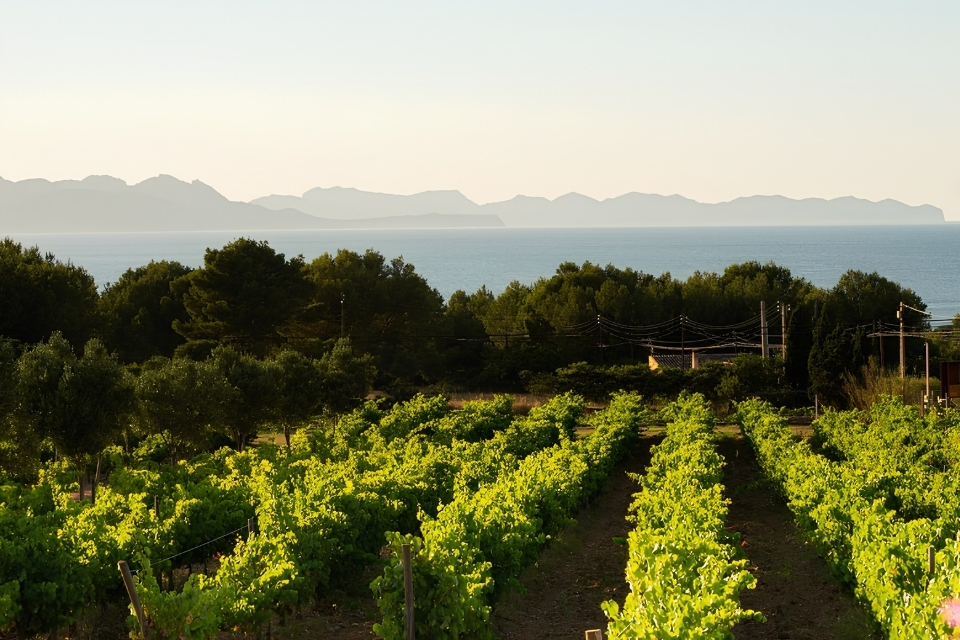
The vineyards sit predominantly on limestone soils, often clayey and rich in carbonates. The Serra de Tramuntana mountain range protects the inland areas. Exposure, altitude, and proximity to the sea define significant differences between the Raiguer, the central plain, and the Llevant. The IGP Mallorca regulations indicate an average annual temperature of 17 degrees, about 427 millimeters of rain, and 2,800 hours of sunshine. These conditions are similar to some areas of Sardinia.
MALLORCA: TWO DOS AND ONE IGP IN 2,000 HECTARES
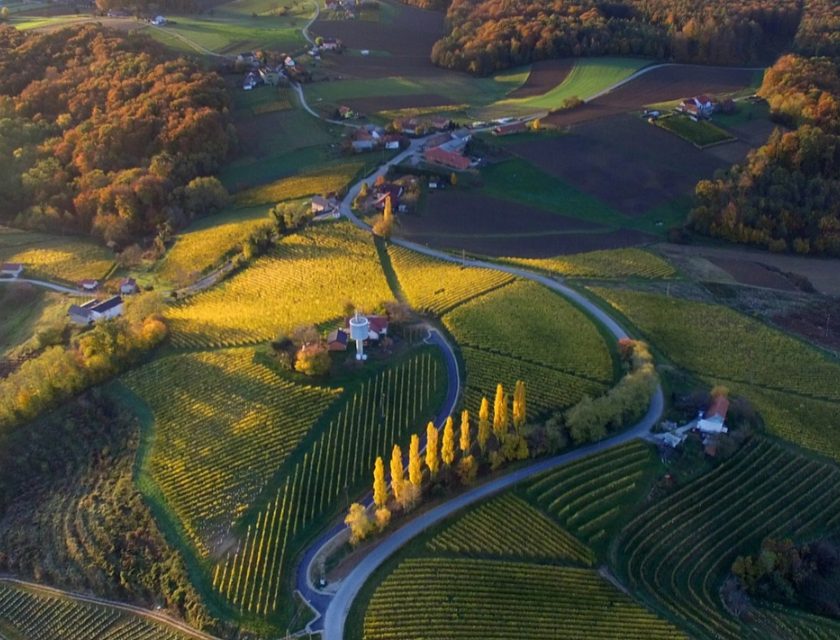
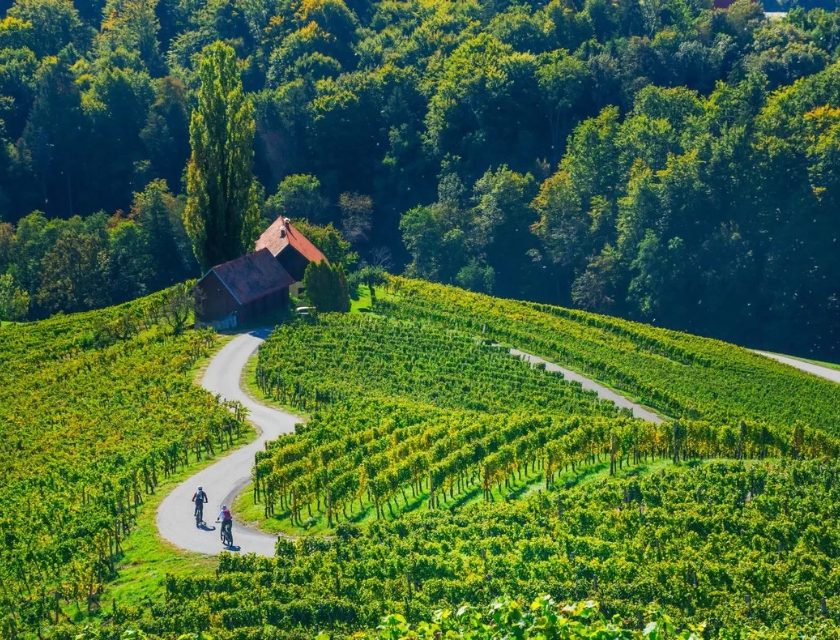
Mallorca is the largest of the Spanish Balearic archipelago: crossing it by car from one end to the other takes about an hour and a half. Viticulture revolves around approximately 2,000 hectares of vineyards, a scale comparable to Brunello di Montalcino Docg. Yet, the Mallorcan wine system includes two designations of origin: DO Binissalem and DO Pla i Llevant, both recognized at the European level as PDO.
To these is added IGP Mallorca, a protected geographical indication known through the traditional mention Vi de la Terra Mallorca. It is the latter that covers the entire island and authorizes the widest range of varieties. However, there is no sharp divide between local and international grapes: varieties like Cabernet Sauvignon, Merlot, Syrah, and Chardonnay are also permitted in the two DOs.
BETWEEN LOCAL AND INTERNATIONAL GRAPE VARIETIES
The difference mainly concerns the composition constraints set by DO Binissalem, which is limited to the municipalities of Binissalem, Consell, Santa Maria del Camí, Sencelles, and Santa Eugènia. The regulations assign a central role to identity-defining varieties: in reds, Manto Negro must constitute at least 30% of the blend, while in whites, at least 50% must come from Moll-Prensal Blanc or Muscat varieties.
The update that came into force in February 2026 also introduced the optional mention «Vinyet», reserved for wines produced with at least 85% local varieties or Muscat (Moscatel de Alejandría and Moscatel de grano menudo), obtained from vineyards at least twenty years old, harvested by hand, and subject to stricter yields and sulfur limits.
Pla i Llevant, on the other hand, extends over 19 municipalities in the center and east of the island. Today it counts over 500 hectares of vineyards, 85 winegrowers, and 12 wineries. The varietal landscape is complex: Callet, Manto Negro, Fogoneu, Gorgollassa, Prensal Blanc – locally Moll – and Giró Ros coexist with Syrah, Cabernet Sauvignon, Merlot, Pinot Noir, Chardonnay, and Viognier. The regulations also include Macabeo, Parellada, Riesling, Monastrell, and Tempranillo.
IGP MALLORCA PRODUCES MORE THAN THE TWO DOS COMBINED
The most recent figures confirm the weight of the IGP. In 2025, Vi de la Terra Mallorca marketed 30,293 hectoliters, compared to 8,383 hectoliters for DO Pla i Llevant and 5,133 for DO Binissalem. The two designations of origin combined reached 13,516 hectoliters: less than half the volume achieved by the IGP.
Considering only the three Mallorcan designations, Vi de la Terra Mallorca represented 69.1% of the wine marketed and is set to confirm these figures for the 2026 harvest.
The picture is consistent with the general production trend in the Balearics: in 2025, wines with a designation of origin lost 4.2%, while Vins de la Terra grew by 7%. Total production of quality wines in the archipelago reached 55,126 hectoliters, 3.5% more than in 2024.
TOWARDS A FUTURE DO MALLORCA?
A similar proportion emerged from the exclusive tasting organized for Winemag at the DO Pla i Llevant headquarters. Of the 139 wines presented, 91 belong to IGP Mallorca, 36 to DO Pla i Llevant, and 12 to DO Binissalem. The IGP thus represented 65.5% of the samples.
These numbers suggest the possibility—perhaps better called the necessity—of a future revision of Mallorca’s local viticultural system, under the unique and identity-driven umbrella of a potential DO Mallorca. A move towards simplification and clarity for consumers that the market would certainly welcome, especially regarding exports.
The results of the tasting, distributed among the two denominations and the geographical indication, are interesting. Pla i Llevant obtained the highest average and the most regular distribution. Binissalem recorded the two absolute peaks. IGP Mallorca showed the greatest stylistic breadth, along with a higher dispersion of scores.
IGP MALLORCA: FRUIT, SAPIDITY, AND BREADTH
The 90 IGP wines evaluated obtained an average of 88.64/100. There are 26 labels, equal to 28.9%, with at least 90 points. None exceeded 92. All four wines with 92 points are whites. Blanc de Mantonegro 2025 by 7103 Petit Celler combines citrus, Mediterranean scrub, fruit, and sapidity, without any bitter finish.
The Sauvignon Blanc 2025 by Macià Batle stands out for fruit maturity, volume, and roundness. Atrevido 2023 by Oloron, a pure Chardonnay, combines minerality, salt, and a precise use of wood. Gran Selección Chardonnay Premsal Blanc by Macià Batle instead focuses on yellow and exotic fruit, freshness, and a citrus finish.
The prevalence of whites at the top does not define the entire IGP profile. Tianna Organic Rosé 2025 by Tianna Negre, 91 points, is a sapid, spicy, and gastronomic rosé. Terra Manto by Karretania, also at 91, interprets Manto Negro in a light and contemporary key, with fruit, pepper, and Mediterranean herbs. The same score went to Margalida Llompart by Macià Batle, Bocchoris Blanc 2025 by Tianna Negre, and Camins de Son Antem Negre 2025 from the winery of the same name, Son Antem.
Fruit, sapidity, freshness, and good drinkability are the distinctive traits shared by most wines of IGP Mallorca – Vi de La Terra Mallorca. Manto Negro dominates the scene in the Winemag tasting, ahead of Syrah, Merlot, and Cabernet Sauvignon. This is a sign of a rather heterogeneous geographical indication, in which native varieties represent the main element of recognizability, while coexisting with an important international component.
PLA I LLEVANT: THE MOST CONSISTENT DENOMINATION
Pla i Llevant obtained the highest average of the tasting: 89.78/100. None of the 36 wines fell below 87/100. There are 20 labels, 55.6%, evaluated at least 90 points. Three reached 93. Ses Hereves 2022 by Vins Toni Gelabert, a blend of Cabernet Sauvignon, Merlot, and Syrah, associates a tannic texture with a mineral and sapid vein. The result is a drink with character, elegantly rustic.
Torre des Canonge Negre 2021, from the same winery, works instead on aromatic herbs and purity of fruit, enhancing the contribution of Pinot Noir in the blend. A hat-trick for Vins Toni Gelabert—a Mallorca winery not to be missed—thanks to the Chardonnay 2025 which completes the trio of 93-point wines with citrus, flowers, and a well-defined minerality.
Giró Ros emerges in Torre des Canonge Blanc 2025, 92 points: a wine with a singular profile, with measured wood and a slight tannic grip. Blanc Selecció 2023, a blend of Macabeu and Viognier, reaches the same score thanks to floral notes, exotic fruit, minerality, and depth.
A balanced fruity component, drinkability, aromaticity, and sapidity constitute the other main pillars of the samples tasted. In the whites, citrus drive, floral components, and minerality prevail. The reds show more structure, spice, balsamicity, and Mediterranean herbs, with tannins and alcohol often well integrated. When the fruit becomes riper and the sensation of heat increases, the scores tend to drop towards the 87-89 range.
BINISSALEM: FEWER WINES, HIGHER PEAKS
Binissalem is represented by only 12 samples in the Winemag tasting of Mallorca wines. A small base, which makes statistical and stylistic comparison less stable, but reflects the small size of the denomination. The average is nonetheless 89.17/100. Four wines reach at least 90 points and two are clearly above all other tastings of the day.
Raf 110 2022 by Vins Nadal, pure Manto Negro, scores 96 points. The profile is powdery, slightly wild, full of character; tannins are present but polite, with a strong gastronomic vocation. Supernova Negre 2025 by Can Verdura Viticultors reaches 95 points. Pepper and black spice dominate an agile red, stylistically placed between Gamay and Pinot Noir, with echoes of the aromatic lightness of Verduno Pelaverga.
Negre 110 2025 by Vins Nadal, with 90 points, confirms the character of Manto Negro: minerality, subtle tannins, and potential for evolution. Among the whites, Pedra Blanc Biologico 2025 by Bodegas José L. Ferrer, from Moll-Prensal Blanc and Giró Ros varieties, reaches 90 thanks to citrus, sapidity, and a mineral finish.
Seven of the 12 wines contain Manto Negro. Integrated tannin is the most recurring descriptor, followed by citrus and minerality. The whites are less consistent: alongside the precision of Pedra Blanc and the citrus softness of Jaume de Puntiró Blanc 2025 by Celler Jaume de Puntiró, bitter finishes and some inaccuracies also emerge.
THREE DESIGNATIONS, THREE RESULTS, ONE ISLAND
The tasting provides three distinct snapshots. IGP Mallorca dominates in terms of hectares, production, and variety of interpretations. Pla i Llevant presents the most consistent picture, with the highest average and over half of the wines above 90 points. Binissalem, despite the smallest sample, claims the two best absolute results.
The common point is the growing weight of local grapes. Manto Negro, Giró Ros, Callet, Prensal Blanc, and Gorgollassa are no longer just a territorial reference included in blends. In the most convincing wines, they become the element that separates Mallorca from any other Mediterranean or international region.
But what is perhaps even more surprising are the expressions of international varieties, which in Mallorca shed some of their most common traits to make room for the voice of the island’s terroir. Whites, reds, and rosés perform very well in these parts, dressed in typical Mallorcan Mediterranean character.
Along with a simplification of the three designations under a single “administrative umbrella,” the key to the future success of the Balearic island is here: and it rhymes, once again, with “authenticity.”
WHERE TO EAT IN MALLORCA: THE RESTAURANT NOT TO BE MISSED IS TOMEU CALDENTEY CULINER
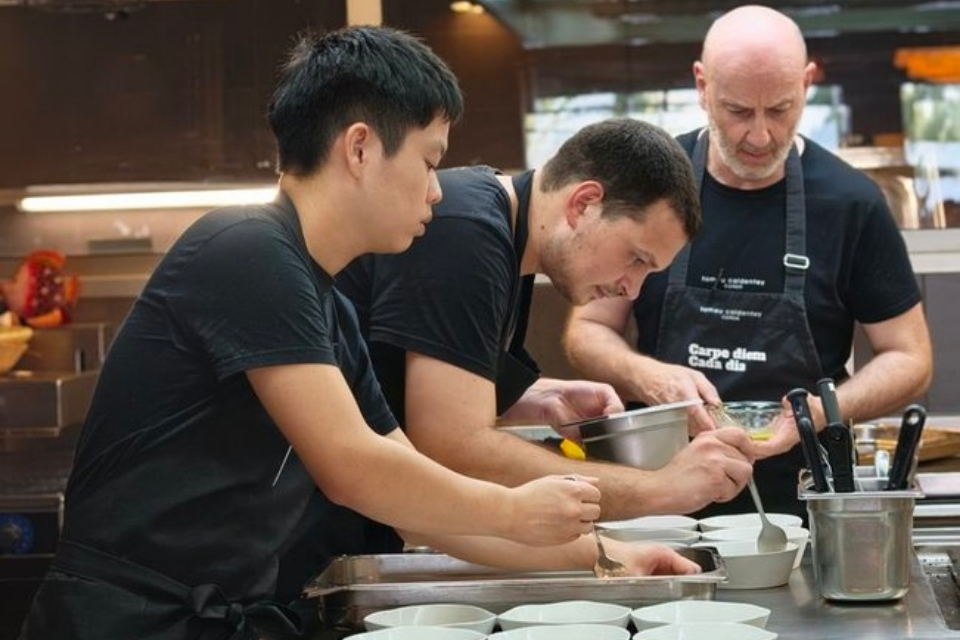
Tomeu Caldentey Culiner seems designed specifically to synthesize the soul of the island’s wines. The journey from the “capital” Palma de Mallorca to reach the best restaurant in Mallorca takes exactly one hour (70 kilometers). And it is a mortal sin not to book a seat at least once in the temple of chef Tomeu Caldentey. Especially if, for your stay on the Balearic island, you have chosen the eastern area, namely the Llevant.
The restaurant is located exactly in Sa Coma, a popular Mallorcan seaside destination not far from beaches with crystal clear water such as Cala Agulla and Cala Mesquida (Capdepera), Cala Varquez (Manacor), and Cala Marçal (near Felanitx). Caldentey’s career path helps to understand the character of the place.
In 2004, at the helm of Es Molí d’en Bou, he was the first Mallorcan chef to win a Michelin star, a recognition confirmed for 15 consecutive editions. In 2018, he voluntarily gave it up to create Tomeu Caldentey Cuiner. A simpler and more accessible format, without abandoning technique, seasonal products, and Mallorcan roots. His is an “intuitive cuisine,” open to international influences, especially Japanese and Korean, but firmly anchored in the island’s Mediterranean pantry.
The gastronomic offering allows you to choose between different formulas. From BARtomeu, the most informal path at 25 euros, to the Caldentey, Soler, and Tomeu tasting menus, which include five, eight, and ten courses, respectively at 45, 55, and 75 euros. The courses are not announced in advance and change according to the season and market availability.
PAELLA IN MALLORCA’S LLEVANT? AT CA’N TAULETA

If Tomeu Caldentey Cuiner represents the most ambitious gastronomic table on the east coast of Mallorca, Ca’n Tauleta is the place for paella in the Llevant. Nothing to do with Restaurante Vista Mar in Sant Elm, the most famous (and very valid) destination for lovers of the traditional Spanish dish in Mallorca, in the far west of the island.
Ca’n Tauleta is located in the center of Porto Cristo, at Carrer de la Mar 11, a few steps from the port. The setting is (very) simple and (completely) informal. You come here in shorts, although no one would look twice even at a swimsuit. You come here for the rice or, rather, for the arroz. The arroces, rice-based dishes, are served at the table or prepared for takeaway.
The absolute protagonist is in fact the fish and seafood paella, flanked by the mixed version, arroz negro, and fideuà. Generous preparations, with clean flavors and without unnecessary complications, which have built the restaurant’s reputation among residents and tourists.
Average prices are approximately between 20 and 30 euros per person and, especially in high season, it is advisable to book. For the most refined palates—and heaviest wallets—not to be missed is also the lobster paella at 70 euros per person. Perhaps bringing your own wine from home: the host probably won’t say no, if notified in time.