IN BRIEF
- Spanish winery ATTIS has expanded its Meaño headquarters for its 25th anniversary, enhancing spaces for winemaking and enotourism.
- The expansion includes new production, aging, tasting, and dining rooms, improving precision in wine processing.
- Albariño and historic Galician varieties remain at the heart of production, with a focus on minimal intervention practices and experimentation.
- The winery’s architecture integrates with the territory, using local granite and offering panoramic views of the vineyards and the Atlantic.
- The project includes a social area to accommodate up to 150 people, telling the story of the wines and the land.
Spanish winery ATTIS has completed the expansion of its headquarters in Meaño, Galicia, on the occasion of the company’s 25th anniversary. The project opens a new phase for the Fariña family and aims to enhance spaces dedicated to winemaking and aging, support growth in national and international markets, and develop the enotourism offering.
The intervention was born as an evolution of the project started by the family. More space and new equipment will allow them to continue work based on knowledge of individual vineyards, the recovery of historic varieties, and a minimal intervention approach in the cellar. For ATTIS, growth does not mean moving away from its origins, but increasing the possibilities of interpreting the territory.
NEW SPACES FOR WINEMAKING AND AGING
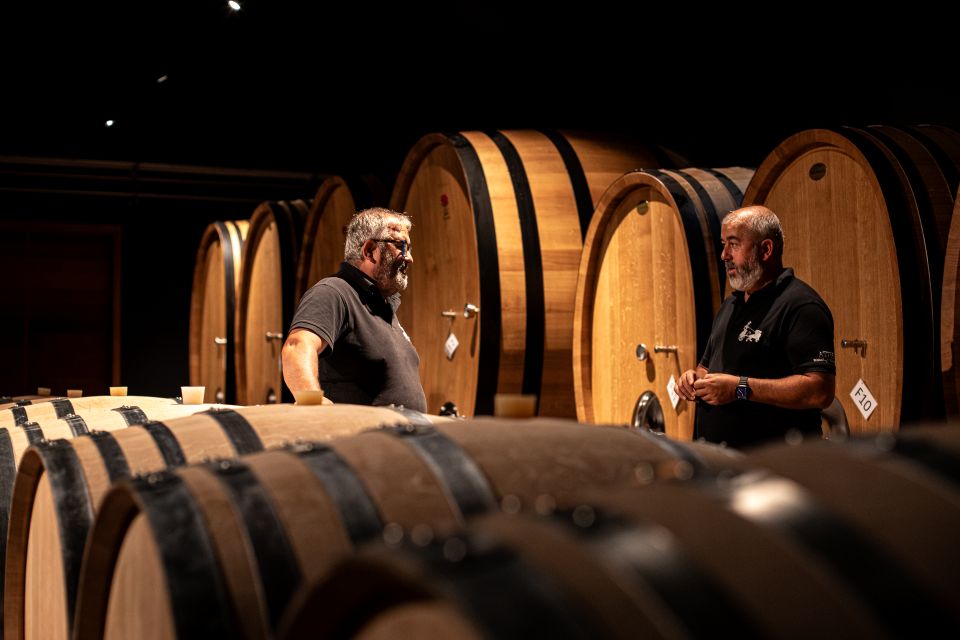
The expansion includes new production rooms, an area dedicated to aging, a warehouse, a bottle storage room, a tasting room, a dining area, a terrace, and new winemaking vessels. The new organization of spaces will allow the winery to work with greater precision on different plots, varieties, and winemaking processes.
At the heart of the project remains Albariño, joined by historic Galician varieties. Among the whites, ATTIS also works with Caíño Blanco and Godello. Red productions include Brancellao, Sousón, Caíño Tinto, Pedral, and Espadeiro.
The expansion will allow for continued experimentation on different soils, plots, vessels, and aging methods. Technique remains subordinate to origin, according to a philosophy that identifies granite, the Atlantic climate, native varieties, and time as the main elements behind ATTIS wines.
A WINERY IN THE GRANITE OF SALNÉS
The winery’s architecture also maintains a direct relationship with the territory. The building is carved into the granite of Salnés and is located on the heights of Meaño, in a landscape characterized by vineyards and the proximity of the Atlantic.
From the winery, the view encompasses the vineyards, Monte Castrove, the Ría de Arousa, the bateas dedicated to mussel farming and, in the distance, A Lanzada. The landscape represents a central element of ATTIS’s identity and the history of the Fariña family, marked by the coexistence of land and sea.
ATTIS FOCUSES ON ENOTOURISM
The new project also involves hospitality. Among the spaces created, a social area stands out with large windows, an independent kitchen, and a capacity for 150 people. Added to this is a terrace on the roof of the winery, with views of the Salnés landscape.
The goal is not just to increase hospitality capacity. ATTIS intends to use the winery visit as a tool to tell the story of the wines through the territory they come from. The expansion coincides with the winery’s 25th anniversary and consolidates the Fariña family’s journey among Albariño, native varieties, granite, and the Atlantic climate.