IN BRIEF
- Štajerska Slovenia is renowned for its white wines. The popularity of Welschriesling (Laški Rizling), Pinot Noir, and Blaufränkisch is currently growing.
- Maribor, recognized as one of the Best Wine Capitals in Europe 2026, represents a major viticultural hub, linking urban life to wine.
- The territory presents a unique link between climatic freshness and variety, with a predominant focus on white grape varieties.
- Climate change is complicating the production of sweet wines, which are historically significant for Štajerska Slovenia.
- Local sparkling wine production has historical origins and is establishing itself as a frontier of the sector, with wineries such as Radgonske Gorice and Puklavec Family Wines.
Štajerska Slovenija (Slovenian Styria) remains a land of white wines, with Welschriesling (Laški Rizling) increasingly gaining prominence, but its production landscape is expanding. Pinot Noir and Blaufränkisch are gaining ground, while more wineries are adding sparkling wines alongside still wines. Sweet wines, protagonists of the local tradition, are instead facing growing difficulties.
Earlier grape ripening complicates late harvests and is compounded by a more limited consumer interest in the category compared to the past. The starting point for exploring this part of Slovenia is Maribor. The city ranked first, ahead of Bordeaux and Porto, in the “Best Wine Capitals in Europe 2026” list by the European Best Destinations tourism platform.
MARIBOR, A CITY THAT LIVES FOR WINE
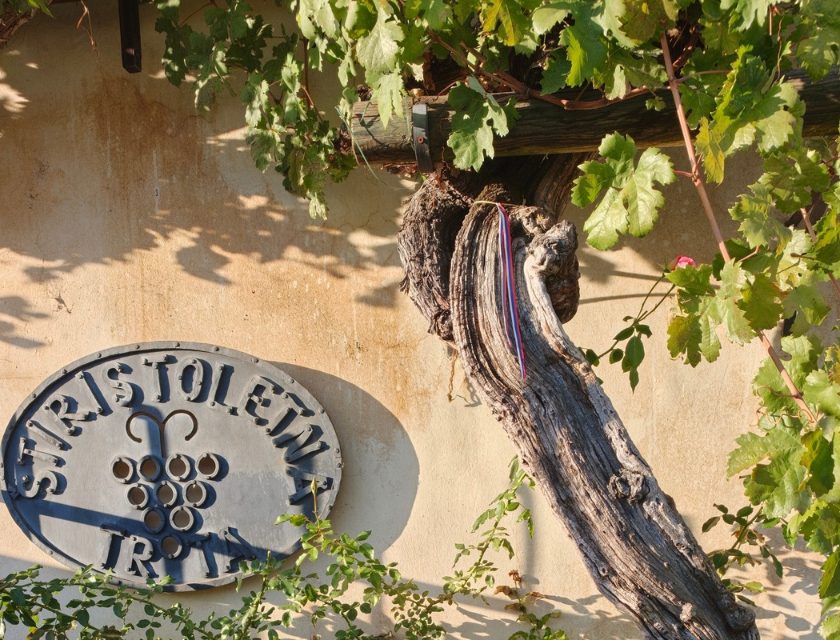
The bond between Maribor and wine is evident in daily life: in the city center’s wine bars, in restaurants, and in the vineyard-covered hills overlooking the city. This continuity between landscape and consumption makes wine part of the urban identity. The most famous symbol is the world’s oldest vine, the Stara Trta, which is still productive.
It is a plant over 450 years old of the Žametovka variety (Modra Kavčina), planted during the Turkish siege in the Middle Ages. A very precious nectar is produced from it—only about a hundred 2-deciliter bottles—used as a ceremonial gift for official visits and world leaders.
However, Maribor’s wine culture also includes a contemporary offering of venues and tastings, linked to the wineries of Štajerska Slovenija, the country’s largest wine district.
THE CLIMATE BETWEEN POHORJE AND THE PANNONIAN PLAIN
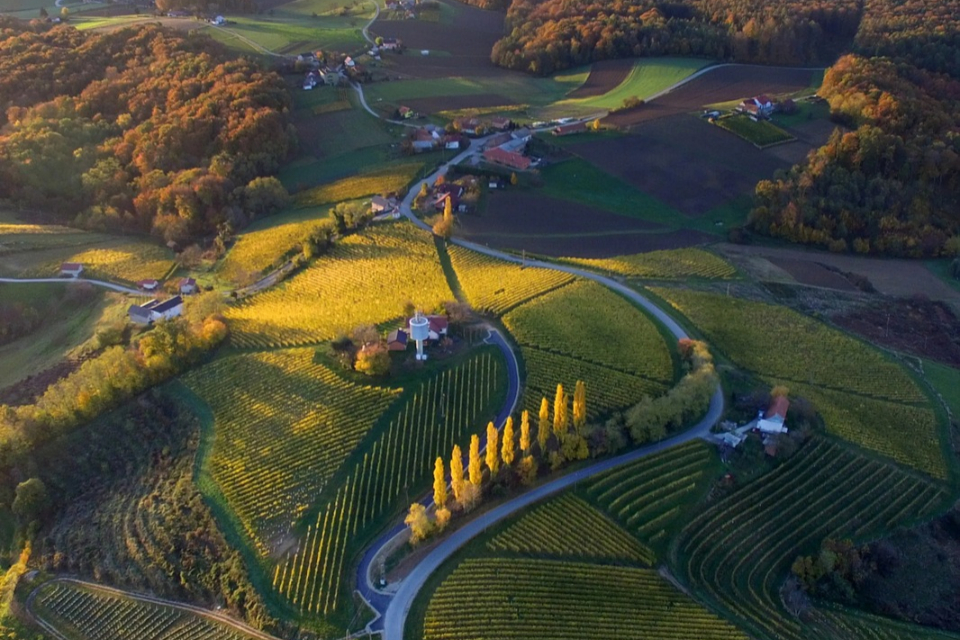
Two geographical elements help define the territory. From the west, the Pohorje massif, at the edge of the Alpine system, contributes to the climatic freshness. From the east comes the warmer influence of the Pannonian Plain. Proximity to Pohorje characterizes the cooler areas around Maribor. Moving eastward, the weight of these two influences shifts.
This is one of the keys to understanding the differences between the region’s wines, along with exposure and the shape of the hills. In international reports, the production repertoire often recalls that of Alsace and Alto Adige in terms of varieties and styles. However, Štajerska white wines tend to express a lighter body compared to those from Alsace and Alto Adige.
DOMINANT WHITES, INCREASING REDS
The vocation remains, in fact, clearly white. Estimates illustrated by the leading Slovenian national expert, Robert Gorjak, indicate a ratio of approximately 93% white grape varieties and 7% black grape varieties, compared to the previous balance of 97% and 3%. Among the grapes contributing to the regional profile are Furmint, locally called Šipon, Welschriesling, Sauvignon Blanc, Chardonnay, and Riesling.
On the red wine front, attention is focused on Pinot Noir and Blaufränkisch, with excellent results. These are varieties that have been present for some time, to which producers are dedicating more space, partly to meet the demand from local restaurants. The growth of reds is thus taking place in a territory that retains a strong specialization in whites, which is also noted—in some ways—in the producers’ “stylistic touch” on Pinot Noir and Blaufränkisch wines.
FROM SINGLE-VARIETALS TO NEW BLENDS
Tradition favors winemaking capable of preserving the grape’s character. In the past, large used wooden barrels were common, with limited aromatic influence. Today, stainless steel plays a central role. Alongside this model, higher-end white blends are emerging, sometimes involving oak aging and malolactic fermentation.
These are still minority interpretations that broaden the range of regional styles. However, blends also belong to everyday life. Welschriesling and Furmint can form the base of fresh wines with moderate alcohol content, completed by other varieties. This is the world of whites for informal consumption, also used for spritzer—wine diluted with water—which is popular in local social life.
PEKEL, RIESLING ON THE SLOPES OF MARIBOR
Among the vineyards that best tell the territory’s peculiarities is Pekel, a name meaning “hell”. It can be reached in a few minutes from Maribor. The plot owned by the Dveri-Pax winery is home to Rhine Riesling (Renski rizling) vines over thirty years old and is characterized by steep slopes. The iconic Riesling “Stare Trte”, or “old vines,” is produced here.
Pekel is useful for a deeper understanding of local Riesling. It serves as a reminder of the need to observe individual plots within a region often described primarily through grape variety names.
SLOVENIAN SPARKLING WINES, AN EXPANDING TRADITION
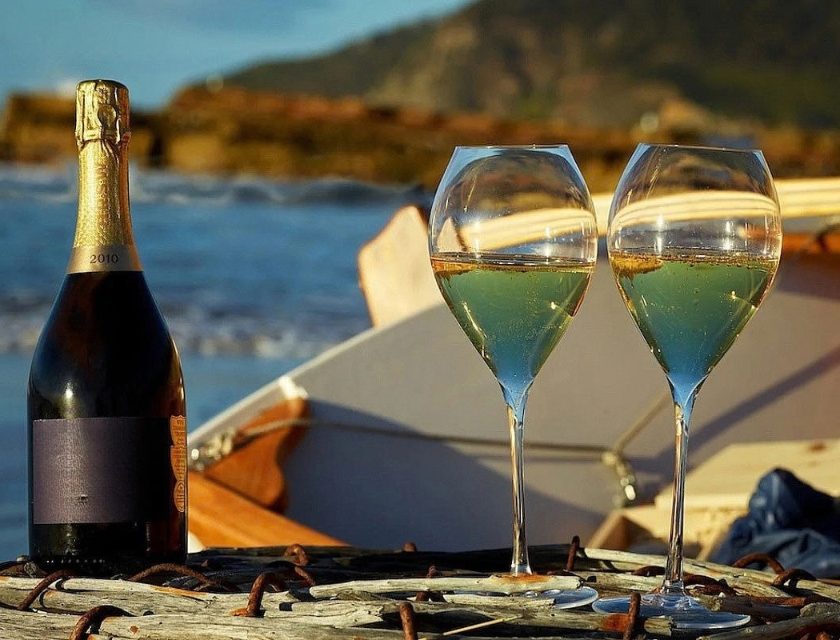
Sparkling wine production has 19th-century roots in this corner of Slovenia and is today one of the latest frontiers for local winegrowers. The historic Radgonske Gorice winery traces its tradition back to 1852 and remains a historical and production benchmark for the category in the country.
Alongside Radgonske Gorice are entities like Puklavec Family Wines and Dveri-Pax. Chardonnay and Pinot Noir are the most common varieties in the local sparkling repertoire, but they can be joined by Pinot Blanc and Furmint, the latter also used as a monovarietal by some producers.
SWEET WINES: THE DIFFICULTY OF WAITING FOR THE COLD
For sweet wines, climate change poses a concrete problem. In the past, grape ripening could more easily coincide with the arrival of the autumn chill, creating favorable conditions for late harvests and, in suitable vintages, noble rot. Earlier ripening, however, increases the gap between the moment the grapes are ready and the drop in temperature.
Leaving clusters in the vineyard for additional weeks can expose them to unwanted rot and compromise the harvest. Added to the greater production difficulty is a demand that is less favorable to sweet wines. These two factors are reducing the space for a style that is historically important for Štajerska Slovenija.