IN BREVE
- Fratelli Branca Distillerie celebrated 180 years on the occasion of World Amaro Day
- Niccolò Branca emphasized the importance of innovating while remaining faithful to the roots and cultural identity of amaro.
- During the event, several experts discussed the sector’s growth and global challenges for Italian producers.
- The amaro market in Italy has exceeded 144 million euros, with a significant increase in domestic consumption since 2019.
In the historic headquarters of Fratelli Branca Distillerie, amidst the scents of herbs and ancient woods, the second edition of World Amaro Day took place—the day dedicated to one of the most authentic symbols of Italian craftsmanship. A special edition, coinciding with the 180th anniversary of the Distillery, which transformed the occasion into a collective story of passion, memory, and entrepreneurial vision.
“A milestone that fills us with pride and reminds us every day of the strength of a motto that has always guided us: ‘Novare Serbando,’ to innovate while staying faithful to tradition,” stated Niccolò Branca, Executive President of Fratelli Branca Distillerie. “Amaro is a language that speaks of emotions, community, and time. It is our history, but also our legacy for the future.”
AMARO AS HISTORY AND FUTURE
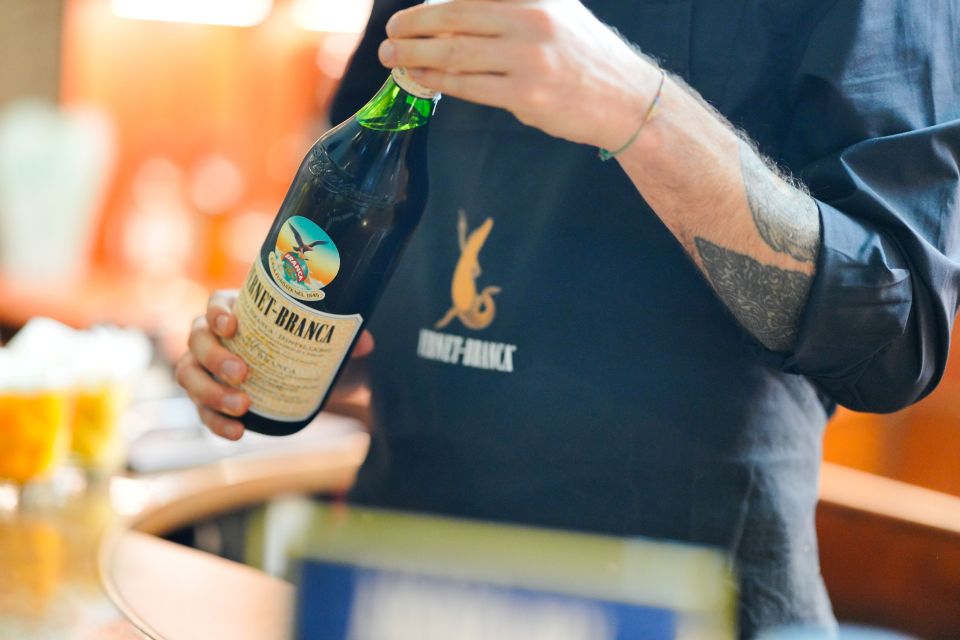
For nearly two centuries, Fratelli Branca Distillerie has preserved and renewed the art of amaro, born in 1845 from the intuition of Bernardino Branca. A knowledge that today lives in bars all over the world, in the hands of a new generation of bartenders and enthusiasts. The company celebrates not just a product, but a business model founded on the balance between roots and innovation, respect and authenticity. During the event, amaro took center stage as a living culture: a drink that spans centuries without losing its ability to unite. From contemporary mixology to industrial memory, every contribution added to a collective narrative made of diverse experiences, knowledge, and perspectives.
VOICES FROM WORLD AMARO DAY
Francesco Vena, CEO of Amaro Lucano and creator of the first edition, recalled that “amaro is a story of family and territory that continues to evolve alongside the country.”
Vittorio Cino, General Manager of Centromarca, emphasized how “the strength of ‘Made in Italy’ lies in the ability to work as a system, building solid alliances between industry and distribution.”
Francesca Migliarucci, Deputy Director of Federvini, highlighted the new global challenges for Italian producers, while Emanuele Di Faustino (Nomisma) and Luca Gerosa (NielsenIQ) illustrated the growth of amaro, driven by the interest of young people and out-of-home consumption.
Virgilio Romano (Circana) and Antonio Portaccio (Italgrob) also reaffirmed the strategic role of the Ho.Re.Ca. and large-scale retail channels in supporting Italian quality.
Finally, Nicola Olianas and Edoardo Nono brought amaro back behind the bar, amidst shakers and creativity, recounting its rebirth in the world of mixology.
“Every brand that stands the test of time preserves a part of the country’s collective memory. Protecting it means looking forward,” noted Rocco Orefice (Historical Brands). Marco Ponzano, Consultant for the Branca Collection and Tower, instead highlighted the Branca Collection, recognized as a Corporate Museum by the Lombardy Region.
THE MARKET AND CULTURE OF AMARO
World Amaro Day was also an opportunity to discuss economic data from a growing sector. According to NielsenIQ, the amaro market in Italy exceeded 144 million euros from January to September 2025 in large-scale retail. Compared to 2019, volumes have increased by 6%, a sign of higher domestic consumption. Nomisma estimates that the spirits supply chain generates a total impact of over 5 billion euros, with a multiplier effect of 4.5: for every euro of value added produced by companies in the sector, another 4.5 are created in the Italian economy.
CORPORATE CULTURE AS HERITAGE
Fratelli Branca Distillerie renews the link between memory and innovation every day through the Branca Collection, inaugurated in 2009 at the historic plant in via Resegone, Milan. Recognized by the Lombardy Region among the historic corporate museums, the Collection spans over a thousand square meters, telling 180 years of visions, posters, tools, and passion. “Preserving memory means shaping the future,” concludes Niccolò Branca. “Every bottle, every gesture, every story reminds us that to innovate is not to forget: it is to continue believing.”