Darmagi is much more than a wine. It is one of the most debated and iconic choices in the last 40 years of Piedmontese viticulture: the introduction of Cabernet Sauvignon to Barbaresco, a territory historically linked to Nebbiolo. A wine born as a disruptive gesture, but also as a response to a concrete need: to open new paths at a time when the international market was not yet ready to fully understand Barbaresco.
Angelo Gaja recalls the feeling of “melancholy” upon returning from trips to England and the United States. Enthusiasm and prospects that, once back home, clashed with the difficulty of conveying the value of Piedmontese wines outside of the most expert niches.
DARMAGI AND THE FOREIGN MARKET: WHEN NEBBIOLO WAS AN ALIEN
In the 1970s, Gaja recounts, Nebbiolo seemed foreign to the international public’s references. The comparison was almost automatic: Bordeaux. And, in that comparison, Nebbiolo was judged “too light,” “too tannic,” “too thin.” Italian restaurants abroad remained the most faithful ambassadors, capable of introducing customers to Barbaresco.
But outside of those contexts, the language of Piedmontese wine seemed incomprehensible, as if it “spoke an unknown language in a room full of people.” From this came the intuition: produce a Cabernet Sauvignon in Barbaresco. An idea that, in the context of the time, sounded almost provocative.
HIS FATHER GIOVANNI GAJA AND THE “NO” TO THE FOREIGN VARIETY
The story of Darmagi also involves a family confrontation. Giovanni Gaja, Angelo’s father, was tied to a rigorous and traditional vision. In his life, he had drunk almost exclusively Barbaresco. Rarely Barolo. Never Bordeaux or Burgundy.
To the proposal of planting Cabernet, the reaction was blunt: why introduce a grape variety other than Nebbiolo when “we already have the best of the best”? Yet, recognizing his son’s determination and sharing the goal of “making Barbaresco shine,” Giovanni Gaja eventually granted permission. On one condition: the planting had to take place away from his eyes. In the most remote part of the property: “Just an experiment.” For Angelo Gaja, that was the turning point: the permission to plant Cabernet.
IL BRICCO: THE BARBARESCO HILL CHOSEN FOR CABERNET SAUVIGNON
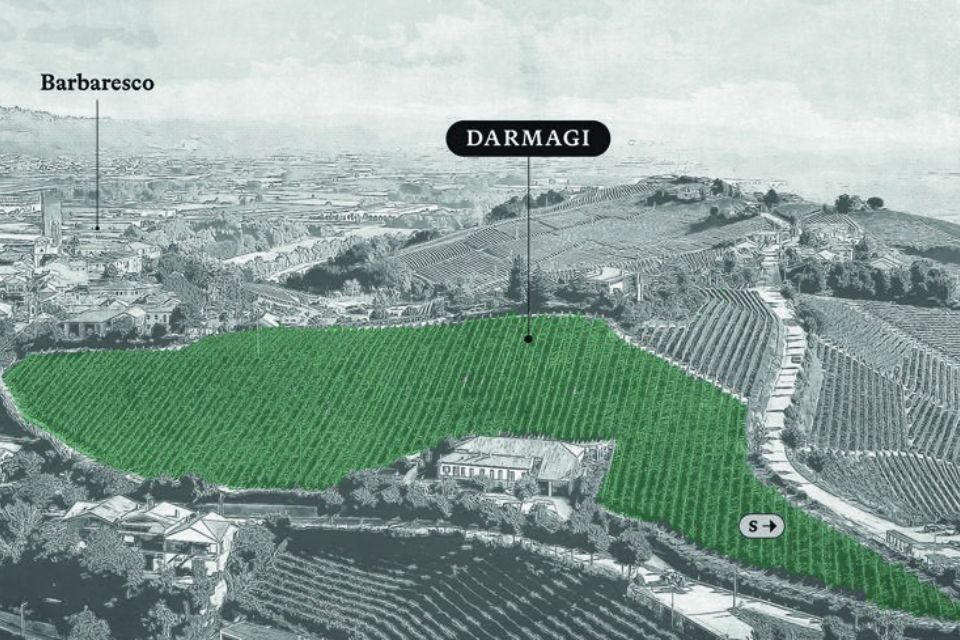
However, a problem remained: where to plant it? Gaja decided to have the estate’s soils analyzed and sent the results to the University of Bordeaux, asking which plot was most suitable for Cabernet Sauvignon. The response pointed to a vineyard in the heart of the village of Barbaresco, on the hill called Il Bricco. A choice that was both symbolic and practical. “Il Bricco” is not just any hill; it is “The Hill.” The one where his father’s house stood.
The soil is described as silt-loam, with a good supply of sand and silt, moderately alkaline, and with very high total limestone. On that hill was an old Nebbiolo vineyard, too old to continue. It had been uprooted and the land was resting, waiting for a replanting “as tradition would have dictated.” But tradition, that time, would not be respected.
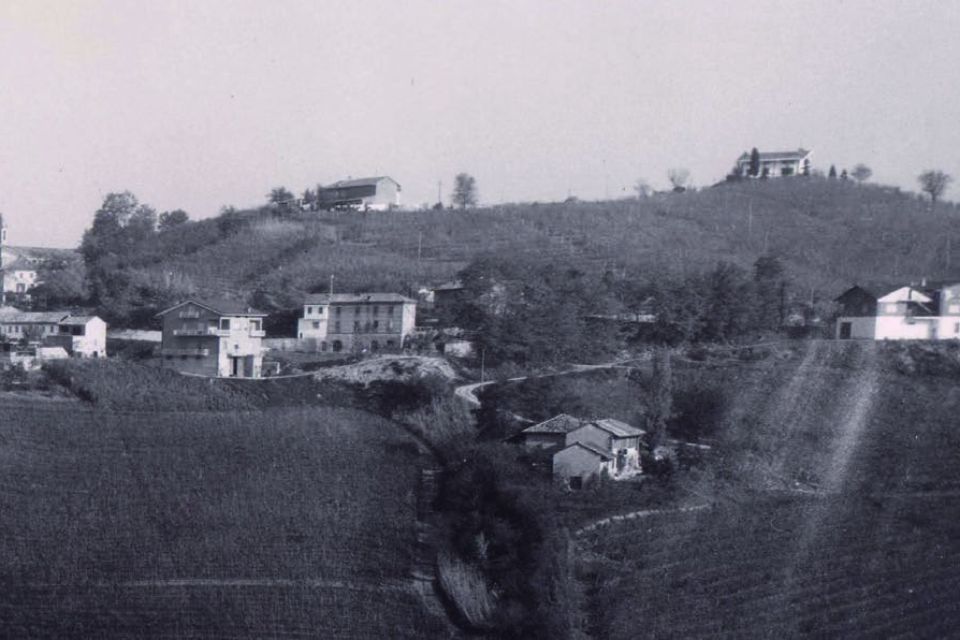

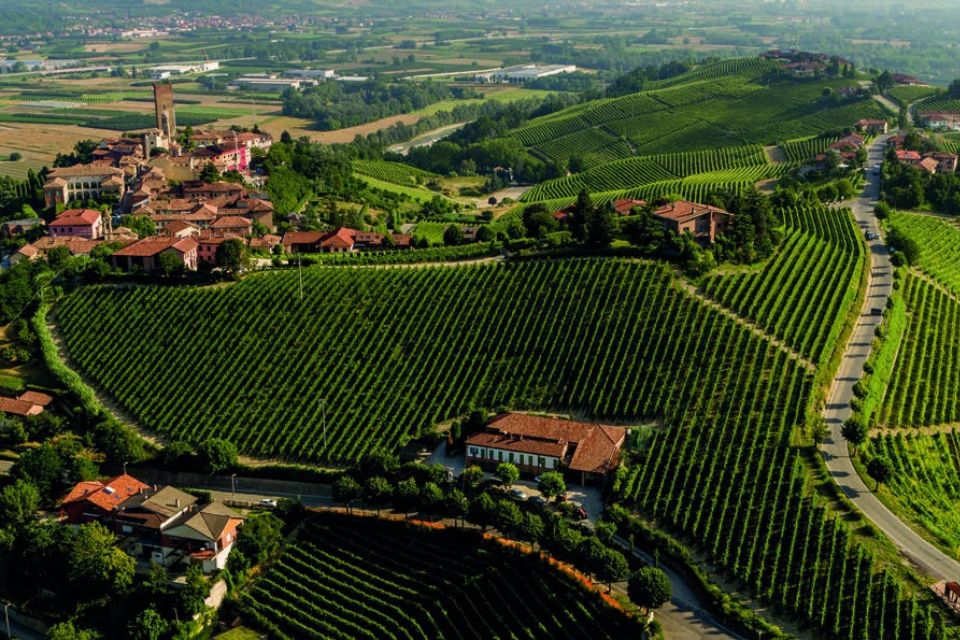
FEBRUARY 1978: PLANTING CABERNET IN BARBARESCO
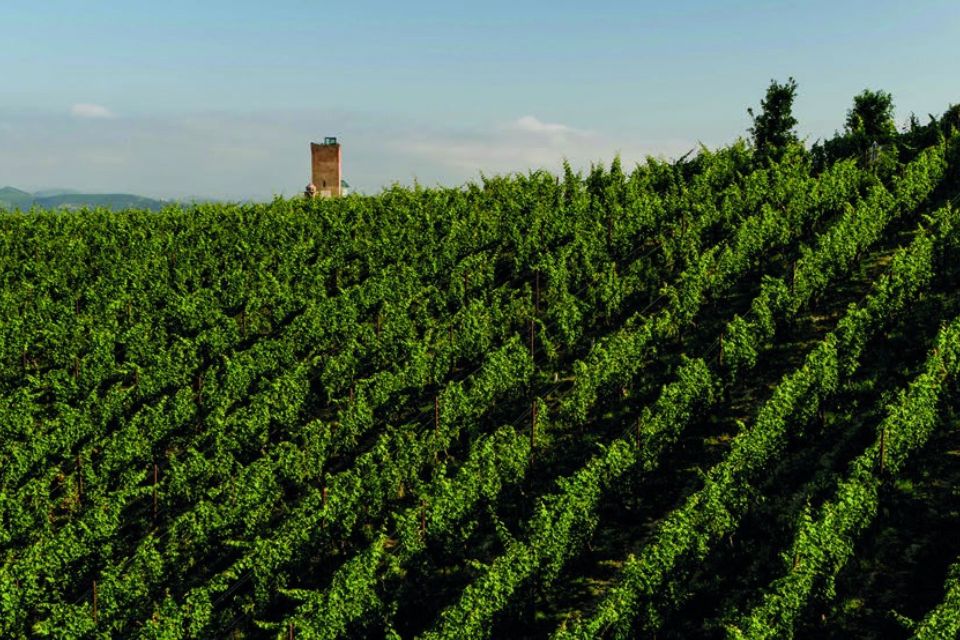
Taking advantage of his father’s winter absence while he spent time in Sanremo, the Cabernet Sauvignon was planted in February 1978. The vineyard measured 1.98 hectares, with a full southern exposure and a significant slope of 30%. The vines came from Bordeaux, grafted onto rootstock suitable for limestone soils. Angelo Gaja entrusted the task to Gino Cavallo, the long-standing vineyard manager.
A man tied to Nebbiolo, who viewed the operation as an agricultural heresy. A clash of visions: short pruning, green harvesting. A “variety he didn’t even know how to pronounce.” When Giovanni Gaja returned home and saw the replanted vineyard, he understood immediately. His reaction is legendary: a palm to the forehead, eyes to the sky, and a single word: “Darmagi!”
WHAT DARMAGI MEANS: “WHAT A PITY!” IN PIEDMONTESE
The name is no coincidence. In Piedmontese, Darmagi means “what a pity!”, and it also recalls the French dommage, as well as an assonance with the English damage. Angelo Gaja says he grew fond of the name and decided to use it for the first vintage of Darmagi Vino da Tavola 1982. It was also a symbolic gesture: the first wine with a dialect name on the label, an act of audacity but also an ironic and affectionate tribute to tradition.
Giovanni Gaja never wanted to drink it. He preferred older wines, and Darmagi was never old enough for his tastes. But he did not oppose it. There was no generational rift. There was disappointment. And a self-irony that, over time, transformed the episode into an identifying fragment of the winery.
IDENTITY AND STYLE: A “PIEDMONTESE” CABERNET, NOT BORDEAUX
Over the years, Darmagi became a “battering ram,” capable of opening conversations and doors that would otherwise have remained closed. It is a wine that piques curiosity, leading new tasters toward Barbaresco and the Langa. But its most interesting characteristic, in the narrative, is its style: not a “classic” Cabernet from Bordeaux or Tuscany, but rather a Cabernet with a strong Piedmontese imprint.
Tense and fresh tannins, almost like Nebbiolo. A slender body, rare pyrazinic notes. Aromas of red fruits, blackberry, violet. Licorice and aromatic herbs like mint and thyme. And hints of roots and bark. From the beginning, work was done with low yields, between 30 and 35 hectoliters per hectare, to achieve full ripeness. Thanks to its southern exposure and elevated position, the vineyard receives sun all day long.
THE VINEYARD TODAY: THE GAJA FAMILY’S STORY
Over time, the management of Cabernet Sauvignon has required specific attention. The clusters are small, the berries very small, with little pulp and thick skins. A structure that helps the health of the grapes and defines the wine’s personality, but requires calibrated extractions and different macerations compared to Nebbiolo.
According to the Gaja family, vintages with good temperature excursions, especially in the last ten days of ripening, are those that best enhance aromas and complexity.
Gaia, Rossana, and Giovanni Gaja define Darmagi as “the concrete incarnation” of their father’s futurist ideas. The transfiguration of his rebellious genius. A vineyard that breaks the mold. “Unconventional and a champion,” just like the man who wanted it.