IN BREVE
- The red wine crisis does not worry Barolo and Barbaresco, which show a slight decline in numbers but with signs of stability.
- The 2022 Barolo is more approachable and promises a new interpretation without losing the variety’s identity, thanks in part to climate change.
- Communication must return to presenting Barolo and Barbaresco as wines to be paired with food, not just as alcoholic beverages.
- Langhe Nebbiolo is growing, representing an everyday wine that serves as an introduction to more structured wines.
- A major event will take place in Toronto for the Barolo Barbaresco World Opening 2026, with the goal of transforming events into more long-lasting activities.
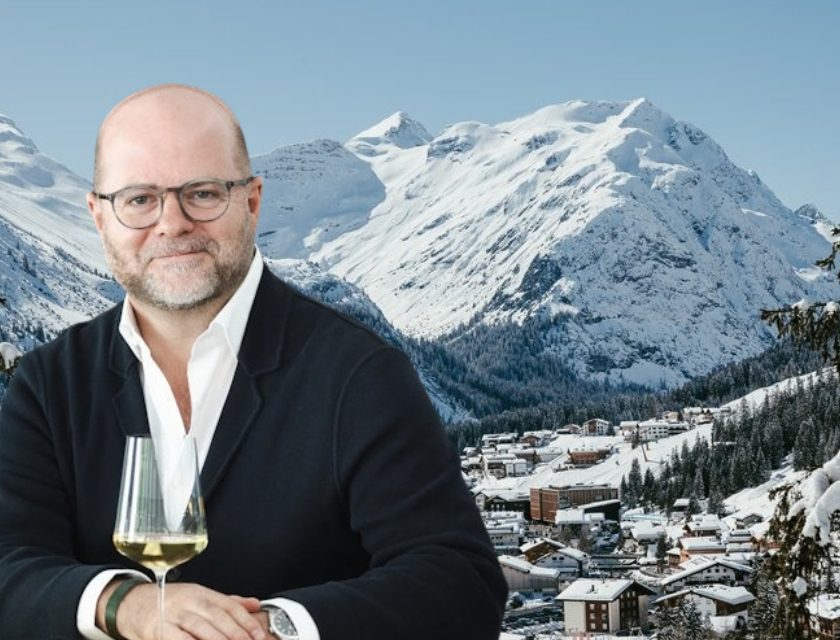
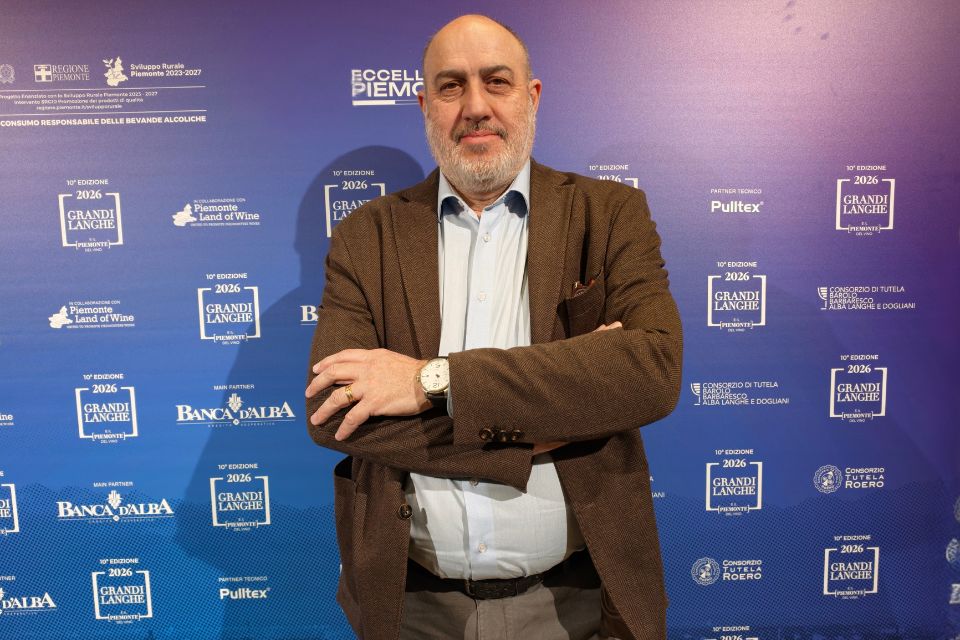
The red wine crisis? It is barely touching and not worrying Barolo and Barbaresco. So much so that Sergio Germano, president of the Consorzio di Tutela Barolo, Barbaresco, Alba Langhe e Dogliani, appears more relaxed than ever at Grandi Langhe 2026. He jokes with staff and fellow presidents of Piedmontese Consortia who have gathered in Turin for the major annual event. And he reels off the figures for Barolo and Barbaresco, despite a slight decline (-1% and -5%), without being overwhelmed by cold statistics: “We could almost speak of stable and encouraging figures, considering the difficult period for many other red-focused denominations.” Details in the interview with Winemag.
In recent years, there has been much talk of a new interpretation of Barolo and Barbaresco. What is your take on the most recent vintages, 2022 and 2023?
I believe the vintages currently on the market tell the story of this evolution very well. After 2021, the 2022 Barolo is a much more approachable, accessible vintage. It is not uniform everywhere, but in certain pockets it expresses great finesse, freshness, and roundness. These are wines that suggest a new interpretation, without distorting the identity of the grape variety.
How much does climate change influence this stylistic evolution?
It certainly has an impact. Climate change leads us to have sweeter and more pleasant tannins, but at the same time, the skill of the winegrowers and winemakers has also grown significantly; they are more attentive and aware today. We are moving towards more immediate drinkability, while knowing that the aromatic complexities will continue to evolve over time.
Does this mean it is no longer “a sin” to open a young bottle?
I would say definitely not. In the case of 2022, for example, Barolo can already be enjoyed with great pleasure. If we think of Burgundy, often the latest vintage presented is two years old: it can last thirty years, but it is also drunk immediately. This approach is now possible for Barolo and Barbaresco as well.
The same applies to the 2023 Barbaresco vintage, as confirmed by the tastings carried out in the press room
2023 was also a rather warm vintage, with a Barbaresco that is a bit drier compared to the Barolo. However, the expressions are definitely interesting. They speak well to both the adaptability of the winegrowers’ work and that of Nebbiolo itself. A variety that, if planted in the right areas, manages to face climate change without suffering catastrophes.
Are we talking more about climate change or a reinterpretation of the wine?
I would say it is a consequence of the ongoing evolutions. Precisely to prevent warm vintages from leading to dry tannins, today great attention is paid to maceration and aging. Everything is moving towards optimizing drinkability, which is fundamental: Barolo and Barbaresco must maintain their austerity, but also be drinkable, considering changes in lifestyles and diets.
No post found!
The theme of pairings also seems to have changed
Absolutely. It should no longer be necessary to talk only about wild boar or venison when discussing Barolo and Barbaresco. They are not just wines for celebrations. They can be enjoyed on many more occasions, without diminishing them or weakening their identity.
From a market perspective, how do you see the current situation?
The market experiences increasingly shorter cycles. They used to last twenty or thirty years; today it’s two or three. We lived through a period of great enthusiasm, even during Covid, with strong consumption. Today there seems to be a different phase, also influenced by new anti-alcohol media distractions and a greater focus on healthy lifestyles, which must obviously be respected.
What kind of communication is needed for these wines today?
We need basic communication in the most positive sense of the term: perceptible, clear. We must go back to describing Barolo and Barbaresco as food products that pair with meals, not just as alcoholic drinks. This helps remove the fear of opening a bottle, which is often perceived as something distant or demanding.
In this context, what role does Langhe Nebbiolo play?
A fundamental role. Year-end figures show that Barolo held up well, with a -1%, while Barbaresco is around -5%. Langhe Nebbiolo, on the other hand, is growing. It is a wine with a more everyday, easier approach, and it is perfectly introductory to the deeper wines made from the same grape. This is why we want to invest more in communication for this denomination.
Also because the supply is increasing, in terms of production and availability
Exactly. In recent years there have been significant plantings and today the supply can keep up with the market. It is positive to see that this wine continues to grow.
What are the next steps for the Consortium?
The main event will be in Toronto on May 12, with the Barolo Barbaresco World Opening 2026. We are talking about 170 producers present for one day. The Canadian monopolies are very involved and satisfied with this project. They are waiting for us with great anticipation.
The work in Canada is not limited to the main event, correct?
Our goal is to transform these one-day events into activities distributed more over time, to have a greater impact. As we have already done in the United States, we have organized side masterclasses in Canada as well, involving key provinces such as Ontario, New Brunswick, Alberta, and British Columbia, aimed at agents and monopoly operators.
What kind of market is Canada for Langhe wines?
It is a market with a solid wine culture and very interesting potential. They are increasingly understanding the evolution of Langhe wines, especially thanks to greater stylistic flexibility, particularly in the more immediate expressions of Nebbiolo.