The ordinary amendment to the production regulations of the Umbrian denomination has been approved. Several designations have been removed, and new specifications for riserva and sparkling wine have been introduced. Among the types, macerated wine (orange wine) has been approved, while “refermented” has been eliminated through the ban on crown caps. Rules on zone, yields, aging, and analytical parameters have been redefined. An extension of the production area has already been approved by members and the Board of Directors of the Consorzio, which will bring the denomination to grow up to 500,000 bottles by 2027. Interview with the president of Consorzio Vini Montefalco, Paolo Bartoloni (Le Cimate).
The ordinary amendment to the Spoleto DOC production regulations has been published in the Official Gazette, outlining the Trebbiano Spoletino of the future. The measure, requested by the Consorzio Tutela Vini Montefalco, concerns the Trebbiano Spoletino (dry) still, sparkling, riserva, and passito types. The objective is to make the regulatory framework clearer and more coherent, enhancing the identity of the native grape variety and its oenological expressions. Among these, the macerated version (orange wine) has been approved, thanks to a broadening of the color spectrum, from “straw yellow” to “deep golden”. The updated production regulations will be notified to the European Commission for application within the Union.
THE TREBBIANO SPOLETINO PRODUCTION ZONE
The production zone of Trebbiano Spoletino Spoleto DOC remains, for now, unchanged, although valley floors have been included with the elimination of the 400-meter altitude requirement. It includes the municipality of Montefalco and parts of the municipalities of Campello sul Clitunno, Castel Ritaldi, Foligno, Spoleto, and Trevi. The Consorzio has already approved the intention to extend the area in the future. Bevagna, Gualdo Cattaneo, and Giano dell’Umbria, previously excluded for administrative reasons, will be included in the perimeter, along with the entire municipality of Spoleto. The expansion, if definitively approved, would bring production from the current 280,000 bottles to 500,000 by 2027.
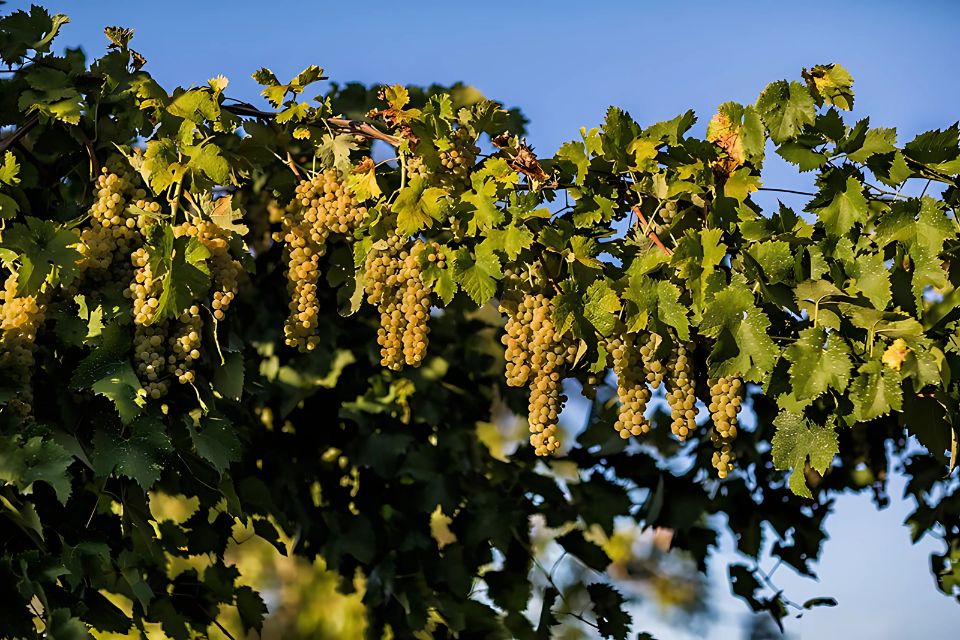
Members and the Board of Directors of Consorzio Tutela Vini Montefalco have already approved the measure, which will be submitted to the Ministry for review in the coming months. The ampelographic base of Spoleto DOC requires at least 85% Trebbiano Spoletino, with a maximum of 15% other non-aromatic white grape varieties authorized in Umbria. All vinification, drying, aging, and bottling operations must take place in the delimited zone. An exemption is provided for facilities active before 2011. The use of wood, maceration on the skins, and other traditional techniques are authorized.
TREBBIANO SPOLETINO: RISERVA INSTEAD OF SUPERIORE AND SPARKLING
Among the main changes, the introduction of the “Riserva” designation replacing the previous “Superiore”, now considered inadequate. The new type requires a minimum aging of 18 months from harvest and a minimum alcohol content of 12 degrees. A choice, according to what Consorzio president Paolo Bartoloni explained to Winemag, that “better reflects the wine’s profile and its evolutionary potential.” “The ‘Superiore’ designation, rarely used even in other denominations,” continues the owner of Le Cimate winery, “has been eliminated to make the language more consistent with the wine’s quality, produced in any case by only two or three wineries, as well as current.”

The sparkling wine has been redefined with the exclusion of ancestral and refermented types. Only the use of mushroom corks will be allowed, eliminating any form “that could create confusion about the perceived quality of Trebbiano Spoletino.” The intent is to standardize the product’s presentation and strengthen consumer perception. The “Spoleto Bianco DOC” type has also been eliminated, no longer produced by any winery.
LABELING, ANALYTICAL PARAMETERS, AND FUTURE PROSPECTS
The new production regulations allow the use of the term “Umbria” on the label, provided it is graphically separated from the “Spoleto” denomination and displayed in smaller characters. The amendment aims to enhance the regional origin while maintaining the centrality of the specific denomination. The analytical and organoleptic parameters have been updated for all types: color, aroma, flavor, acidity, non-reducing extract, and minimum alcohol content.
The specifications have been expanded at the Ministry’s request to accommodate the different existing production interpretations and encourage a broader oenological range. All amendments were approved by a large majority, on the proposal of producers such as Gianluca Piernera (Cantina Ninni), president of the Consorzio’s technical commission and among the great supporters and interpreters of Trebbiano Spoletino.
SAGRANTINO SALES PLUMMET: MEETING WITH REGIONAL COUNCILOR MELONI
Meanwhile, the Consorzio is also considering an amendment to the Sagrantino di Montefalco DOCG production regulations, with the possibility of introducing a “Riserva” designation. Bartoloni explains to Winemag that “this type, if made official, could raise the average price and further enhance the territory’s flagship red wine.” The commercial context, however, remains complex. Sagrantino sales have declined by 30% in the first quarter of 2025.
The Consorzio attributes part of the difficulties to the introduction of tariffs in the United States by Trump. More generally, the DOCG is suffering from the international decline in sales of full-bodied, tannic red wines. A meeting with the councilor for PNRR, agricultural and agri-food policies of the Umbria Region, Simona Meloni, is scheduled for Monday, August 4. The objective is to address market challenges and revitalize a sector that seems to have, in the meantime, perfectly profiled its white jewel: Trebbiano Spoletino.
The Trebbiano Spoletino of the future in the Official Gazette. The ordinary amendment to the production regulations of the Umbrian denomination has been approved. Several designations have been removed, and new specifications for riserva and sparkling wine have been introduced. Among the types, macerated wine (orange wine) has been approved, while “refermented” has been eliminated through the ban on crown caps. Rules on zone, yields, aging, and analytical parameters have been redefined. An extension of the production area has already been approved by members and the Board of Directors of the Consorzio, which will bring the denomination to grow up to 500,000 bottles by 2027. Interview with the president of Consorzio Vini Montefalco, Paolo Bartoloni (Le Cimate). https://www.consorziomontefalco.it/.