Commentary from Federvini with President Ponti: “The shared goal remains reaching a lower percentage, ideally zero tariffs.” Reactions from the sector, including Coldiretti and Confeuro, the Confederation of European and World Farmers. Rome announces its intention to activate support measures at the national level, asking the EU Commission to do the same for the most penalized sectors.
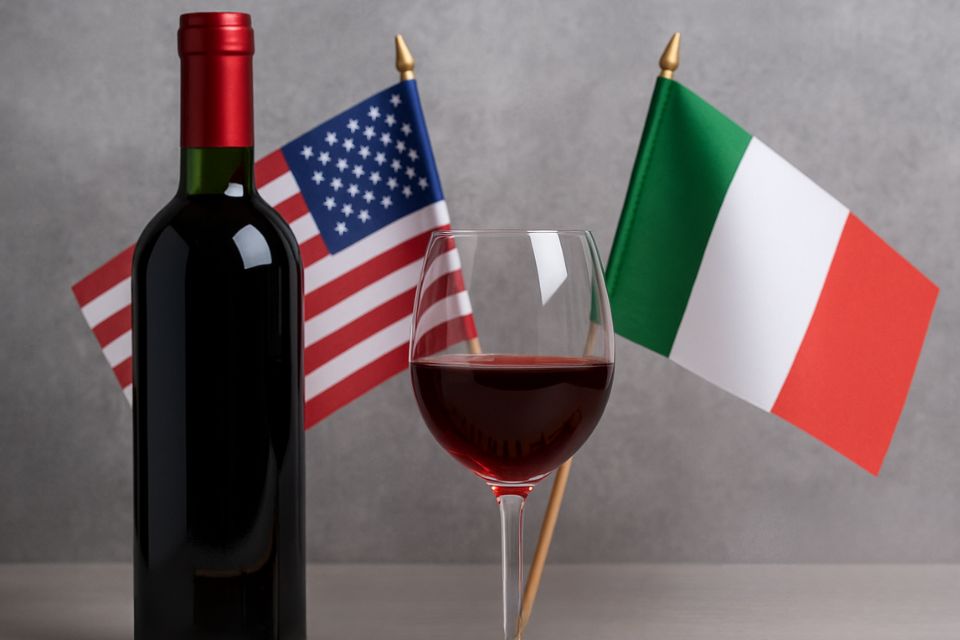
The agreement reached between the United States and the European Union on tariffs—set at 15%—is considered a step forward compared to the initial proposal of 30%. However, strong concerns remain about the repercussions on key sectors of Made in Italy, particularly wine.
Federvini speaks of a “clear criticality” for Italian wine, spirits, and vinegars. President Giacomo Ponti hopes for a reduction in the threshold: “The shared goal remains reaching a lower percentage, more sustainable for our businesses, while keeping in mind that the ideal would be zero tariffs.”
Coldiretti, while calling the agreement “an improvement,” also requests European resources for the hardest-hit sectors. “The new tariff structure must be accompanied by compensation,” states President Ettore Prandini, “also considering the devaluation of the dollar.” The agricultural organization also emphasizes the need to include strategic products like wine on the zero-tariff list.
THE ROLE OF EUROPE AND CRITICISM OF ITS FRAGMENTATION
Confeuro takes a more critical stance. For President Andrea Tiso, the agreement represents “the bitter victory of Trump-style neo-protectionism over a fragmented and inefficient Europe.” Tiso points to the absence of a common strategy: “Once again, small and medium-sized agri-food businesses will pay the price.”
Confeuro, while acknowledging that the agreement could reduce global instability, warns: “Europe must change course, regain competitiveness, and overcome internal divisions. A wake-up call is needed before it’s too late.”
THE ITALIAN GOVERNMENT: POSITIVE AGREEMENT, BUT PROTECTIONS ARE NEEDED
The Italian Government welcomes the EU-US agreement, emphasizing the avoided risk of a trade war between two interconnected economic areas. “The negotiated solution,” declare Prime Minister Giorgia Meloni and Deputy Prime Ministers Antonio Tajani and Matteo Salvini, “is the result of joint work between European institutions and member states, including Italy.”
The Executive considers the 15% tariff sustainable, provided it is not added to pre-existing measures. Meanwhile, Rome announces its intention to activate support measures at the national level, asking the EU Commission to do the same for the most penalized sectors.
PROTECTION OF MADE IN ITALY AND COMBATING ITALIAN SOUNDING
Among the priorities of agricultural organizations remains the defense of Made in Italy. Coldiretti emphasizes the urgency of combating Italian sounding in the United States, which generates estimated losses of over 40 billion euros per year.
Secretary General Vincenzo Gesmundo reiterates the need for more effective promotion of authentic products: “We must protect consumers from imitations and strengthen geographical indications, a cultural and economic safeguard of our food.”