IN BREVE
- The dealcoholized wine tasting at Mundus Vini 2026 highlighted a sector in evolution but with variable quality.
- White wines achieved better scores than reds, with aromatic varieties showing better results after dealcoholization.
- Dealcoholized wines require structural balance, but the absence of alcohol often created a void in taste characteristics.
- Many samples were technically correct but lacked complexity. The “emotion” chapter: missing in action.
- The focus must be on defining specific quality parameters for dealcoholized wines rather than direct comparison with traditional wines.
Tasting dealcoholized wines in a structured and rigorous context like Mundus Vini 2026 means suspending prejudices and ideological positions. Blind tasting requires focusing exclusively on what’s in the glass: clarity, aromatic precision, balance, taste coherence, persistence. Nothing more. The overall impression is that of a rapidly evolving category, but not yet homogeneous in terms of quality and style.
WINE ORIGIN AND VARIETIES TASTED
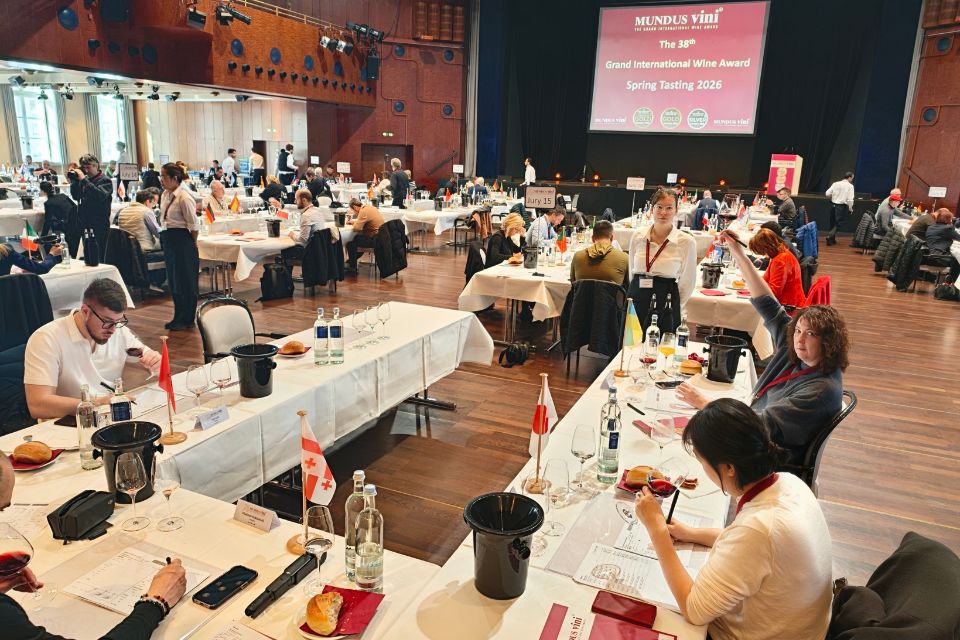
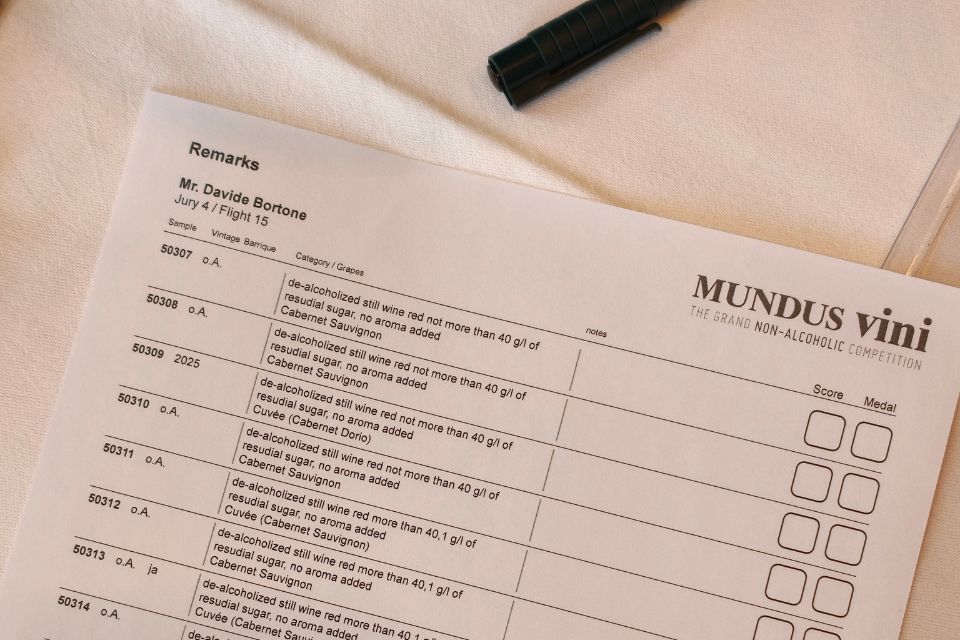
The organizers of the prestigious competition held for the 25th year in Neustadt an der Weinstraße selected 6 jury tables for the tasting of over 300 dealcoholized wines. As jury president of panel 4, together with 4 other industry professionals from Germany, the Netherlands and Poland, I tasted samples from Germany, Italy, Spain, France, Switzerland, Portugal, Austria, Croatia, Luxembourg, Hungary and Chile. These were still and sparkling wines, white, rosé and red, predominantly without added aromas.
Germany stood out for a wide presence of Riesling, Müller-Thurgau (Rivaner), Muskateller, Gewürztraminer and aromatic blends, as well as reds based on Cabernet Sauvignon and cuvées with Merlot and Pinot Noir (Spätburgunder). Italy presented mainly sparkling wines from Glera, the queen grape of Prosecco, and cuvées with Chardonnay and Traminer, as well as Moscato and Piwi varieties like Johanniter and Bronner. From Spain came samples from Airén, Garnacha, Tempranillo, Trepat, Monastrell and Muscat of Alexandria.
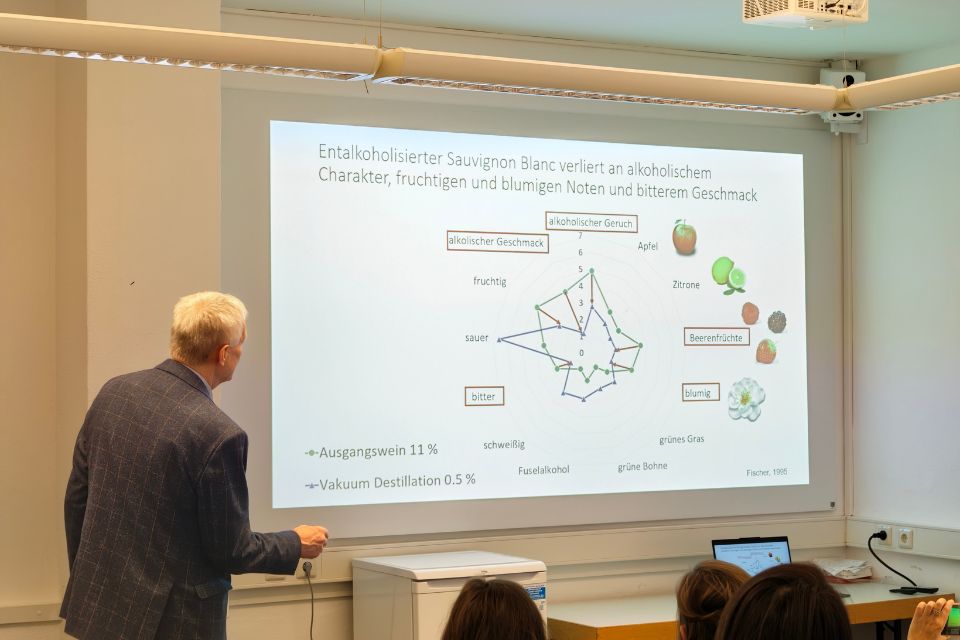
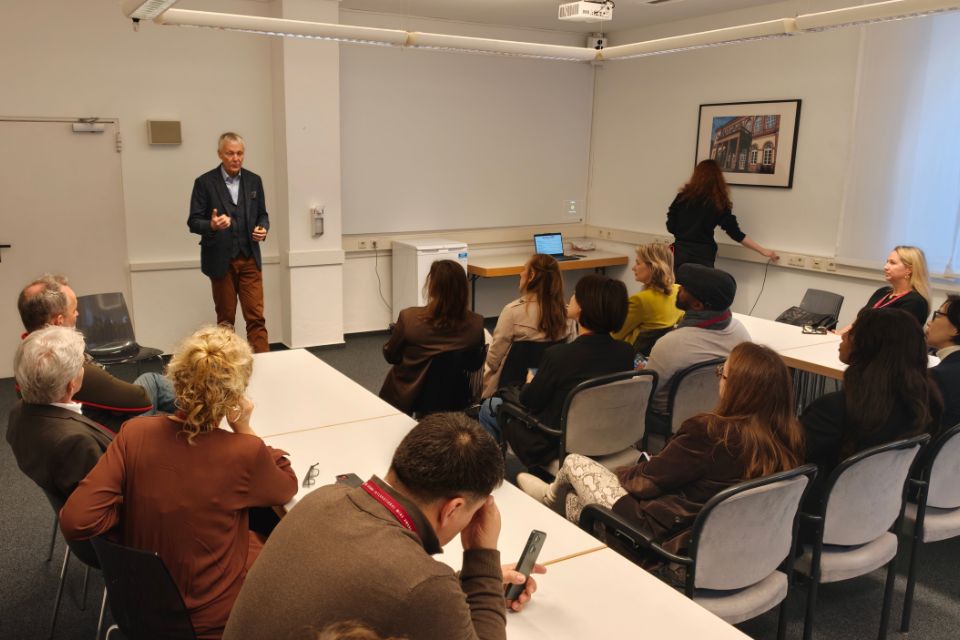
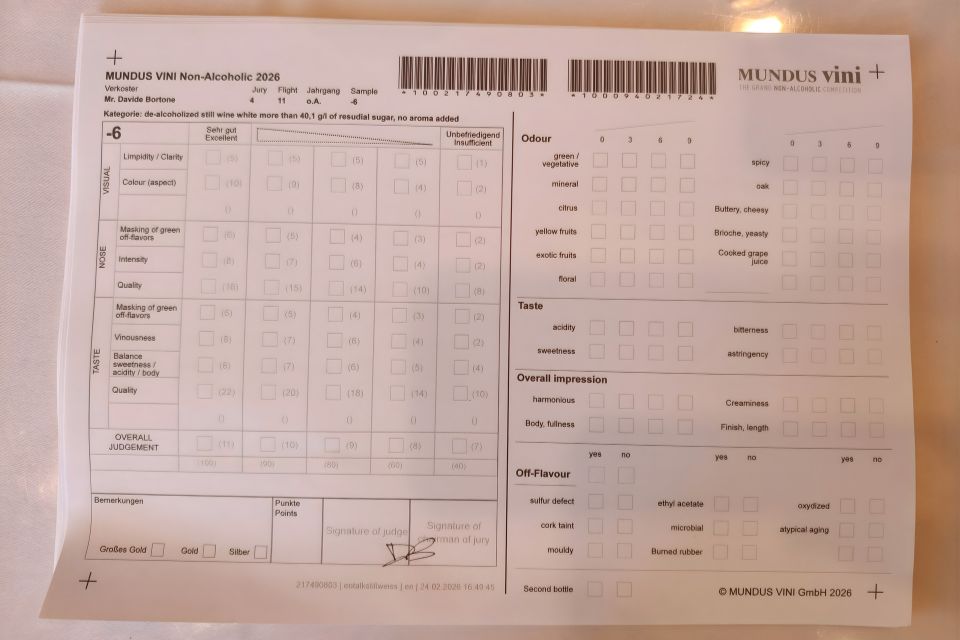
France was represented particularly by Colombard, Muscat and Cabernet Sauvignon (also in blends with Syrah). Also present were Austrian samples from Muscat Ottonel and Gelber Muskateller, Croatian from Malvasia and Sauvignon Blanc, as well as Swiss, Portuguese, Luxembourgish wines and a Chilean red from Cabernet Sauvignon. Before the tasting, the 6 juries selected by Meininger Verlag participated in a brief presentation session on the dealcoholized category and the evaluation sheet reserved for them.
ALCOHOL-FREE WINES: White and sparkling DEALCOHOLIZED wines more convincing than reds
Overall, white wines were more convincing than reds. Aromatic varieties or those naturally endowed with strong varietal identity, such as Riesling, Sauvignon Blanc, Müller-Thurgau, Gewürztraminer and Muscat in its various expressions, proved more suitable for the dealcoholization process. In German and Austrian samples the aromatic component remained readable, albeit with inevitable structural simplifications.
Italian sparkling wines based on Glera, as well as some white cuvées, benefited from the presence of bubbles. Carbon dioxide helps restore dynamism to the palate and partially compensate for the absence of alcohol, offering greater tension and a more defined and linear perception of freshness.
THE STRUCTURAL ISSUE IN DEALCOHOLIZED WINES
The main critical issue remains structural. Because alcohol is an architectural element of wine: it carries aromas, contributes to body. It modulates acidity and supports taste length. Its removal creates a void that is not always filled convincingly. In several samples, including French, Spanish and Chilean reds based on Cabernet Sauvignon or blends with Tempranillo and Syrah, the mid-palate appeared diluted. With short finishes and tannins sometimes dry and disconnected.
The residual sweetness, in some cases exceeding 40 g/l, seemed more a compensation tool than a stylistic choice. Reds, in particular, represent the most complex challenge: aromatic recognition may be correct, but without alcohol the structure often appears fragmented.
SCORES AND QUALITY LEVEL OBSERVED
From the perspective of scores assigned during the tasting sessions, most samples fell into a mid-range bracket. Many wines were technically correct and free of obvious defects, but not always endowed with significant complexity or persistence.
Some sparkling wines and a few still whites achieved higher ratings thanks to better overall balance and greater taste harmony. Reds, overall, showed greater variability and moderately lower scores.

MARKET IDENTITY AND FUTURE PROSPECTS OF ALCOHOL-FREE WINES
But the central point is not to establish whether dealcoholized wines measure up to traditional wines. Direct comparison is not only structurally unbalanced, but entirely wrong. The question is whether the segment can define its own quality parameters, with coherence and recognition within its own category.
At Mundus Vini 2026 I observed a sector, that of dealcoholized wines, that is investing decisively and has significantly reduced sensory defects compared to the past. However, stylistic identity is still under construction. The most convincing samples were not those attempting to imitate traditional wine, but those accepting a different structural lightness, positioning themselves as an alternative for specific consumption occasions.
DEALCOHOLIZED WINES: EMOTION HAS NO VOICE
As a taster, I apply the same criteria to every glass: balance, harmony, internal coherence to the category. Some dealcoholized wines tasted reached a solid quality level. Very few were truly engaging. Many were technically correct, but emotionally neutral.
If quality is growing, identity is still a work in progress. And emotion, perhaps, is not even to be sought or considered as a goal, even though we’re discussing a category that carries a “heavy name,” certainly debatable: “wine”.