IN BREVE
- Žilavka is a native grape variety of Bosnia and Herzegovina, particularly representative of southern Herzegovina.
- Despite the lack of wine consortia, producers like Podrumi Vukoje 1982 contribute to the promotion of Žilavka.
- The cultivar has a long history, dating back at least to the Middle Ages, and is distinguished by its adaptation to difficult climatic conditions.
- Žilavka presents itself as a dry white wine, with varied styles ranging from steel-aged vinifications to more structured versions in wood, and orange wines.
- Ten wineries where you can try Žilavka: from fresh wines to more aged ones, the white grape-wine of Bosnia and Herzegovina is waiting to be discovered.
Žilavka (often transcribed as Zilavka) is one of the most representative white grapes of Bosnia and Herzegovina, particularly southern Herzegovina. It is a historic variety, linked to an area of strong agricultural and cultural identity. Today, it is at the center of a qualitative enhancement process involving both agronomic research and increasingly successful oenological choices.
In the mosaic of European native grape varieties that are still little known outside national borders, Žilavka deserves a place of honor due to the “bureaucratic-administrative” context of this small—but extremely fascinating—Balkan country. Here, there are no actual wine consortia. The qualitative growth of local viticulture is due solely to the initiative of producers, led by flagship wineries such as Podrumi Vukoje 1982 in Trebinje and its owner and winemaker Radovan Vukoje.
An influence on the national production fabric that comes, in this case, from the Serbian-majority area of Bosnia and Herzegovina, the Republika Srpska (RS, literally Serbian Republic). An area well-defined by the 1995 Dayton Agreement, aimed at ending the Bosnian War.
WHAT IS ŽILAVKA AND WHY IS IT CONSIDERED NATIVE?
Politics aside, the Žilavka white grape-wine (pronounced Zhee-lav-ka, with the “Ž” interpreted like the French “j” in “je suis“) is one of the elements on which the choices of wineries most attentive to contemporary wine market trends converge. A variety of Vitis vinifera historically cultivated in Bosnia and Herzegovina. The presence of numerous local synonyms testifies to a deep-rooted and ancient distribution, linked to viticultural practices passed down over time.
Available historical and scientific studies indicate that the cultivation of Žilavka in Bosnian territory dates back at least to the Middle Ages, with references placing its presence as early as the 14th century. This data contributes to defining its native character and identity value for national viticulture.
- Prokupac: A new identity in Serbia for the iconic Balkan grape-wine
- The best Balkan rosé is Albanian
- Cotarella lands in the Balkans: “I will produce Serbia’s best wine”
- Vranec or Vranac: Challenges and prospects for the iconic Balkan red wine
- The Albanian Sommelier Association turns 20
- Wine Vision by Open Balkan 2025: Vinitaly toasts to Made in Italy leadership
MOSTAR AND HERZEGOVINA, THE HISTORIC HEART OF PRODUCTION
The production center of Žilavka is located in Herzegovina, with a central role played by the Mostar area and surrounding municipalities. Here, viticulture has a long tradition, and Žilavka has been one of the reference grapes for centuries.
In historic vineyards, alongside this variety, other local grapes are often present that have accompanied its spread, contributing to a complex ampelographic heritage typical of the region. This context makes Žilavka not just an isolated grape variety, but an integral part of a broader agricultural and cultural system.
CALCAREOUS SOILS AND CLIMATE OF BOSNIA AND HERZEGOVINA
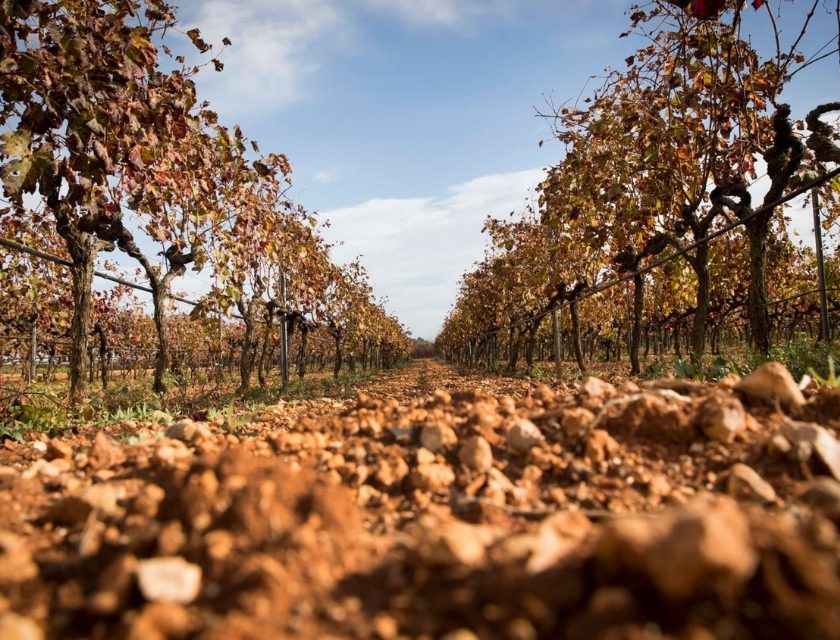
The viticultural territory of Herzegovina is characterized by poor, predominantly calcareous and karst soils, combined with a hot and very sunny climate. In this environment, Žilavka has developed a remarkable capacity for adaptation, managing to maintain balance and freshness even in challenging climatic conditions.
Agronomic research conducted in recent years has highlighted a certain internal variability of the variety, with biotypes and clones coming from different sub-zones of Herzegovina, including areas linked to the Neretva and Trebišnjica basins. This element opens up interesting qualitative prospects.
WINE STYLE: FRESHNESS, STRUCTURE, AND MODERN INTERPRETATIONS
In the glass, Žilavka presents itself mainly as a dry white wine, where freshness plays a central role. Contemporary interpretations follow two main directions. On one hand, stainless steel vinifications that focus on aromatic precision, cleanliness, and gustatory tension. On the other, more structured versions involving the use of wood, capable of offering greater volume, complexity, and a different expressive depth.
Alongside single-varietal wines, a tradition of blending also survives where Žilavka remains the backbone, supported by small percentages of other local varieties. What emerges from tasting about fifty samples is the dual face of the variety, capable of producing fresh and “ready-to-drink” wines, as well as versions capable of long aging over time. This versatility is also confirmed by “orange wine” (macerated) versions, with the orange color (and flavor) profile suiting Žilavka remarkably well.


WINE IN BOSNIA AND HERZEGOVINA: A REGULATORY CONTEXT IN TRANSFORMATION
The process of promoting Žilavka is part of a broader evolution of the Bosnian wine sector. In recent years, Bosnia and Herzegovina has initiated a process of regulatory updates regarding wine market organization, geographical indications, and designations of origin. This is a significant step as it contributes to providing greater clarity and recognition for regional wines, creating the conditions for more effective communication even in international markets.
From a gastronomic point of view, Žilavka finds a natural place in Adriatic and Balkan cuisine, though it can look well beyond. The fresher, more linear versions pair with fish dishes, both saltwater and freshwater, and preparations based on white meats or aromatic herbs. More structured interpretations, especially those aged in wood or orange/macerated, can accompany more complex and richer dishes.
WHY LOOK AT ŽILAVKA TODAY
Žilavka deserves attention for the strength of its territorial bond, for the growing support of scientific research—most often at the expense of passionate local producers—and for a production sector that is trying to structure itself without giving up its identity. This is not a passing trend, but the identification of a “national flagship” grape variety that tells the story of Bosnia and Herzegovina’s attempt to build a modern viticulture starting from its roots. A white wine that, without fanfare, is slowly finding an increasingly clear voice in the landscape of European native wines.
And in the process of building a recognizable and credible Bosnian viticulture, the Podrumi Vukoje 1982 winery represents one of the most solid benchmarks. Based in Trebinje, in eastern Herzegovina, it is one of the companies that has most influenced the qualitative leap of Bosnia and Herzegovina’s wine in recent decades. Founded in the early eighties, the winery has progressively moved beyond a local dimension to take on a national leadership role, becoming a reference point not only for production but also culturally and symbolically for the sector.
THE ROLE OF PODRUMI VUKOJE 1982 IN BOSNIA AND HERZEGOVINA’S VITICULTURE
Leading the company is Radovan Vukoje, a central figure in contemporary Bosnian wine, who has shaped the company’s work around a clear vision: promoting the territory through native grape varieties and a modern interpretation of Herzegovinian terroir. The vineyards, distributed in various suitable areas around Trebinje, also include the Carski vinogradi (Imperial Vineyards), considered among the most prestigious sites in the region.
Here, Žilavka finds one of its most recognizable expressions, thanks to favorable soil and climate conditions and agronomic management oriented towards quality rather than quantity. Vukoje’s role, however, goes beyond a single label or corporate success. Through constant investment, participation in competitions, and strong attention to the image of Bosnian wine abroad, the winery has contributed to building a new narrative for Bosnia and Herzegovina’s wine industry.
In a national context still undergoing regulatory and commercial structuring, Radovan Vukoje has over time assumed a leadership role for the entire sector, demonstrating how certain native grape varieties, starting with Žilavka, can be the key to establishing a recognizable and competitive national identity.


- Carsko Vino Grand Cru (vertical 2021-2020-2018) and Žilavka 2024 Tradition, Podrumi Vukoje
- Žilavka, Vinarija Vera (2019 and 2024)
- Žilavka 2024, Vinarija Sekulović
- Rastok Žilavka Selekcjia 2024 and Žilavka 2024, Begić Boutique Winery
- Žilavka 2013, Podrum Tolj
- Žilavka 2024, Domano
- Vitača Ostojić Žilavka 2024 and Vojača Ostojić Žilavka 2024, Podrum Ostojić
- Žilavka Selekcjia 2024, Vinogradi Nunić
- Žilavka 2023, Vinarija Dabić
- Krŝ Orange Žilavka 2022, Krŝ Bijeli Žilavka 2024 and Carsus Krŝ Orange Žilavka 2023, Ŝkegro Family Winery