IN BREVE
- In 2025, the Albanian Sommelier Association celebrates 20 years of activity dedicated to developing wine culture in Albania.
- In an exclusive interview with Winemag, president Dashamir Elezi traces the milestones of Organizata Shqiptare e Sommelierisë.
- The alliance with Italy is well established, between the Italian Sommelier Association and Aspi – Professional Italian Sommellerie Association.
- Today, OSHS has approximately 240-250 members and has earned international recognition, while facing challenges such as sommelier migration.
- The association aims to improve the quality of local wine production, enhancing know-how and the excellence of raw materials.
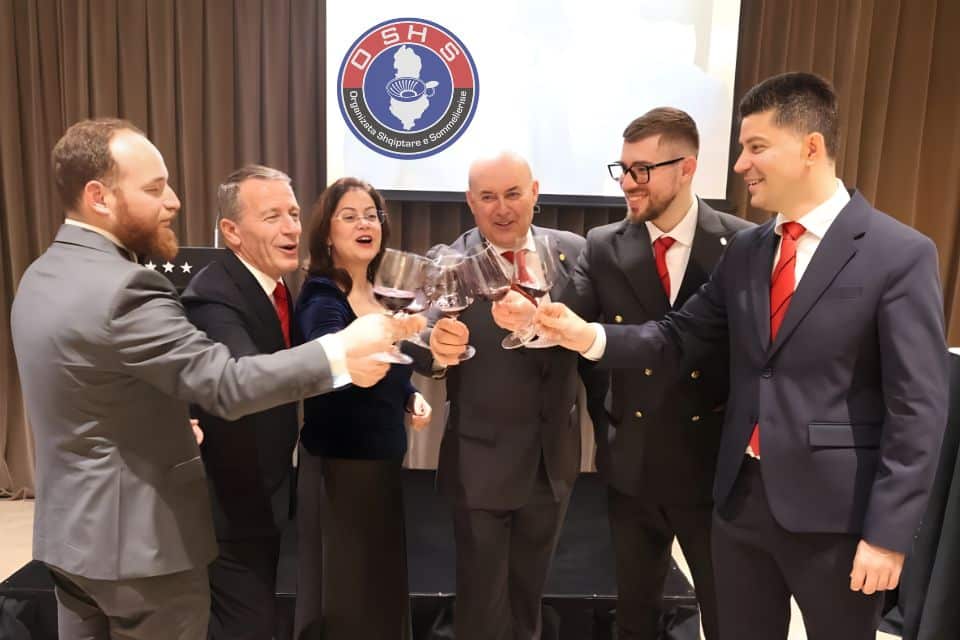
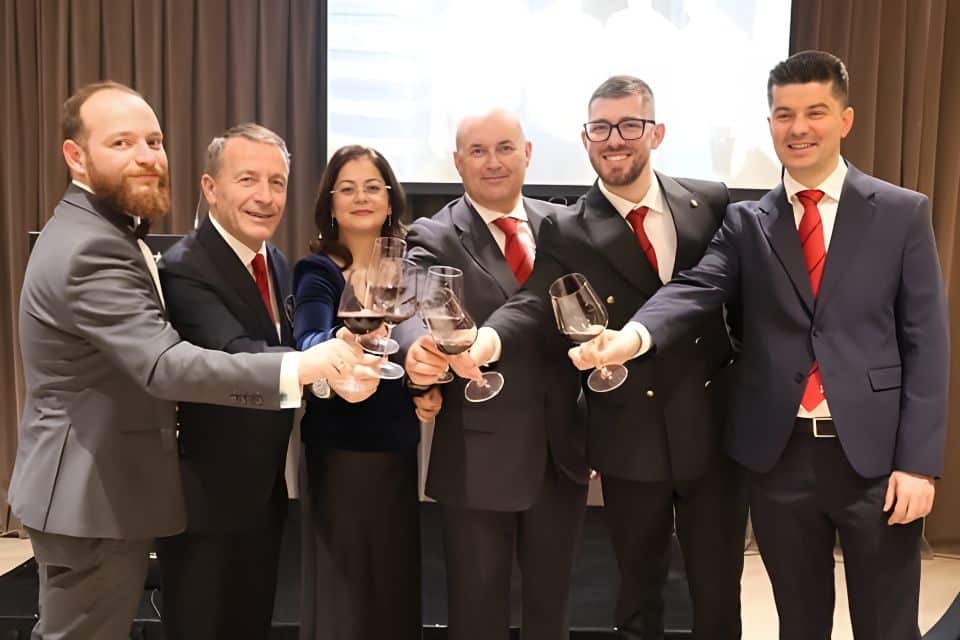
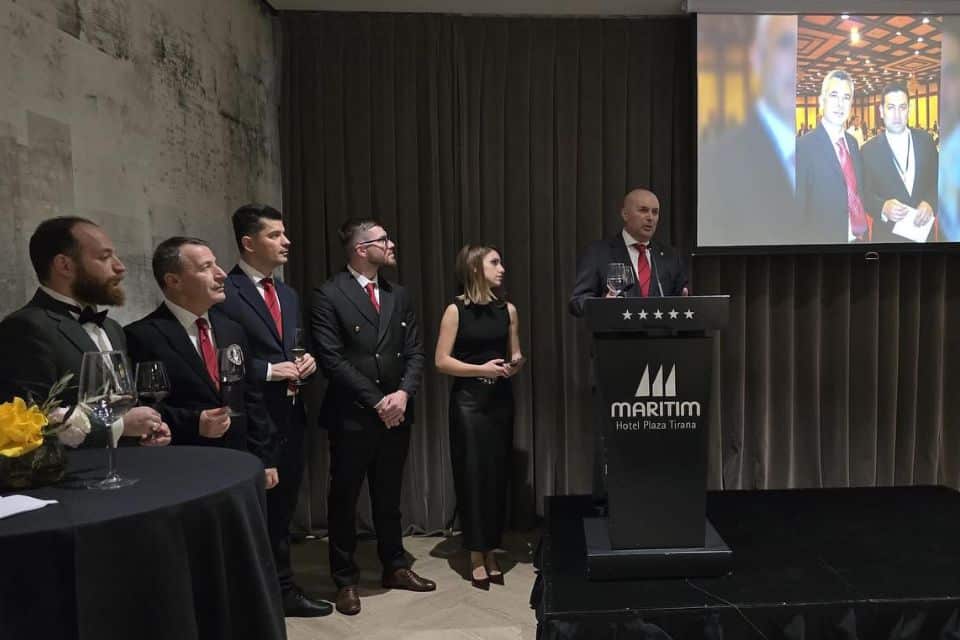
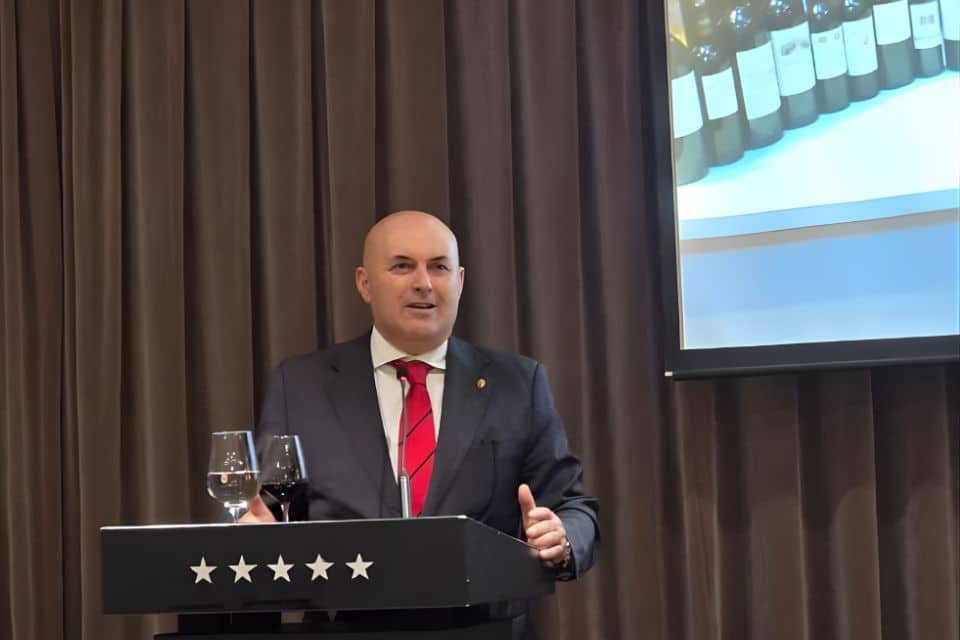
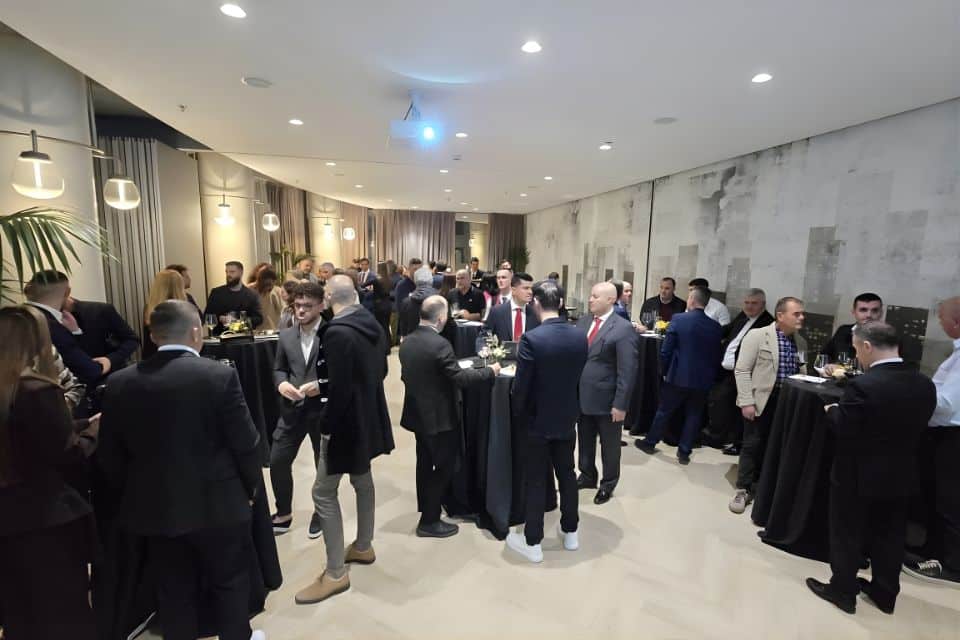
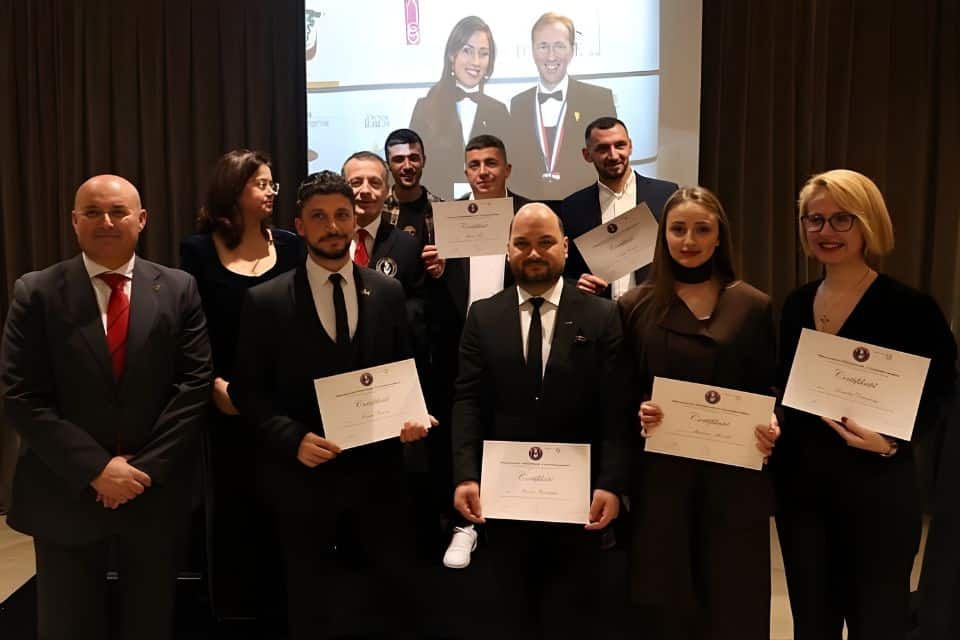
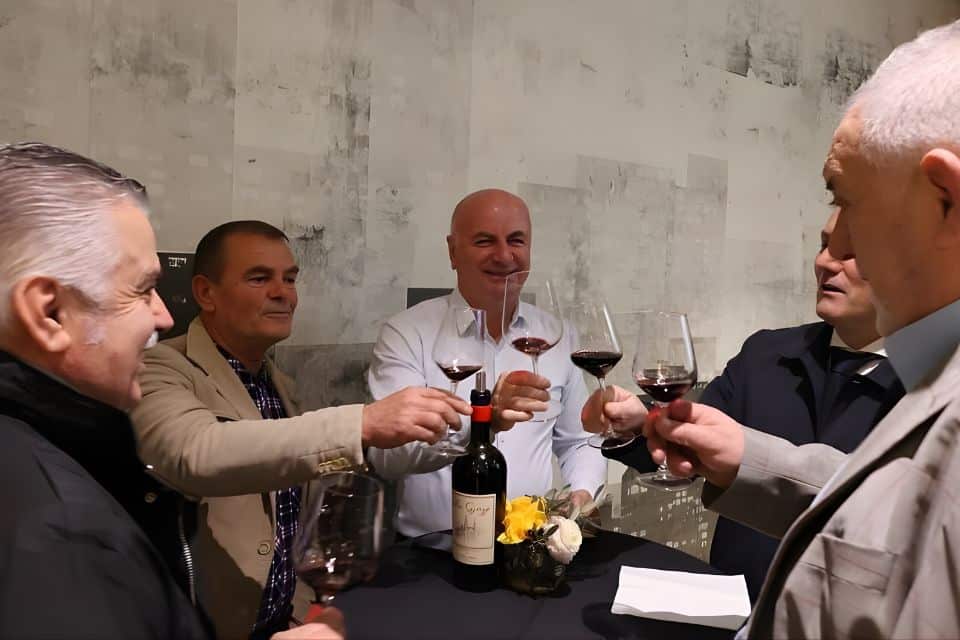
In 2025, Organizata Shqiptare e Sommelierisë (OSHS), the Albanian Sommelier Association, turns twenty. The celebratory ceremony took place at the Maritim Hotel Plaza in Tirana on the evening of December 12. Members, trainers, and representatives of the Albanian wine world gathered here—those who, over these two decades, have accompanied the growth of sommellerie in the Balkan country. An anniversary that marks an important milestone for an organization founded in 2005, with the goal of building a professional wine culture in Albania.
The association was founded by Dashamir Elezi, now president of the association, together with Petraq Ilollari, Dritan Beqiri, Sokol Luçi, and Silvana Hyseni. Five founding members who shaped a project that was pioneering at the time and is now internationally recognized.
THE ORIGINS OF ALBANIAN SOMMELLERIE
In an exclusive interview with Winemag, Dashamir Elezi traces the milestones that led to the 20th anniversary of the Albanian Sommelier Association. Two decades in close relationship with Italy. Since 1997, Elezi has attended courses at the Italian Sommelier Association in the Marche region, eventually becoming an official taster. An experience that enabled him to acquire technical skills and a structured vision of the profession.
In 2002, he returned to Albania, this time as an entrepreneur. Elezi started an import-export company, initially focused on professional cleaning products from Italy. At the same time, his connection with wine remained strong, nourished by a family tradition linked to agronomy and the wine sector.
FROM IDEA TO FOUNDING THE ASSOCIATION
The idea of creating an association took shape through discussions with the then regional president of Sommellerie Marchigiana, Teodoro Bugari. A monument of Italian sommellerie (who passed away in 2011). It was he who encouraged Elezi to establish an independent organization in Albania. Starting in 2002, the first activities began: private courses, informal meetings dedicated to food-wine pairing, and importing Italian wines to the Balkan country.
Around this rising figure in the Albanian wine scene, a team interested in building “something more structured” began to gather. This led to the creation of the statute and internal regulations, drafted with the necessary legal support. “On May 25, 2005 – Elezi explains – official recognition came from the Albanian State, with the assignment of a tax ID number and the formal definition of the association’s purposes.”
GROWTH AND INTERNATIONAL CONTACTS of Organizata Shqiptare e Sommelierisë
“In the early years – the founder continues – Organizata Shqiptare e Sommelierisë, the Albanian Sommelier Association, had only five members, namely the founders. But our goal was clear: to grow through training. Starting in 2006, we consistently organized two or three annual courses for sommeliers, thanks also to the contribution of figures such as Teodoro Bugari himself, Claudio Giacomini, Graziano Simonetti, and Otello Renzi.
The role of Giuseppe Vaccarini was also central. These were the years of his presidency of the Italian Sommelier Association (1999-2002). A role through which he was able to accompany the Albanian association in its consolidation process, which continues today in his capacity as chief representative of Aspi – Professional Italian Sommellerie Association.
In 2006, Dashamir Elezi then made contact with the International Sommelier Association (ASI), thanks to the support of Gualberto Compagnucci, Italian sommellerie champion and Knight Commander of the Italian Republic. In 2007, the official candidacy to ASI was submitted, followed by a visit from an international trustee to Albania. In the same year, the association was accepted as a candidate member. It then obtained full member status in 2009 during the General Assembly.
MEMBERS, TRAINING, AND CURRENT CHALLENGES
Today, Organizata Shqiptare e Sommelierisë has approximately 240-250 members. A significant number when compared to Albania’s size, a country of 2.3 million inhabitants. Over the years, the association has promoted national competitions and participation in international contests, with its members even reaching the semifinals. A testament to the level of preparation of the professionals trained in Tirana.
However, the challenge of youth migration remains in the Balkan country. “Many Albanian sommeliers, once they complete their training – Elezi tells Winemag – work abroad. In Croatia, Slovenia, Italy, Germany, France, the United States, and Australia. The association’s growth is progressive and tied to a limited but dynamic demographic context.”
RESULTS OF THE POGRADEC WINE COMPETITION
The icing on the cake of the 20th anniversary celebrations of the Albanian Sommelier Association was the participation of four Albanian sommeliers in the Pogradec Wine Competition, a town in Albania overlooking Lake Ohrid (or Lake Ocrida), one of Europe’s deepest and most biodiverse lakes. The results follow.
In the white wine category, first place went to Kantina Fani from Berat, followed by Kantina Kopliku from Malsia e Madhe and Kantina Bejko from Permeti. As for red wines, the victory was won by Kantina Max Wine from Korça, ahead of Kantina Sina from Tepelene and Kantina Flavio from Durrës. In the rosé category, finally, Kantina Binjakët from Tirana prevailed, with Kantina Fani from Berat in second place and Kantina Max Wine from Korça in third.
“Despite being a small provincial competition in the southeast of the country – Elezi comments – wineries from other areas responded well to our call. The quality of more artisanal productions can, and must, still improve. The raw material is excellent, but there’s much work to be done in terms of know-how for those working in a “natural” way. All the conditions are there for a bright future for Albanian wine, as demonstrated by the wines from wineries equipped with better technology.”