IN BREVE
- The 2025 Barbera vintage shows limited yields but high quality, with balanced and structured wines.
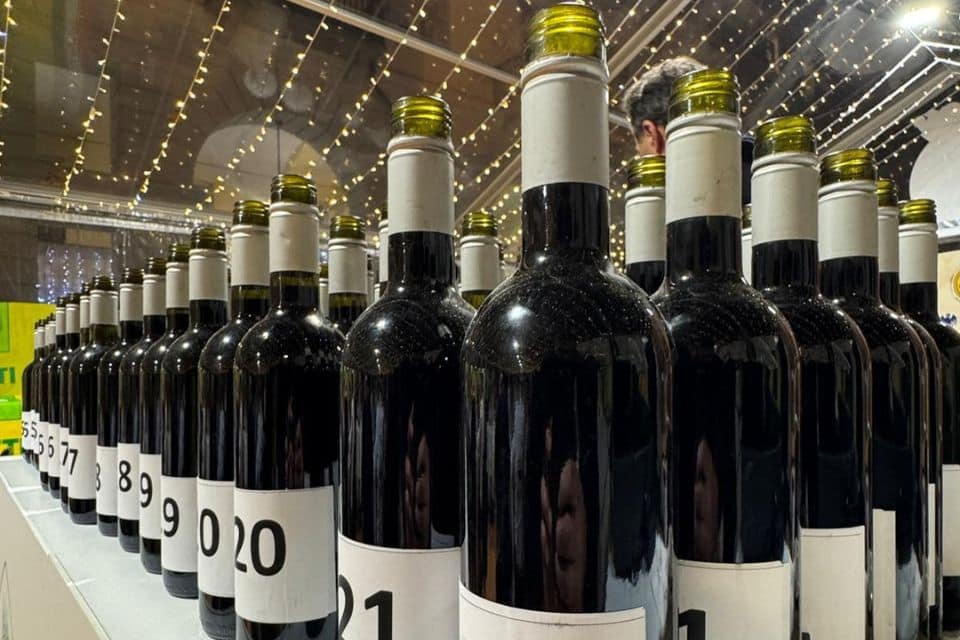
- During Coldiretti’s Barbera Preview, Professor Vincenzo Gerbi praised the quality of the 21 selected samples.
- Laboratory analyses show increasing parameters compared to the 2024 vintage, with an average alcohol content of 14.56% vol.
- The wines tasted range from ready-to-drink to those suitable for aging, all at a high level.
- The president of Coldiretti Asti, Monica Monticone, emphasized the importance of the Preview for improving product quality.
The 2025 Barbera vintage presents limited yields but a high quality profile. What emerges are balanced, expressive wines with a solid structure, both in the ready-to-drink versions and those destined for aging.
This scenario emerged during the technical tasting of the 24th edition of Anteprima Barbera, an event promoted by Coldiretti Asti and dedicated to promoting the symbolic grape variety of the Asti region. The event took place on Wednesday, December 10, at the PalaTartufo in Piazza Alfieri, Asti.
WORDS FROM VINCENZO GERBI
Leading the tasting of the 21 selected samples was Professor Vincenzo Gerbi, former Professor of Food Science and Technology at the University of Turin. “For Barbera, the future d’Asti DOCG and Nizza DOCG, the 2025 vintage was limited in quantity but excellent in quality, with very balanced wines, rich in typical aromas and pleasant on the palate.”
THE WINES TASTED
The analyzed samples include 13 future Barbera d’Asti DOCG and 8 future Nizza DOCG wines, coming from the main production areas of the Asti region: Castelnuovo Don Bosco, Agliano, Vaglio Serra, Albugnano, San Damiano d’Asti, Asti, Montegrosso d’Asti, Castagnole Lanze, Montemagno, Nizza Monferrato, Mombercelli, Casorzo, Castelnuovo Calcea, and Cisterna d’Asti. The tasting was supported by laboratory analyses from the Piedmont Wine Research Center in San Damiano d’Asti.
ANALYTICAL DATA FOR THE 2025 VINTAGE
A comparison with the 2024 vintage shows growing parameters in terms of structure and extraction. On average, the total alcohol content stands at 14.56% vol (+0.18), while total acidity reaches 7.04 g/L (+0.63). The pH drops to 3.5 (-0.03).
There is also a significant increase in color intensity, which rises to 1.21 compared to 0.88 in 2024. Anthocyanins are up, with 343 mg/L (+17), as are total flavonoids, which reach 2,038 mg/L (+463). The tannin/anthocyanin ratio is also increasing, moving from 3.8 to 4.9.
BALANCE AND EVOLUTIONARY POTENTIAL
“The samples tasted are divided into wines that are more ready-to-drink but with great structure, and others more suitable for aging; in general, all are of a high level,” Gerbi emphasized. “There is also a perfection in winemaking among almost all producers now.”
On the same note was Daniele Rabbione, director of the Piedmont Wine Research Center and deputy director of Coldiretti Asti. “We can now confirm that the past season was an excellent vintage. The analyses revealed Barbera in perfect organoleptic balance, with a significant concentration of color and polyphenols.”
THE ROLE OF TECHNICAL COMPARISON
According to Monica Monticone, president of Coldiretti Asti, the Preview represents a growth tool for wineries. “It is satisfying to see how, over the years, thanks also to this opportunity for technical-scientific comparison, companies have increased the qualitative value of the product.”
This concept was also reiterated by director Giovanni Rosso: “The precise analyses of the Piedmont Wine Research Center are fundamental for managing the aging process and evaluating the different potentials for longevity.”
No post found!