IN BREVE
- On November 28 in Milan, the challenges and prospects of espresso coffee in Italy will be discussed during IEI Connect.
- Alessandro Borea highlights the complexity of the bar sector and the need to maintain high quality in both coffee and service.
- The Italian Espresso Institute is committed to training and promoting quality, supporting both traditional and specialty coffee shops.
- Borea emphasizes the importance of increasing the perceived value of espresso to justify a fair price for the consumer.
- The issue of professional machine equipment loans is also addressed, a practice considered standard in the industry.
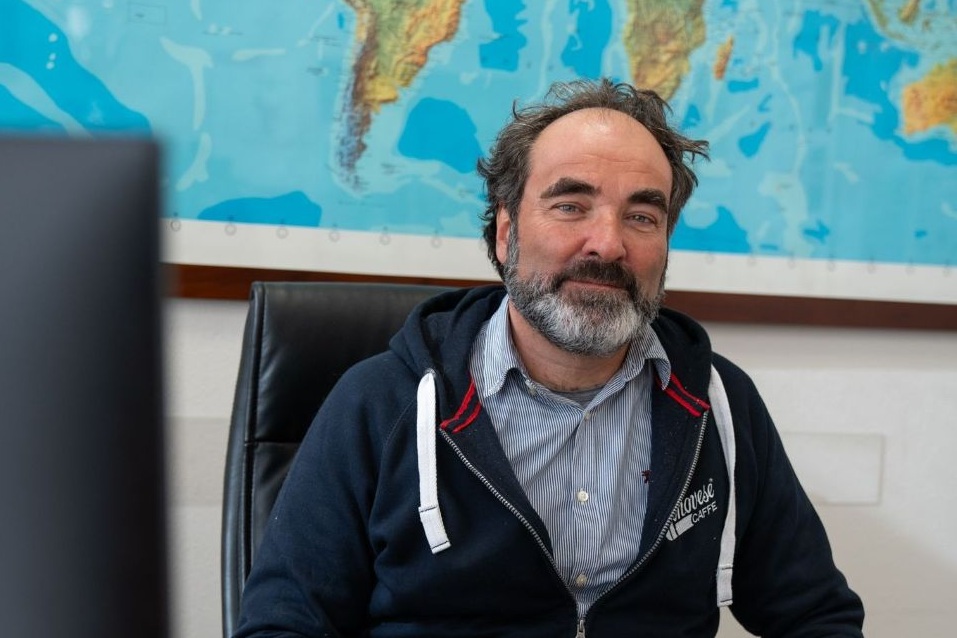
One month before IEI Connect, scheduled for November 28 in Milan, the Italian Espresso Institute (IEI) is sparking debate on the sector’s challenges and the future prospects of espresso in Italy. According to President Alessandro Borea, the current situation calls for a clear-eyed analysis.
“We cannot deny that the bar sector is going through a complex phase, with numerous critical issues highlighted by the latest FIPE data, which shows many businesses are closing. In too many cases, the quality of the coffee, service, and barista preparation does not meet expectations, and it would be anachronistic to ignore these aspects.” Borea emphasizes, however, that “there are many establishments in Italy that represent excellence—bars where you can enjoy high-quality espresso, served by trained and attentive baristas capable of offering an experience that enhances Italian tradition.”
TRAINING AND ENHANCEMENT OF TRADITIONAL AND SPECIALTY COFFEE SHOPS
The Italian Espresso Institute reaffirms its commitment to training and promoting quality. “In this context, our commitment is twofold: on one hand, to help and highlight those establishments that set the standard for professionalism and quality; on the other, to support the growth of traditional coffee shops,” Borea explains.
The president adds: “With passion and care, these establishments contribute to making Italian espresso known and appreciated worldwide. These venues, often family-run, are the true engine of the sector and deserve to be valued. Furthermore, specialty coffee shops deserve attention—places where coffee culture evolves through research, training, and experimentation.” For IEI, these businesses are a strategic element for raising overall quality and spreading new awareness among consumers.
RESTORING VALUE TO THE CUP OF COFFEE
Another central issue concerns the price per cup. “Our goal as IEI is to increase the perceived value of espresso so that consumers are willing to recognize and pay a price that matches the quality, whether it’s an espresso or a well-prepared cappuccino,” says Borea. To this end, the Institute promotes coffee training and culture, alongside projects like the Barista Ambassadors, designed to bridge the gap between tradition and innovation and restore value to a product that is a symbol of ‘Made in Italy’.
EQUIPMENT LOANS AS AN OPPORTUNITY FOR THE SUPPLY CHAIN
Among the topics at the center of the debate is the loan-for-use of professional machines, which has always been considered a critical point. “Equipment loans are often cited as one of the causes of certain problems in the sector and, undoubtedly, contributed to a general decline in quality in the past. However, today it represents a consolidated practice, adopted by almost all baristas and roasters,” Borea observes. According to the IEI president, “thinking of eliminating it would be impractical; it is more appropriate to consider it an opportunity, where roasters and baristas, even while using equipment loans, continue to work with high-quality blends.”