IN BREVE
- Romagna Sangiovese Sottozona represents a symbol of quality and vindication for wine producers.
- Cristina Geminiani (Fattoria Zerbina) highlights the importance of the Romagna Sangiovese Subzone Maps in showcasing the identity of different micro-areas.
- The Consorzio Vini di Romagna approved 16 subzones between 2011 and 2022, improving understanding of the distinctive characteristics of hillside Sangiovese.
- Masnaghetti’s maps help create a stronger connection between wines and their origins, reducing the gap with other wine regions.
- The next goal is to present the maps of individual Romagna Sangiovese subzones in 2026.
Romagna Sangiovese Sottozona as a symbol of vindication. A hymn to quality, celebrated through sweat. The counter-manifesto of an entire sector—wine entrepreneurs—too often seen as a category always celebrating. So similar to the stereotype of Romagna itself. Land of sea, piadina, riviera. Of wild nights at the disco and summers of falling in love and losing yourself under a beach umbrella. Until the next toast to the good life.
Clichés that are cumbersome totems, capable of overshadowing the mountains. That Apennine and those hills, rugged and wooded, where great wines are born. Bitter powdered sugar on earth-stained hands and boots sinking into mud. Useless weapons against the increasingly challenging trials of climate. And the uncertainties of a market influenced by international politics.
CRISTINA GEMINIANI (FATTORIA ZERBINA): “WE’RE NOT JUST PIADINA AND SCIUCAREN”
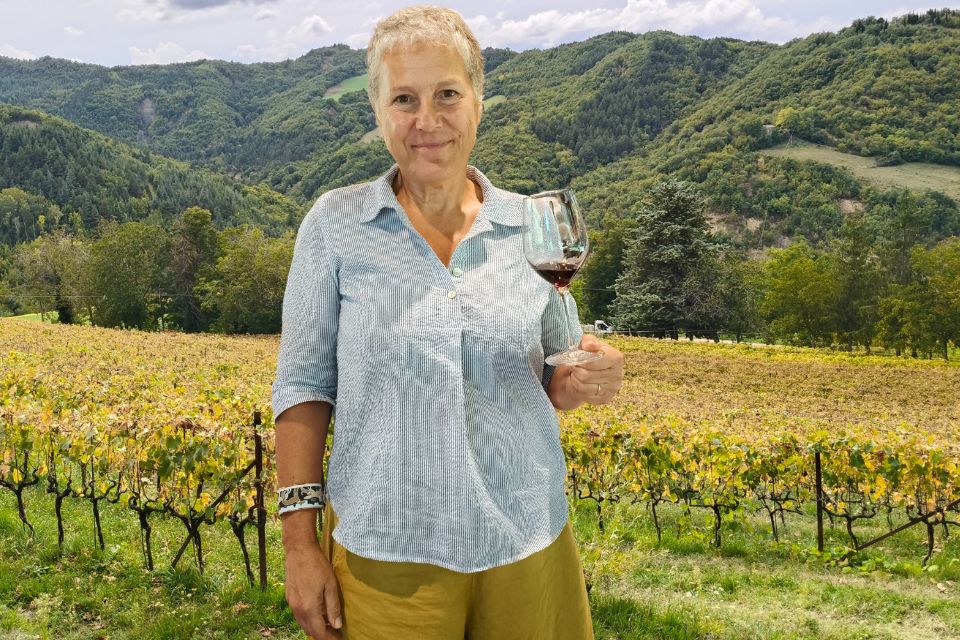
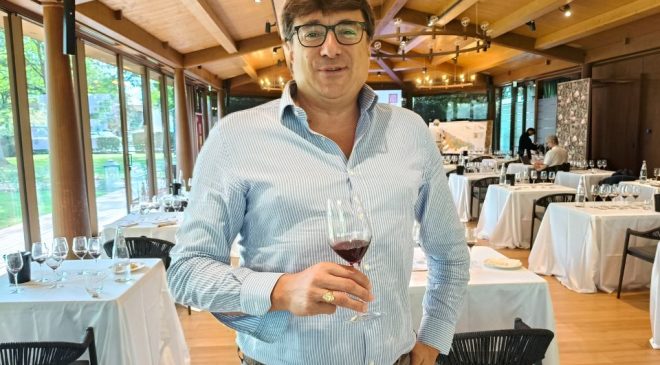
She smiles more with her eyes than her lips, winemaker Cristina Geminiani of Fattoria Zerbina, as she tells Winemag about the added value of the Romagna Sangiovese Subzone Maps for producers. On the palate, at the conclusion of a tasting of some older vintages—the zenith reached on Tuesday, September 23 at Vini ad Arte 2025, the preview of iconic Romagna wines, Sangiovese and Albana—the guests in the room set up at Villa Abbondanzi Resort in Faenza still have the vivid, bracing flavor of her extraordinary Pietramora 1985.
We need to move beyond the image of Romagna as all sea, piadina, and sciucaren, even if meant in a positive sense and without wanting to offend anyone. This Romagna that’s always seen in an overly simplistic way, perhaps because of the good nature of Romagnoli, who are fantastic people. Our work isn’t just about joy, about constant celebrations. It’s mainly about great dedication. About difficult vintages, about easy and difficult choices.
Cristina Geminiani
“IN ROMAGNA, AGRICULTURAL ENTREPRENEURS FIGHTING FOR QUALITY”
“The limitation I unfortunately see today in Romagna—continues the Ravenna producer—is precisely that of always seeing it as a joyful region, of beaches and happiness. And not thinking that there’s actually a whole category of agricultural entrepreneurs who are fighting. To demonstrate that there’s something else, something profound. And above all something that, with commitment, can allow us to stand absolutely well among many other colleagues from regions far more renowned than ours.”
Cristina Geminiani, not by chance, is among the first to have believed in and proposed “cru” Sangiovese wines that emphasized the specificity of their own “subzone.” Or, even more, of their own municipality. In 1985, when Masnaghetti’s maps were still science fiction for Romagna wine, she labeled Pietramora as “Table wine from Marzeno,” named after the locality nestled between the municipalities of Brisighella and Faenza, from which the grapes came.
THE ADDED VALUE OF THE ROMAGNA SANGIOVESE SUBZONE MAPS
“Being able to convey to the end consumer this identity-driven idea of a large production area, synthesized by micro-areas, is an incredible added value. Pietramora proves it: in my family, since the 1980s, there was the idea of seeing something in Marzeno with an identity different from everything else. Now the challenge is to use the Romagna Sangiovese Subzone Map as a promotional tool to make this identity even better known.”
The maps are an incredible opportunity to spread a wine culture that in Romagna, at least officially, arrived much later than in other Italian regions, such as Piedmont, Tuscany, or Valpolicella. They’re an extremely important tool that I hope producers will always carry with them, to accelerate the timeline and reduce this gap with other territories.
“MAP MAN” MASNAGHETTI CONVINCES CONSORTIUM AND PRODUCERS
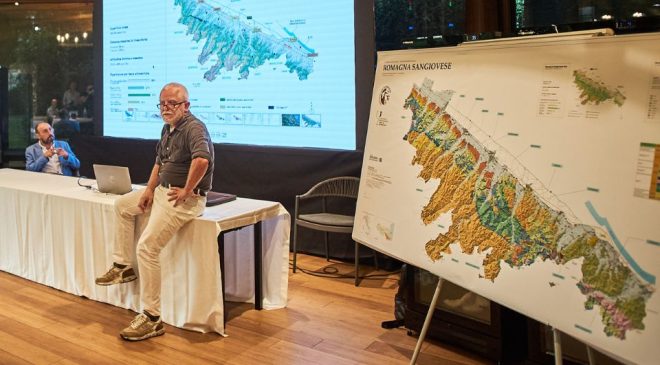
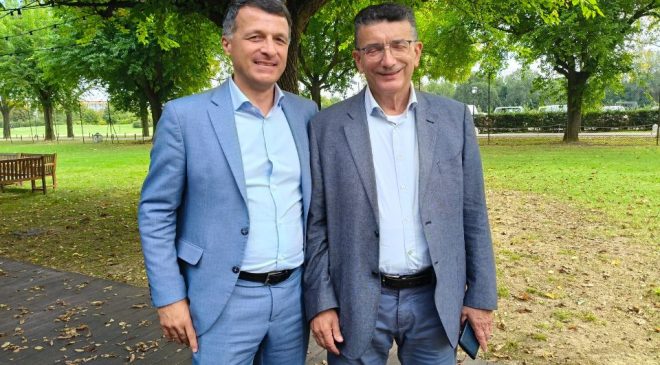
There’s great enthusiasm around the Consorzio Vini di Romagna’s new step. For president Roberto Monti, “Masnaghetti’s work, begun in the early 2000s and realized between 2011 and 2022 with the approval of 16 subzones, helps understand the distinctive characteristics of Romagna’s hillside areas, which extend from Rimini to the outskirts of Bologna, with notable differences from one valley to another and depending on soil geology.”
“There’s a remarkable aspect of synthesis—adds the director of Consorzio Vini Romagna, Filiberto Mazzanti—. Now we need to create a further communication synthesis, developing ‘information capsules’ that can be even more immediate and useful to anyone wanting to approach the extraordinary variability of Romagna Sangiovese.”
Also enthusiastic is Enrico Drei Donà, historic producer of the area with Tenuta La Palazza: “Masnaghetti’s subzone maps—he explains—are an exceptional synthesis work for understanding the various nuances of Romagna Sangiovese. The next step, in 2026, will be to present the maps of the 16 individual subzones. Masnaghetti’s work makes geological knowledge more accessible to everyone and helps us appreciate our wines even better.”
“When I started in 2010—comments Marco Cirese of the Noelia Ricci winery—my intent from the beginning was to showcase Sangiovese from the Predappio subzone, vinifying it pure and trying to reflect the territory and soils. Masnaghetti’s maps further enhance this approach, helping us create an even stronger connection between our wines and their origins.”
Romagna Sangiovese Sottozona: “We’re more than just sea and piadina.” https://www.consorziovinidiromagna.it/le-sottozone-del-romagna-sangiovese-doc/.