IN BREVE
- Prokupac Day 2025 in Belgrade showcased the evolution of Prokupac, Serbia’s flagship grape, which now boasts a new, more elegant identity.
- The Prokupac Riedel Performance glass marks significant growth for this wine, bringing it closer to the world’s great wines.
- Today, Prokupac represents only 5% of the vineyard area in Serbia, a sharp decline from 60% in the 1970s.
- Recent improvements in cultivation and winemaking have led to more elegant and profound wines, as seen in the varied styles presented during Prokupac Day.
- There is growing interest in Prokupac in international markets, thanks to its competitiveness and the renewed appeal of Balkan wines.
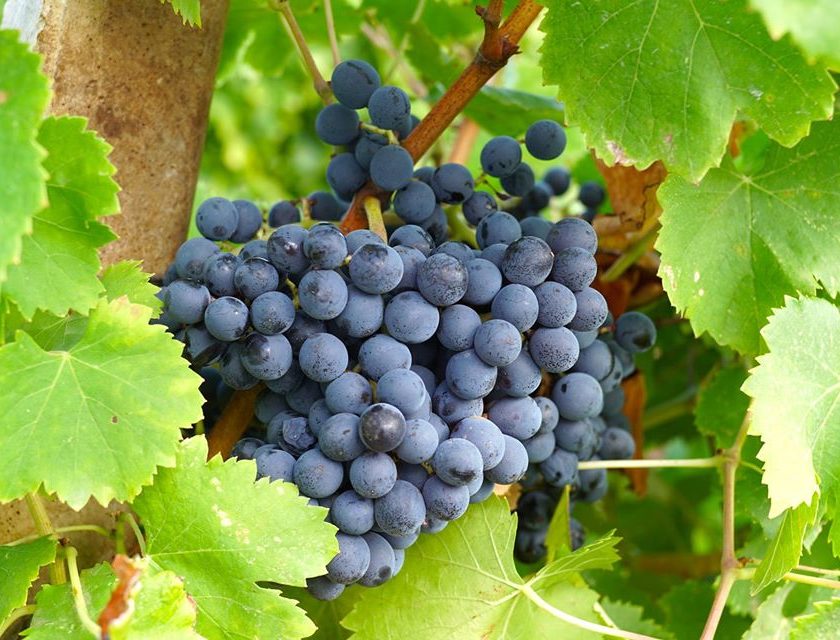
Sometimes the past tells the story of the present better than a photograph taken here and now with the latest Polaroid model. The snapshot of Prokupac Day 2025—held in Belgrade in mid-October—reveals the profound change made by Serbian producers to what was, and is even more so today, one of the iconic grape varieties of the Balkans. Farewell to the pitch-black, concentrated, and high-alcohol Prokupac that everyone was used to and from which the general public gradually began to distance itself. Prokupac, Serbia’s iconic grape and wine, now has a new identity.
Defined by a more or less pronounced ruby color. By an elegant spiciness accompanying crunchy red and black fruits, ready to bite into. Structure, yes. But also inviting drinkability, even when young. An aspect that does not at all compromise its extreme aging potential. Observed from a distance, the footage of Prokupac Day 2025 could take on the appearance of a Barolo or a Barbaresco. Or even a Pinot Noir, a Nerello Mascalese, a Beaujolais. A Vosne-Romanée. A Pommard. Or a Santenay.
No oversight. Nothing requiring an eye exam. Only those in the know understand how much Prokupac’s change of pace—and its climb toward the launchpad of definitive consecration among the world’s great wines—has to do with Riedel’s decision to dedicate a specific glass to the Serbian grape, the Prokupac Riedel Performance. The same one with which the famous Austrian glassware house recommends drinking the prestigious Italian and French denominations mentioned. It was 2022. In the harmonious shape of that crystal lies the certification of a colossal change of pace. One of those that shuts the door on the past and opens the view to new, unthinkable perspectives.
AT THE ORIGINS OF PROKUPAC, SERBIA’S INDIGENOUS GRAPE
The toponym “Prokuplje” first appears in a written source in a charter from 1395 in which Princess—in Serbian Kneginja—Milica, regent of the Principality of Serbia after the death of her husband Lazar Hrebeljanović, assigns properties and rights to the Ravanica Monastery. The term derives from the Latin Vicus Procuratoris or Proculpa, which in the medieval Serbian context is linked to the territories and villages of the current southern area of Prokuplje and Toplica, traditional for Prokupac.
Historically widespread also in the Župa Aleksandrovačka area—considered by many to be the true home of Prokupac—cultivation has expanded over the years to Šumadija, the Negotinska Krajina regions, and eastern Serbia in Timočka Krajina, on the border with Romania and Bulgaria. The Serbian Vineyard Registry indicates that Prokupac today represents 5% of the total vineyard area, whereas in the 1970s it occupied a full 60%.
This amounts to about a thousand hectares of Prokupac, out of a total of approximately 20,000 hectares of vineyards in the Balkan country (2024 data). The goal is to increase the area of this late-ripening variety to about 5,000 hectares. However, the global decline in red wine consumption is dampening the enthusiasm of Serbian producers, leading them, in some cases, to favor new white wine plantings, especially in the most suitable regions, with excellent results.
THE NEW IDENTITY OF PROKUPAC
In recent years, Prokupac has benefited from a change of approach in the vineyard and cellar. A more calibrated use of wood, parcel selection, and well-controlled fermentations of perfectly ripe (only rarely overripe) grapes have given life to authentic and modern interpretations capable of expressing elegance and depth.
On the occasion of Prokupac Day 2025 in Belgrade, different styles emerged, yet all were consistent in telling the story of the grape. From lighter wines focused on freshness to more structured single-vineyard versions designed for aging, and even rosés, though there is still much work to be done on the latter.
Producers highlighted growing interest from importers and the restaurant industry. The renewed appeal of Balkan wines, combined with their competitive value for money, seems to favor Prokupac’s entry into key markets of other traditional Italian and French denominations that already enjoy an excellent reputation. Progress is also being made on the “premiumization” of the Serbian grape and wine, with interpretations from single vineyards and parcels.


TOP 10 PROKUPAC BY WINEMAG
- Prokupac 2019 Bela Stena, Temet (Jagodina): 96/100
“Bela Stena” means “White Stone.” A name that says it all about the type of soil in which this Prokupac is rooted. The wine comes from a single vineyard. White soils that express themselves clearly in the glass within a framework of extreme elegance. From the same winery, don’t miss the Tri Morave Prokupac 2022, with its delicious savory vein on crunchy red fruit. - Prokupac 2023, Vinarija Tarpoš (Šumadija): 95/100
With her arrival at the winery, enologist Jelena Živanović has given a special touch to Tarpoš wines, all marked by elegance and refinement. This Prokupac is also extremely elegant, with great precision on the fruit and divinely calibrated wood. - Prokupac 2021 Breg, Doja (Toplica): 95/100
Prokupac from specific parcels located at 480 meters above sea level. Soils composed of crystalline schists, quartz dolomites, and clay sediments. Optimal varietal extraction over 25 days of maceration. A careful profile on dark fruit and great drinkability, with very well-integrated wood. - Prokupac 2019, Vinarija Aleksandrović (Šumadija): 95/100
The iconic grape of Serbia and the Balkans can age beautifully. This is demonstrated by this 2019 magnum from Vinarija Aleksandrović, one of the most well-known and respected Serbian producers. The wine, produced in Topola, retains plenty of freshness and red fruit. It stands out for its elegant tannic texture and classic spiciness. - Prokupac 2022 Veliki Župan Vila Vina, Vinarija Milosavljević (Trstenik): 94/100
Wine dedicated to Stefan Nemanja, founder of the Nemanjić dynasty, considered the father of the Serbian nation. This Prokupac (with a minimal addition of Merlot and Cabernet Sauvignon) recalls the commander and ruler of Serbia in its structure and the pride of its aromas. Soft tannins and great pleasure outline the contours of an important wine that doesn’t forget drinkability. Also excellent from the same winery is the Prokupac Vila Vina “Stari Rskavac”: a little Barbaresco. Lots of floral notes, crunchy fruit, a touch of spice, and great aging potential. - Prokupac Superiore 2019 Čukundeda, Matijašević Vinogradi (Šumadija): 94/100
Here the dedication is to great-grandfather Dragomir Matiješević, a renowned viticulturist and enologist. The percentage of dried grapes gives this delicious Prokupac depth and breadth on the palate, which well compensate for the dense, evolving tannins and good freshness. With eyes closed, it’s a red that recalls a high-quality Ripasso della Valpolicella. - Prokupac Reserve 2017 – Limited edition, Vinarija Milinčić (Župa Aleksandrovačka): 94/100
In the Balkan region and Eastern Europe, the 2017 vintage confirms itself at very high levels with this Prokupac as well. A powerful and long-lived wine, reflecting the concentration of the old vines from which it comes. With this label—the result of a graphic restyling wanted by Danijel and endorsed by his father Milivoje Milinčić—we are perhaps at the highest levels of combining tradition and modernity. Between the past and the present of Serbia’s iconic grape and wine. - Prokupac 2023, Natural Grape Concept (Župa Aleksandrovačka): 93/100
The very first vintage for this winery, founded by architect and viticulturist Jelena Živković Dimitrijević, with enologist Radovan Đorđević. Next year, the company will obtain organic certification for its grapes, which are processed naturally, as the chosen name for the winery clearly explains. In the meantime, the 2023 Prokupac vintage is a smooth start and a promise of a bright future: full of fruit, powerful in tannins and spice, a faithful mirror of the grape in the Župa region. - Prokupac 2020, Vinarija Grabak (Tri Morave): 93/100
Wine obtained from an old vineyard located at 500 meters above sea level, with vines averaging 40 years of age. A winery that works according to low-intervention enological standards, placing great attention on grape quality in the vineyard. The glass speaks clearly. Grabak’s is a Prokupac faithful to the traditional fullness of fruit and structure, also pronounced by the tertiary notes provided by well-blended wood. Drink now or keep longer, without fear. - Prokupac 2022 Zmajeviti, Vinarija Despotika (Šumadija): 92/100
Special mention for this Prokupac, which could be seen as a synthesis of Prokupac Day 2025 in Belgrade. Vinarija Despotika presents it among the bottles of a precious vertical tasting starting from 2015, telling—well beyond the company’s borders—where the Serbian grape and wine has been “going” in recent years. That is, toward drinkability, agility, freshness, and precision. A label, moreover, that shows how the “new” Prokupac can also be consumed slightly chilled from the refrigerator.