The harvest on the Greek volcanic island through the eyes of Domaine Sigalas. A third consecutive decline, but the winery led by Stellios Boutaris is focusing on new plantings, technology, and collaborations to revitalize the vineyards. Climate, the abandonment of traditional practices, and labor costs are threatening the survival of the viticultural system.
The 2025 harvest in Santorini closes with a new record low: barely 450 tons of grapes collected. This marks the third consecutive year of production decline, with yields in some cases limited to 500 kg per hectare. Meanwhile, the average price of grapes continues to rise, surpassing the historic levels of 2024. “There is still a light at the end of the tunnel,” comments winemaker Stellios Boutaris, head of Domaine Sigalas, one of the best wineries in Santorini. “Our task,” he continues, “is to face current circumstances and build a sustainable future. Keeping Santorini as a museum piece makes no sense. We have chosen the path of systematic investment.”
According to the latest available data, total grape production in Santorini in recent years has hovered between 2,500 and 3,000 tons, with peaks of up to 5,000 tons in 2003. The latest production, just over 400 tons, highlights an exorbitant drop compared to past years and the previous decade. In terms of wine, the 2025 harvest in Santorini will settle at a total of 390,000 bottles.
SIGNS OF A STRUCTURAL CRISIS, BUT THE ANEDOSA RETURNS
According to Stratos Guillame Xyrafis, vineyard manager at Domaine Sigalas, the current situation is the result of weaknesses accumulated over decades. “Climate change,” he explains, “has amplified chronic problems such as the abandonment of traditional practices and the aging population of winegrowers.” The labor shortage, made even more severe by the high cost of living on the island, has led to neglected vineyards and increasingly poor yields.
Climate data from 2025 confirms the difficult picture: a mild winter with irregular budding, rainfall halved compared to the twenty-year average, and strong winds that particularly damaged the southern part of the island. The only positive note is the return of the “anedosa” phenomenon, the sea mist that aids grape ripening.
2025 HARVEST IN SANTORINI: QUALITY PRESERVED
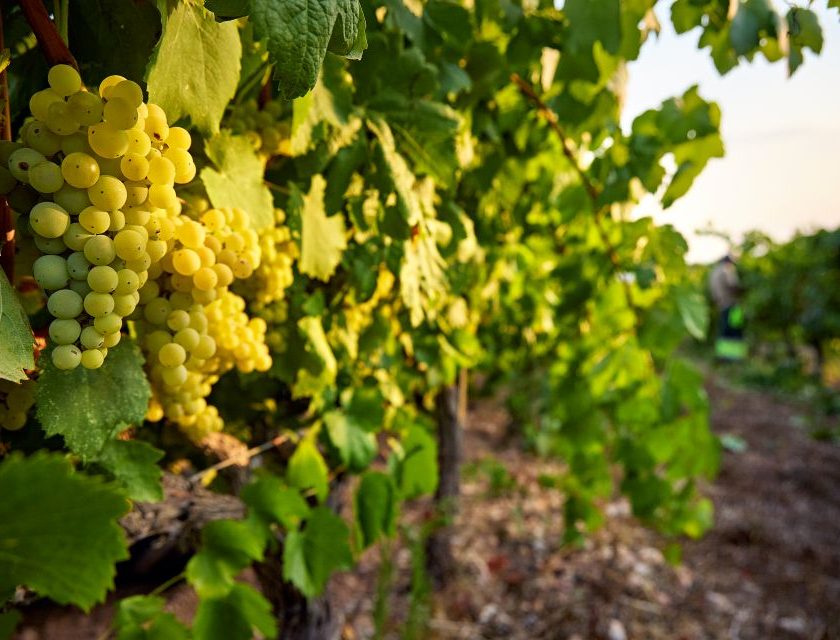
Domaine Sigalas recorded a 15% reduction compared to 2024. The harvest began on August 7 with Mavrotragano and continued until August 27 with Aidani. “The timing of the harvest was decisive,” emphasizes oenologist Sara Iakovidou. “We moved it forward to preserve acidity, phenolic ripeness, and aromas. The 2025 wines will have a lower alcohol content, around 13.5%.”


THE VINEYARD RENEWAL PLAN
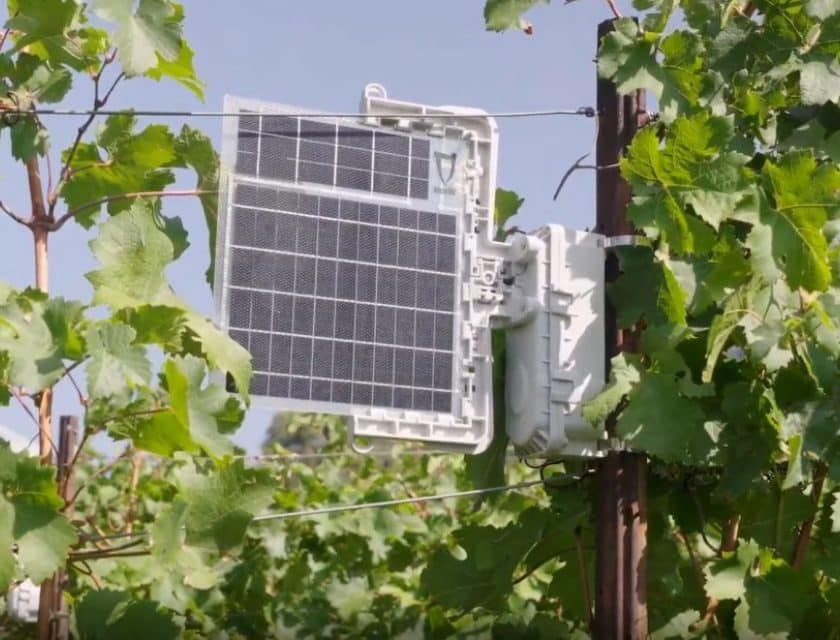
Since 2020, Domaine Sigalas has intensified investments, with 17 hectares of new plantings already completed and a total of 45 hectares cultivated in the northern part of the island. The goal is to create a sustainable vineyard that is resilient to climate change and less dependent on seasonal labor.
Renewal involves recovering traditional training systems, “kouloura” and “kladedtiko”, combined with higher densities and greater operational efficiency, also thanks to mechanization. The irrigation protocol developed by the company aims to maintain soil moisture without resorting to intensive irrigation.
A GENERATIONAL CHALLENGE: THE REBIRTH OF SANTORINI’S VINEYARDS
In parallel, Domaine Sigalas is participating in an experimental project on the use of greywater, in collaboration with other Santorini wineries, the Aristotle University of Thessaloniki, and local authorities, as part of the European program “Measure 16 – Cooperation.”
The new generation is already at work: Yiannis Boutaris, son of Stellios, represents the sixth generation of the family in wine. “The first signs from the new plantings,” he highlights, “are encouraging. The knowledge we are accumulating is available to all those who believe in the rebirth of Santorini’s vineyards. We want the island to return to being talked about for the authenticity and quality of its wines.”
MARKET OUTLOOK FOR SANTORINI WINES
The sharp production drop over the last three years and grape prices at historic highs are reshaping the positioning of Santorini wines. Available quantities continue to shrink, while international demand remains high. This could further consolidate the image of the island’s labels as niche products, with a value linked to the uniqueness of the terroir and scarcity.
The main export markets—United States, Northern Europe, and Asia—continue to drive demand, supported by growing interest in wines linked to extreme and recognizable territories. In these contexts, Santorini wines position themselves as high-profile references, intended for consumers attentive to origin and willing to pay a premium price.
The challenge will be to maintain high quality standards, even in the face of the great popularity of Santorini’s flagship variety, Assyrtiko, in other Greek islands and abroad. At the same time, it is crucial to ensure the economic survival of local wineries and growers, in a delicate balance between sustainability and the global market.