IN BREVE
- Sicily is a continent in miniature with a geographic mosaic that creates ideal conditions for viticulture.
- Sicilian vineyards cover approximately 97,000 hectares, with over 32,000 hectares cultivated organically, the highest figure in Italy.
- The Sicily DOC Wine Protection Consortium promotes the identity of Sicilian wines to international markets, enhancing native grape varieties.
- Sicilian wineries are exploring new styles, combining tradition and innovation in native and international grape varieties.
- Sicily DOC represents an export opportunity through a coherent narrative of the territory and its winemaking excellence.
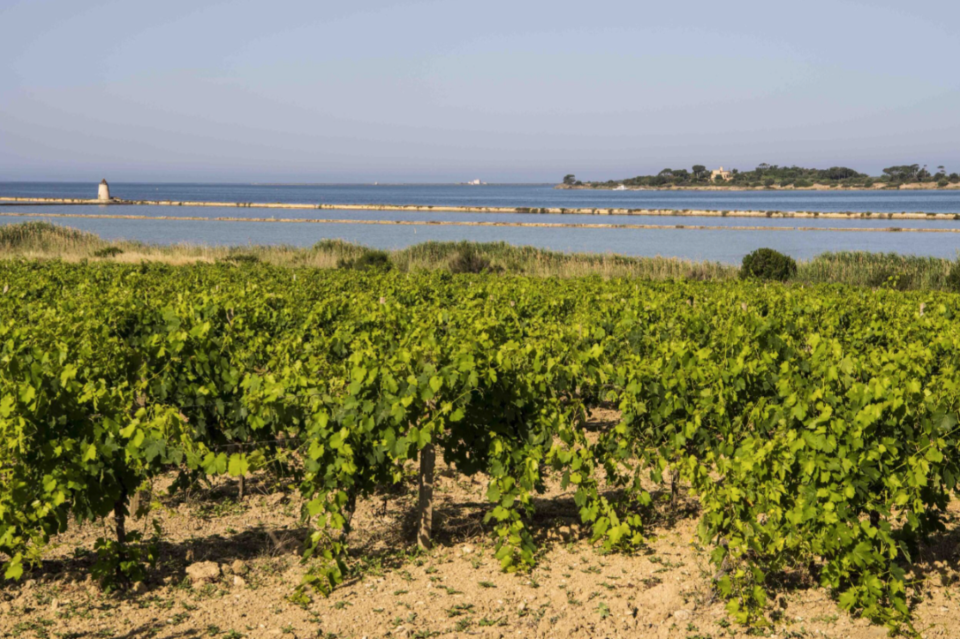
Sicily is an island only for those who look at it on a map. For those who traverse it, but especially for those who cultivate it, it’s a continent in miniature. Sicilians themselves have been saying this for some time: sea on three sides, mountains, hills, sun-scorched plateaus. Smaller islands that seem like satellites and, in the background, Mount Etna reminding everyone that here the earth is alive and burning. Just move a few dozen kilometers to change landscape, soil, and climate each time: windswept coasts, hot and dry inland areas, cold highlands, humid volcanic slopes. A geographic mosaic that makes Sicily one of the most varied wine-growing territories in Europe.
THE SOSTAIN SICILY FOUNDATION
This variety is the reason why the vine, on this island-continent, has found ideal conditions practically everywhere. Sicilian vineyards today approach 97,000 hectares. An enormous area, which alone is worth about three times the entire vineyard of New Zealand. And within this number there’s another decisive record: over 32,000 hectares are cultivated organically, the highest figure in Italy. Sicily, therefore, as a gigantic laboratory of sustainable viticulture. A micro-continent where climate and natural ventilation (and the distance from the rest of the actual continent) allow work while reducing interventions. Also for this reason, driven by the consortium and Assovini Sicilia, the SOStain Sicily Foundation was born. A program open to all wine-growing operations that choose to measure and limit their impact based on concrete measurements (water and carbon footprint, reduction of bottle weight, careful choice regarding corks).
The Sicily DOC Wine Protection Consortium, which turns 12 in 2026, has, in this context, a rather clear role. To give a common direction to a vast system, strengthen the identity of Sicilian wines and communicate it especially to international markets. The chosen image is that of a mosaic, made of very different tiles but capable of composing a harmonious image and (above all) recognizable as a single design from afar. Perhaps from the ambitious perspective of the international market. The risk of the operation—given the extreme variety of territories and identities of the island-continent—is achieving a patchwork effect rather than a mosaic effect. A risk averted by the consortium’s determination to start the DOC narrative from an indisputable pillar common to all areas of Sicily: the presence and enhancement of native grape varieties.
THE STRENGTH OF NATIVE GRAPE VARIETIES
There are fourteen Sicilian native grape varieties: carricante, catarratto or lucido, damaschino, grecanico, grillo, insolia or ansonica and moscato d’Alessandria or zibibbo for white grapes. Alicante, frappato, nerello cappuccio, nerello mascalese, nero d’Avola, nocera and perricone for dark-skinned grapes. Interesting is the trajectory of catarratto or lucido—we’re talking about approximately 30,000 cultivated hectares, which makes it the most widespread grape variety on the island—which is giving excellent results also as a sparkling wine thanks to its acidity, sapidity, and freshness: hardness qualities that bring to the glass a product appreciated even by those who see in the sparkling wine trend only a market issue.
This is the signal: Sicilian native grapes are no longer confined to traditional styles, but become grounds for experimentation. The Consortium’s work lies in holding together protection and experimentation, encouraging producers and territories to explore new interpretations without losing the connection with their origins. The work is hard, but Sicily is a land that doesn’t fear hard work.
THREE POLAROIDS FROM SICILY DOC
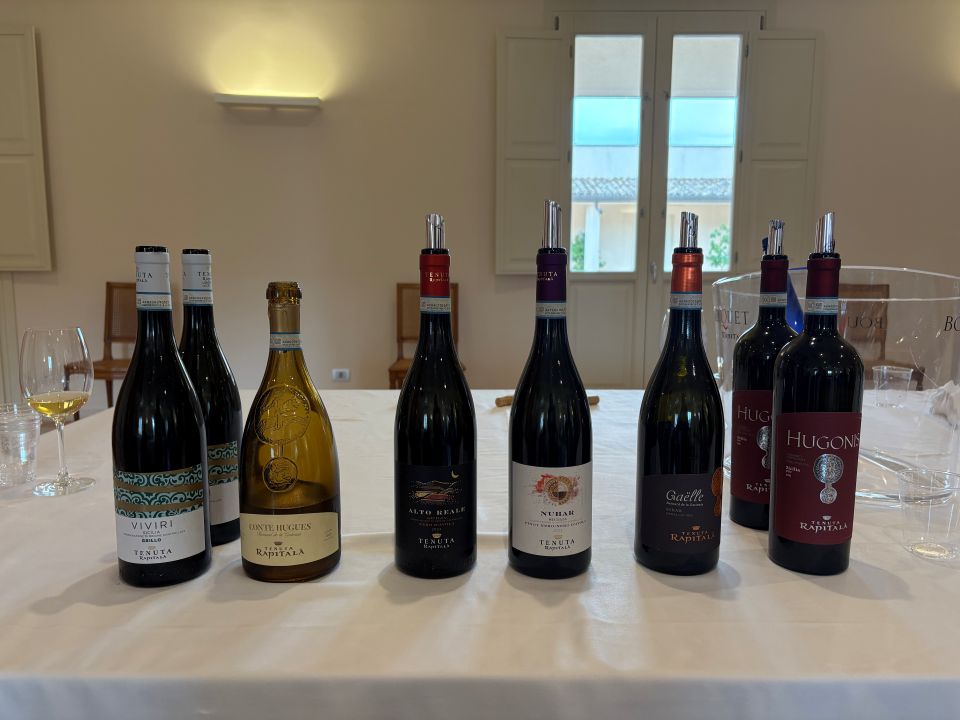
Among the hills of Alcamo DOC, in Camporeale, Tenuta Rapitalà has the appearance of the garden that gave origin to its name (Rabat-Allah, “Garden of Allah”). Founded in the late 1960s from the encounter between the French oenological culture of Count Hugues Bernard de la Gatinais and the Sicilian tradition of the Guarrasi family, Rapitalà works on over 150 hectares in a single block between 300 and 600 meters. Clays, sands, and tuff coexist in the same space, creating distinct micro-terroirs that are managed with a certified organic approach. The international soul is well expressed by the choice to interpret mainly international grape varieties: Cabernet Franc, Pinot Noir (both proposed in blends with the local Nero d’Avola in the Hugonis and Nuhar labels), Syrah, and Chardonnay. It’s Silvio Centonze, winemaker at Tenuta Rapitalà, who has been carrying forward since 1999 the pioneering idea of creating a clearly recognizable identity, between local and international.
Polaroid 2 – Alessandro di Camporeale
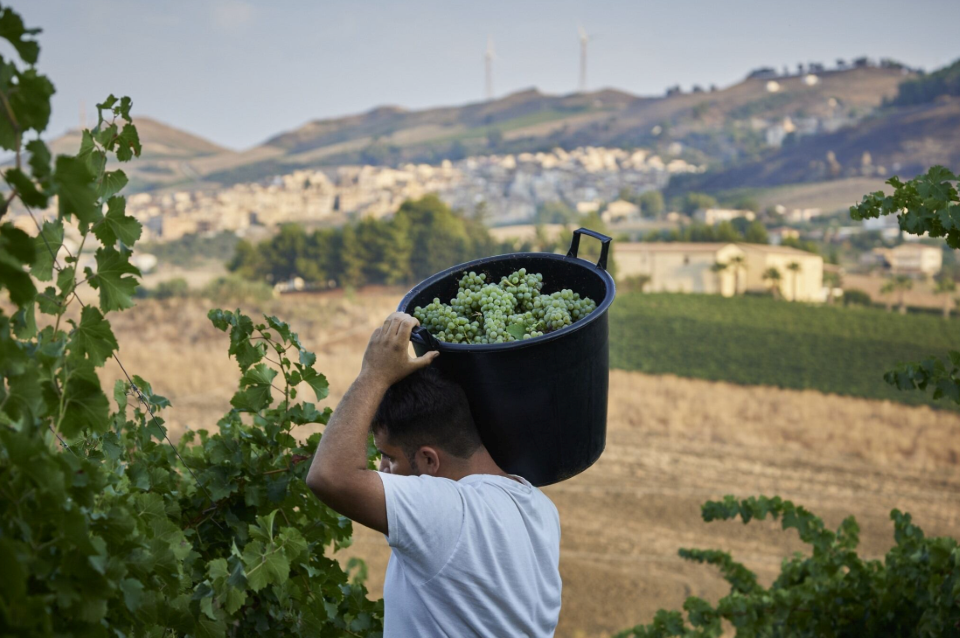
A few kilometers further on, the landscape remains hilly but the tone changes. Alessandro di Camporeale tells a family story that spans four generations and today arrives in the hands of Benedetto and Benedetto (“Benedetto the red” and “Benedetto the black,” not card suits nor Stendhal but hair color). The vineyard, about 40 hectares between 300 and 600 meters, rests on calcareous-clay and sandy soils, ventilated but well protected by the morphological conformation of the landscape. The work among the rows follows a very concrete agricultural logic: manual vineyard management, green manure, attention to biodiversity, minimally invasive winemaking. Here too, native varieties coexist with international ones: winemaker Benedetto Alessandro has placed at the center of production Catarratto (Benedè and Monreale bianco are 100% produced with Catarratto Lucido and Extra Lucido grapes), Nero d’Avola, and Perricone, with some excursions into Syrah and Sauvignon Blanc. Interesting is the extra brut late-disgorged Metodo Classico: Catarratto Extra Lucido aged 72 months on the lees, just enough to give the bubble a fine almond pastry aroma.
Polaroid 3 – Baglio di Pianetto
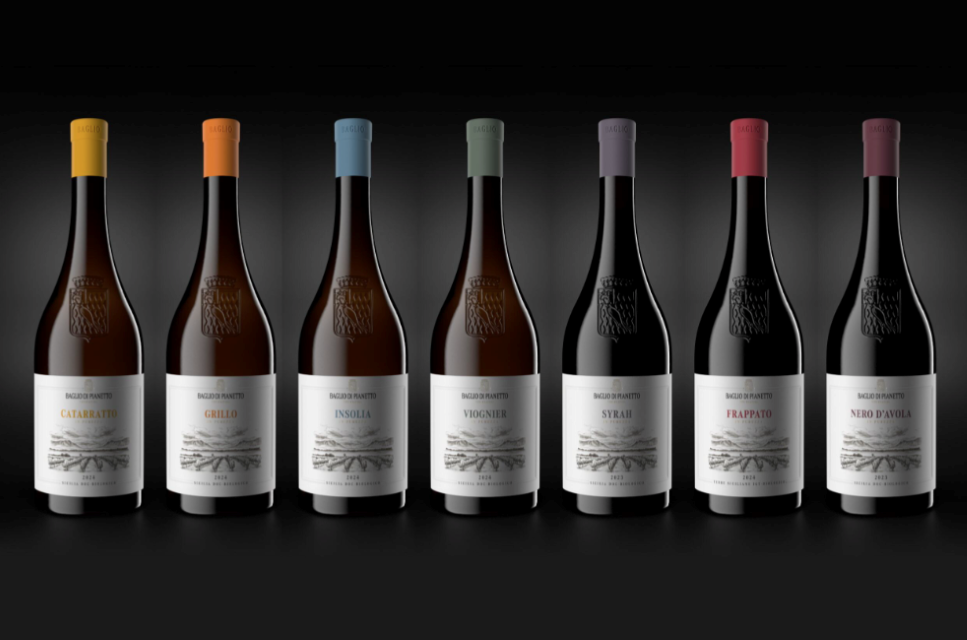
Finally, we climb. South of Palermo, toward Piana degli Albanesi, there’s Baglio di Pianetto. We’re at about 650 meters altitude, between mountains and woods. Here we speak of “high-altitude Sicily”: less torrid summers, marked temperature variations, constant winds. Founded in the 1990s by Count Paolo Marzotto, the estate was born to interpret the Sicilian territory with the rigor of the great European châteaux. Today the winery has taken a new direction, thanks to a new tourism hospitality project but, above all, to the new management’s determination to place Sicilian native grape varieties at the center of the project: Catarratto, Insolia, Grillo, and Frappato, with some echoes of the past—Viognier and Syrah—as supporting players. We’ve already discussed the most interesting experiment, the sweet wine Era Passito, in this article*: the Ucriana violet, endemic to the mountains around the Baglio, is one of the symbols of a revolution born from the territory. A grassroots revolution that, alone, can make the Sicily DOC mosaic a coherent, exportable narrative.