IN BREVE
- Valle d’Aosta hosts Cervim, a publicly controlled body responsible for heroic viticulture, but the protection and promotion of vineyards is stagnant.
- Despite the 2016 law for the protection of heroic vineyards, implementation is experiencing significant delays.
- Management of recognition procedures varies greatly among regions, with excellence like Liguria and problems like Veneto and Valle d’Aosta, still without public registers.
- Detailed information on heroic vineyards would allow measuring the effectiveness of policies and public funding.
- Without central monitoring by the Ministry of Agriculture, the risk is to further compromise the defense of heroic viticulture.
In the heart of the Alps, a paradox unfolds that measures the distance between political narrative and territorial reality. Valle d’Aosta is the cradle and headquarters of Cervim, the Research, Study, Protection, Coordination and Promotion Center for Mountain Viticulture. A private-law entity directly controlled by the Autonomous Region. It was Cervim itself that developed the scientific definition of “heroic viticulture” adopted by national regulations.
Yet, in the administration that controls it, the protection of these vineyards is at a standstill. No official list has ever been published. The administrative procedure has not yet been completed. It is the symbolic contradiction of a country that celebrates its landscape sentinels and its farmers as bulwarks against hydrogeological instability. Only to then abandon them in the labyrinth of bureaucracy.
Six years of waiting put to the test of decrees
To reconstruct the origins of the impasse, we must rewind to 2016, the year Article 7 of Law 238, the Consolidated Law on Vines and Wine, was approved. The regulation provided for specific interventions to safeguard, recover and maintain heroic and historic vineyards. Setting January 2018 as the deadline for issuing implementing decrees.
That interministerial measure, marked by number 6899, arrived instead only on June 30, 2020. Accumulating two and a half years of delay before publication in the Official Gazette. The decree assigned regional administrations the management of recognition applications, investigations, inspections and publication of territorial registers.
Having failed to set a peremptory deadline for the establishment of such lists, the regulation ended up splitting Italy in a patchwork fashion. Leaving room for glaring delays and management disparities.
An Italy at different speeds between virtuous and delayed
The analysis of regional acts carried out by Winemag provides a snapshot of a procedurally divided country. Among the first to move are Lazio, which established the register at the beginning of 2021, enrolling the first vineyards in the summer of the same year, and Emilia-Romagna, which approved its own provisions in August 2021. Reaching the first list in the following February and keeping it updated over time.
The only true complete model at the national level is represented by Liguria. Through a regional law in 2022 and an immediate implementing resolution in 2023, the Ligurian administration made the system operational on a structured basis. It accepts producers’ applications in three distinct annual windows. Updates official decrees. And facilitates requests through a preliminary survey of eligible parcels.
At the opposite extreme is the case of Veneto. Here the list was established by resolution only in April 2026, almost six years after the adoption of the ministerial decree. This stalemate has generated concrete repercussions also on funding planning. In the 2024/2025 vineyard restructuring campaign, the Region found itself forced to freeze the 20% reserve of the budget allocated to heroic viticulture, while allowing producers to access ordinary support.
The panorama of the most recent measures includes Puglia, which approved the first list in June 2026 for applications submitted at the end of 2025. And Friuli Venezia Giulia, which defined its own procedure during 2025, making the register visible at the beginning of 2026.
The uncertainty zone and the Regions still at a standstill
Between the virtuous realities and those that have just completed the procedures lies a vast intermediate area. In Lombardy and Sardinia, the lists of recognized areas have been published. In regions such as Piedmont, Tuscany, Marche, Abruzzo, Campania and Umbria, implementing resolutions and recognition procedures have been approved in recent years. Without, however, a cumulative and updated public register having yet been made available for consultation.
Alongside Valle d’Aosta, the process lacks any publication or formal conclusion also in Basilicata, Calabria, Molise and Sicily. The latter nevertheless provides support measures aimed at including the category, based on the national definition. An identical stalemate situation is finally recorded in the territories of the Autonomous Provinces of Trento and Bolzano.
Access criteria and institutional responsibilities
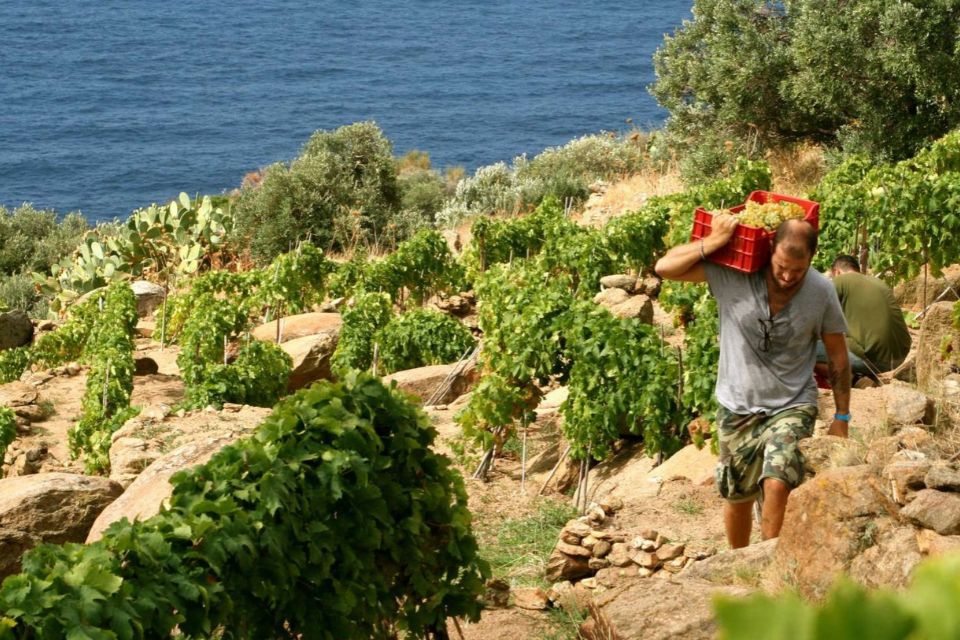
From a technical standpoint, the ministerial decree makes access to heroic vineyard status conditional on possessing at least one of four alternative requirements: a slope exceeding 30%; an average altitude above 500 meters above sea level; the presence of cultivation on terraces and steps; or location on small islands.
The presence of terracing allows recognition to be obtained regardless of the slope threshold. A provision already included in the national framework, but often a source of misunderstandings and debates among winegrowers. In this context, the division of tasks assigns the State the regulatory framework and the Regions the administrative management of inspections.
Institutional protection of heroic vineyards: impossible to draw up a balance sheet
This distinction, however, does not eliminate the driving role that should belong to representative bodies. For an entity like Cervim, a symbolic organization of mountain viticulture and closely linked to the Valle d’Aosta Region, there is a precise moral and political responsibility. Although lacking direct administrative powers, the Center could exercise a soliciting action toward territorial administrations. Demanding data transparency and promoting register uniformity.
Six years after the implementing decree, the balance sheet of institutional protection of heroic viticulture remains essentially incomplete. Essential information to measure the concrete effectiveness of the measure is still missing. How many applications have been submitted and how many accepted nationwide? How many hectares have been recognized? What inspections are periodically carried out?
Without incisive central monitoring led by the Ministry of Agriculture and in the absence of transparent reporting by the Regions, the tangible value of winegrowers’ work risks remaining confined to the realm of announcements. All this while the specter of possible public funding for uprooting could contribute to delivering the final blow to heroic viticulture itself.