IN BREVE
- Les Crêtes leaves the Italian Independent Winemakers Federation: the reasons in the exclusive interview given to Winemag.
- Co-owner and commercial director Giulio Corti emphasizes that Les Crêtes has philosophical differences with the Federation, despite having contributed to its founding.
- Corti states that the associative landscape has changed, leading to a loss of representation.
- The decision to leave is not controversial. Les Crêtes wants to focus on communicating its own philosophy and the Valle d’Aosta territory.
- Corti reflects on the change in Fivi, in which the company no longer recognizes itself.
From founder to resigner. Les Crêtes leaves the Italian Independent Winemakers Federation, causing yet another earthquake within Fivi. The first of 2026. And the first since the change of guard at the top, with the election—in February 2025—of president Rita Babini, after Lorenzo Cesconi’s (troubled) term. That of the renowned Valle d’Aosta winery is an exit without controversy. “Quietly,” Giulio Corti calls it, in the exclusive interview given to Winemag. “In fact—cuts short the co-owner, commercial director of Les Crêtes—it’s not even news. Because we’re not the first to leave.”
Corti himself explains the reasons for the choice, claiming the company’s historic role in the association’s birth: “Les Crêtes was among Fivi’s founders in 2008, with our own founder Costantino Charrère. But sometimes philosophies can also diverge.”
THE REASONS FOR LES CRÊTES’ EXIT FROM FIVI
At the root of the decision, which matured over time, there would be no rifts or specific episodes. But a different vision regarding the association’s evolution. “We have different objectives.” The co-owner recalls the original context in which Fivi was born: “Costantino Charrère worked on founding the Italian Independent Winemakers Federation with other people, who unfortunately are no longer with us: I’m referring, for example, to Bucci Pieropan.”
“People of truly significant caliber—Corti continues—within a context where it was useful to unite small wineries with a common philosophy, so they could reach institutional tables. Realities that otherwise would have had no representation.” According to Corti, the associative landscape has changed: “Today there are perhaps too many tables and too many associations that have somehow lost sight of the objective. Despite this, the great journey Fivi has made is undeniable.”
“There is no—the commercial director of Les Crêtes reiterates—questioning of the work done by the Federation. It’s we who have the need not to disperse energy in telling the story of our territory, our winery, in communicating our philosophy and our values.” A need that, in Les Crêtes’ case, takes on specific contours: “For a thousand reasons our ideas diverge. We very often run out of wine. We don’t need to channel energy into the Wine and Winemakers Market. Rather, to channel energy into communicating our territory, our philosophy, and everything we do in our small region, Valle d’Aosta.”
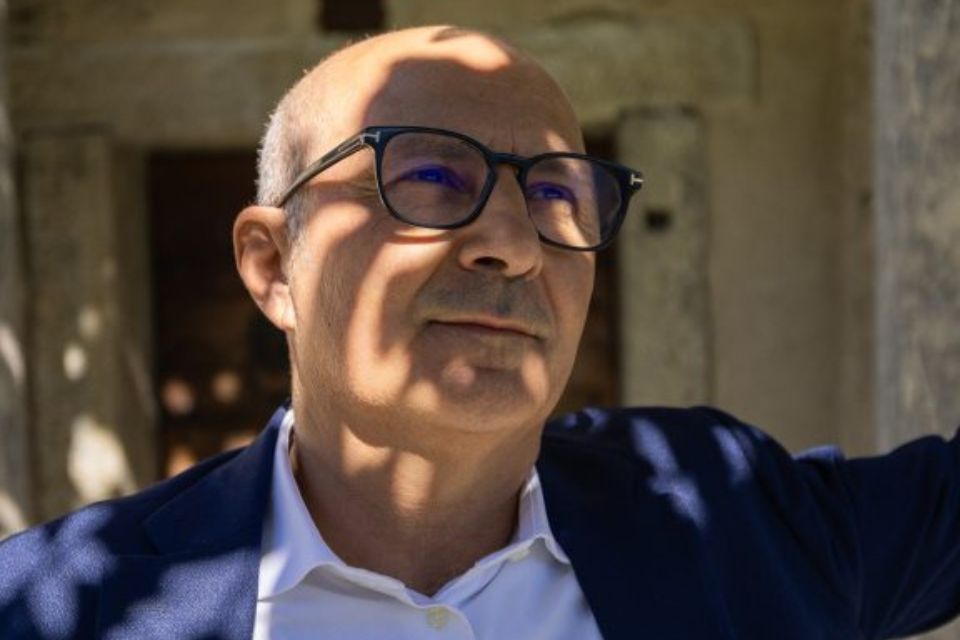
REPRESENTATION AND MARKET ACCORDING TO GIULIO CORTI
In the reasoning of the Valle d’Aosta manager—originally from Lecco, partner of Elena Charrère and with a past at Firriato and Donnafugata in Sicily, as well as Cantina Mesa in Sulcis—the issue of representation also enters. “Very often in the association, diversity is sought.” And again: “Honestly, thinking of making a classification among wineries based only on the number of bottles they produce is debatable: a winery can be large in a context like that of Valle d’Aosta. While remaining very small in the rest of the Italian landscape.”
According to Corti, the internal approach to the Italian Independent Winemakers Federation would have changed over time: “It seems to me that from a certain point onward, differences were looked at more than the things that united us.” When asked if the company felt marginalized, the answer is clear: “No, it’s our decision, matured in light of a series of considerations made in recent years, in light of the time that has passed and being more or less involved in certain situations.”
GIULIO CORTI: “NO CONTROVERSY, WE’RE NOT JOINING OTHER ASSOCIATIONS”
No controversy, then. Nor any desire to join other associative realities: “It’s not that I’m thinking of joining another association or criticizing Fivi. On the contrary, I believe Fivi has its logic, its dimension that continues to grow. Stop, end, that’s fine.” However, a reflection on the Federation’s original meaning remains: “When Fivi was born there was truly a need to go to tables with institutions and say ‘we’re here too.'” And on the present: “I don’t think we’re at the same starting point. It seems Fivi has become market and nothing else.”
Finally, the call for coherence: “Representation is fundamental, but it’s not like we choose which side to be on every season.” And again: “I don’t think philosophy should change according to the market, philosophy must be what identifies you and brings us together.” Words that mark the closing of a chapter opened in 2008, the year Fivi was founded. And that open a new phase, yet another one, of deep reflection. More for Fivi than for Les Crêtes.
No post found!