IN BREVE
- In 2025, the global wine sector shows signs of pressure, with declines in wine production, consumption, and exports.
- The global vineyard surface area has decreased for the sixth consecutive year, reaching 7 million hectares.
- Global wine consumption is estimated to decrease by 2.7%, while exports have fallen to 94.8 million hectolitres.
- Significant signs of recovery in countries like Brazil and New Zealand after years of poor harvests.
- The global market remains in balance, but demand and tariff policies represent major challenges for the world wine sector.
The International Organisation of Vine and Wine depicts a global wine sector still under pressure. In 2025, wine production, consumption, and exports are down, while trade tensions related to tariffs and the effects of climate change continue to influence global markets.
According to the annual overview released by the OIV, the global vineyard surface area has decreased for the sixth consecutive year, falling to 7 million hectares (-0.8% compared to 2024). This reduction reflects the production adjustment of major wine-producing countries to new market conditions.
Global wine production is estimated at 227 million hectolitres in 2025, just above the historic low recorded in 2024 (+0.6%). The data confirms a difficult production phase, marked by extreme weather events in both hemispheres and production containment policies adopted in some key areas of the sector.
Signs of recovery are instead coming from countries like Brazil, New Zealand, South Africa, and Moldova, which recorded a rebound after the previous year’s poor harvests.
CONSUMPTION STILL IN DECLINE
Global consumption of wine is estimated at 208 million hectolitres, a decrease of 2.7% compared to 2024. The OIV links the decline to structural changes in mature markets, evolving consumer habits, and reduced purchasing power caused by economic pressures.
Markets showing signs of growth in 2025 include Portugal, Brazil, Japan, and parts of Central and Eastern Europe.
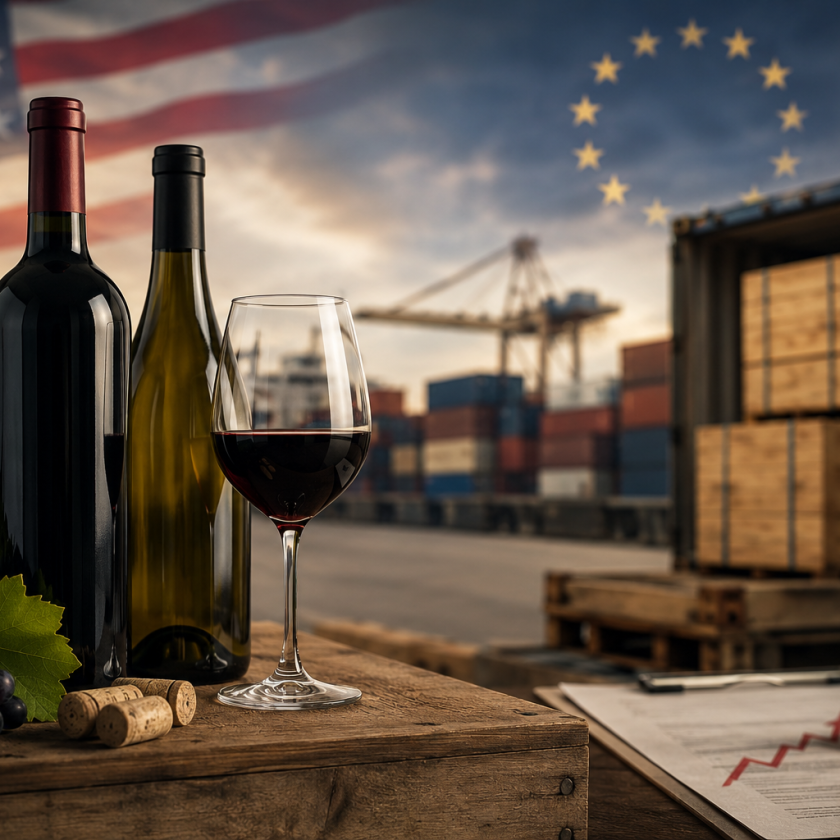
International trade is also slowing down. Global wine exports fell to 94.8 million hectolitres (-4.7%), while the total export value stood at 33.8 billion euros (-6.7%).
However, the OIV highlights that the value of global trade remains above pre-pandemic levels. The contraction was mainly driven by slowing demand and uncertainty surrounding international tariff policies.
Particularly significant is the data from the United States, where wine imports fell to 5.5 billion euros, a 12% decline compared to 2024.
THE SECTOR SEEKS NEW EQUILIBRIUM
According to the OIV, the global market remains substantially in balance. For the third consecutive year, relatively low global production has offset the decline in consumption, limiting the increase in stocks.
The organisation also notes that part of the production is destined for industrial uses, including distillation, vinegar, wine-derived products, and spirits. These uses absorb an average of approximately 30 million hectolitres per year.
In 2025, the estimated gap between global production and consumption is approximately 18.7 million hectolitres.
WORDS FROM THE OIV DIRECTOR GENERAL
The Director General of the OIV, John Barker, stated: “In recent years, the wine sector has adapted to climatic, economic, and social challenges. In 2025, trade tensions related to tariff policies represented an additional external pressure factor that producers, exporters, and supply chain operators had to face.”
“Overall, the sector is demonstrating its resilience, both in seeking new market opportunities and in adjusting production capacity in line with demand. Trade and product value remain solid, and recent bilateral or multilateral trade agreements will help create positive conditions for evolving markets,” Barker concludes.