IN BRIEF
- “Evaluation certificates” sent to participating wineries: the Mondial des Vins Extrêmes 2026 case widens.
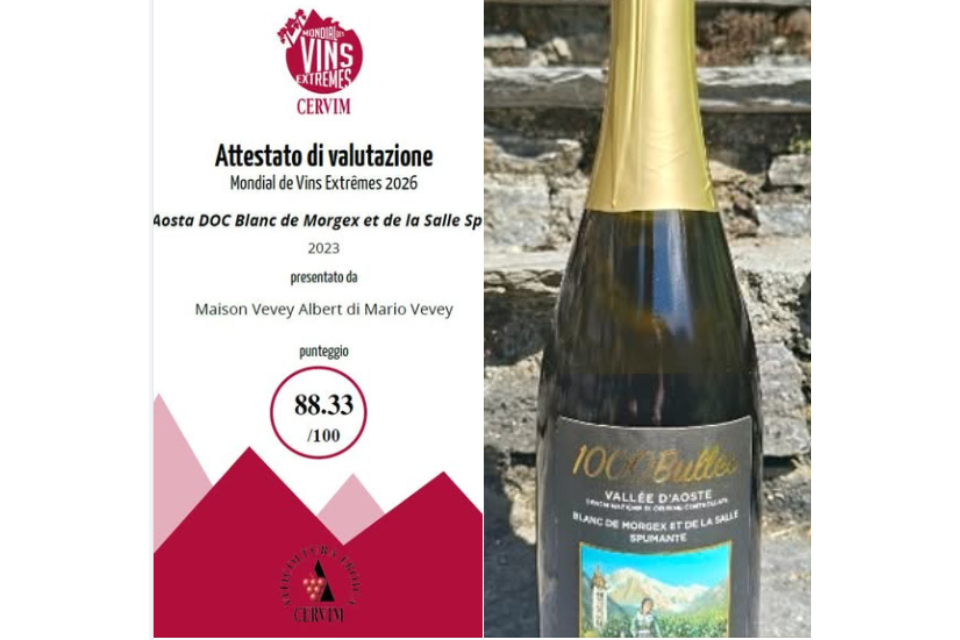
- The documents issued by Cervim have been published on social media and on the websites of some wineries, such as Maison Vevey Albert and Masseria Frattasi.
- The OIV bans the use for advertising purposes of results from wineries that did not win a medal, opposing other forms of “certificates” as well.
- The International Organisation of Vine and Wine has launched an internal investigation following the first articles published by Winemag.
- There’s also a paradox: in the Valle d’Aosta, the region where Cervim is based, regional policy is lagging behind on national requirements for “heroic vineyards”.
An “evaluation certificate” bearing the CERVIM logo, the wine’s name, the producer and the score has ended up on social media and on the websites of some wineries, becoming a disguised “participation certificate“. This reopens the Mondial des Vins Extrêmes 2026 case and the issue of non-compliance with the rules of the OIV – International Organisation of Vine and Wine, which the competition is supposed to strictly follow.
The new line of Winemag’s investigation, the only news outlet covering it at present, adds to the doubts over the Ukrainian wine awarded a gold medal despite not meeting the entry requirements, to the issue of medals exceeding the 30% cap, and to the delays by the Valle d’Aosta Region in protecting heroic vineyards. These are matters on which Cervim and its own press office remain silent and evasive. Meanwhile, the OIV has told Winemag that it has launched an investigation, following the publication of the first articles.
CERVIM: THE “EVALUATION CERTIFICATE” PLOY
A score of 88.33/100, the wine’s name, the producer’s name and the Mondial des Vins Extrêmes logo. This is what appears on the “Evaluation Certificate” published on Facebook by the Valle d’Aosta winery Maison Vevey Albert, alongside a bottle of its Blanc de Morgex et de La Salle Spumante 2023. The wine, however, does not appear on the list of award winners of the Mondial des Vins Extrêmes 2026. What the winery published is simply a “participation certificate” for the 2026 edition of the Aosta competition. A mockery of OIV rules, which explicitly ban the distribution of “certificates” for sponsored competitions, except for those awarded to winning wines.
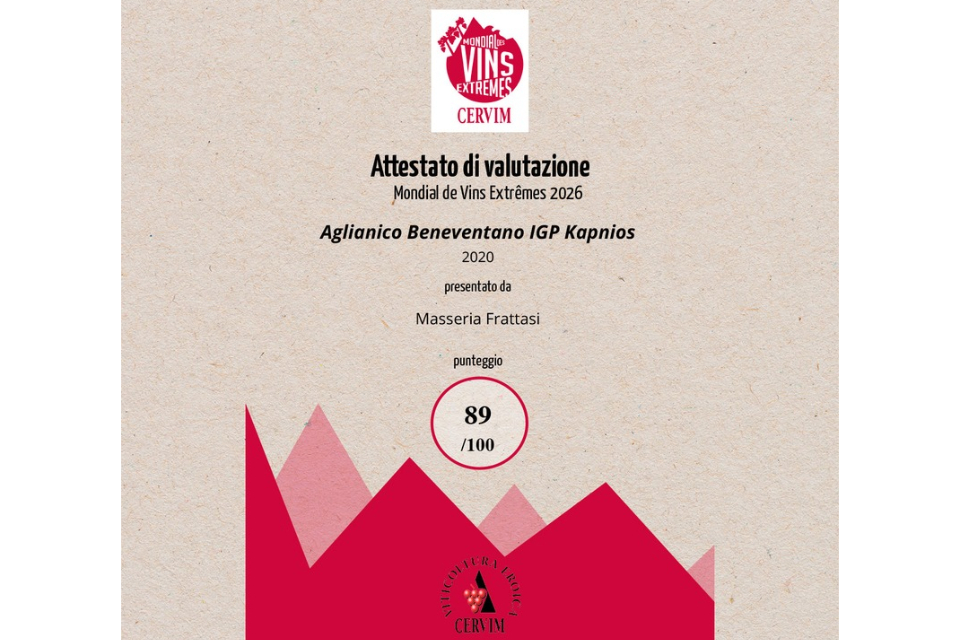
Change region and area of Italy, but not the story. In Campania, confirmation of Cervim’s irregularity comes from Masseria Frattasi. The winery, located in the province of Benevento and active in the Monte Taburno area, published a promotional post on its own website dedicated to the 89 points awarded to Kapnios 2020, accompanied by an image of the certificate.
The graphic design is identical to the certificate published by the Valle d’Aosta winery Maison Vevey Albert. This confirms the direct involvement of the Cervim organisers, the body chaired by Nicola Abbrescia, an AIS sommelier who works as a Civil Liability specialist for an Aosta-based insurance services company.
Article 10 of the CERVIM 2026 regulations bans reproductions or distinctions related to the competition, other than official seals, including in promotional materials. The certificate appears to conflict with this very provision as well. And the problem is that it was Cervim itself that supplied it to all participating wineries.
A CERTIFICATE THAT IS NOT AN AWARD DIPLOMA
Article 14 of the OIV standard for sponsored competitions, such as Cervim’s Mondial des Vins Extremes, updated in 2025, states that awards must be accompanied by the official diploma. It also establishes that no other participation certificates or diplomas may be issued. And yet, a document titled “Evaluation Certificate”, bearing the logo and the individual wine’s score, has been published on social media. On another website, the same document, issued by Cervim itself, appears as well.
There’s more. The ministerial decree Regulation of Wine Competitions of 9 November 2017 (Article 6, paragraph 12) allows, when the competition’s rules provide for it, requesting a copy of the evaluation scorecards, with the names and signatures of the judges anonymised. The CERVIM 2026 regulations in turn provide for the possibility of obtaining evaluation documents for one’s own wines. But handing over a scorecard, on request and for internal use, is not the same as issuing a participation certificate. Nor does it necessarily authorise reproducing it in a promotional post.
The same ministerial decree bans making public the list of wineries that did not reach the minimum score needed to earn a distinction. The rule concerns publication of the list by the organisation. The Maison Vevey Albert post and the promotional news item on the Masseria Frattasi website are instead communications by the wineries themselves about their own wine. The most direct issue therefore remains the ban under Article 10 of the CERVIM regulations and the nature of the certificate in light of the OIV standard.

THE UKRAINIAN CASE AND THE MEDAL CAP
The “illegal” participation certificate adds to the case of the Cabernet Sauvignon Oaked 2024 by Big Wines Big Art, a Ukrainian winery awarded a gold medal. As reconstructed by Winemag, the producing winery stated that the wine does not come from terraced vineyards or from vines with slopes of 30% or more. The competition rules, however, only admit samples if the grapes come from vineyards meeting at least one of these conditions: altitude above 500 metres, slope over 30%, terraces or stepped terraces, or location on small islands. The Russia-Ukraine war, however tragic, is not among the requirements.
CERVIM has shifted all responsibility for what happened, attributing the admission of the samples to the self-certification provided by the companies. In other words: Big Wines would have lied about the “heroic” nature of the vineyard that produced the gold-winning wine. The winery, however, told Winemag that it had received an invitation from Cervim’s management to take part in the 2026 selection of the competition.
It remains to be clarified which requirement allowed the entry and what checks were carried out on site. This is all the more relevant since the matter bears on the medal cap. According to published data, in 2026, 379 awards were given out of 1,175 wines, equal to 32.26%. Article 13 of the OIV standard instead sets the maximum share of awardable samples at 30%.
VALLE D’AOSTA, REGISTERS STILL MISSING: OPPOSITION STEPS IN AT THE REGIONAL LEVEL
The paradox of Valle d’Aosta also remains entirely unresolved: the region that hosts CERVIM but which, according to Winemag’s reconstruction, has not yet completed or made publicly accessible a regional register of heroic vineyards, nor a completed public procedure for their recognition. The 2020 national implementing decree assigns to the Regions the task of carrying out assessments, checks, and publishing the registers.
To recap: Cervim asks producers to self-certify the heroic status of the vineyards behind wines entered in the Mondial des Vins Extrêmes, while results and participation certificates circulate on the wineries’ own channels. In the region that hosts the Centre tasked with promoting mountain viticulture, the public tools for documenting vineyard protection remain incomplete. The criteria are measurable: their application, and their verification, are still awaiting answers.
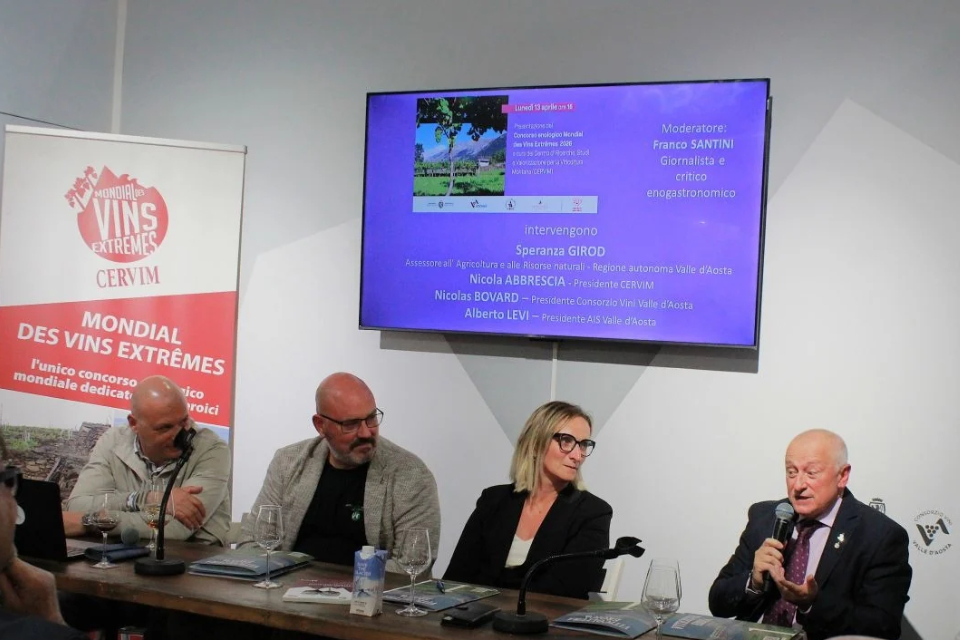
On the delays by the Valle d’Aosta Region and on the competition, opposition regional councillor Andrea Manfrin weighs in, group leader of Lega Vallée d’Aoste (pictured in the gallery): «It is right that on the issues raised by Winemag, from the competition’s requirements to the recognition of heroic vineyards, full clarity should be established. Transparency is the best guarantee for our producers and for the reputation of mountain wines».
«Heroic viticulture – he adds – is part of Valle d’Aosta’s identity. The terraces, dry-stone walls and manual labour carried out by winegrowers who watch over the land and the landscape are a source of pride and a distinctive trait of our Region. The fact that Cervim was born here, in Valle d’Aosta, in 1987, and that its definition of heroic viticulture was adopted into national law, is a point of pride for our whole community».