IN BREVE
- The Consorzio Vino Marsala is experiencing a revival thanks to new governance and renewed dialogue among producers.
- President Benedetto Renda reconstructs the reasons behind Marsala’s crisis in an exclusive interview.
- The Consorzio now comprises 17 members, including private wineries and agricultural cooperatives.
- The strategy focuses on commercial repositioning of Marsala with emphasis on “everyday” pairings, gourmet applications, and mixology.
- Updates to the Marsala DOC production regulations enhance the role of Grillo grapes and differentiate the product from foreign “imitations.”
“We’ll be back very soon with a new look.” There’s no better image than that of the Consorzio Vino Marsala website to convey, almost prophetically, the current state of the renowned Sicilian fortified wine denomination. A sector that, after years of stagnation and a phase that led to liquidation, is trying to get back on track through new governance. A revival that involves the production regulations, commercial repositioning, and renewed dialogue among producers.
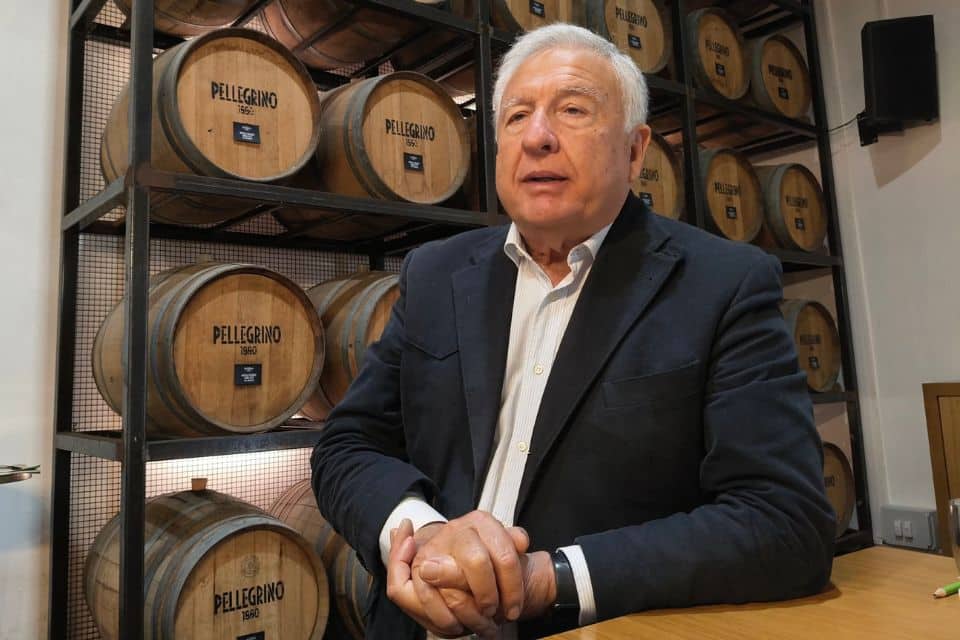
Telling WineMag about the state of affairs is Benedetto Renda, owner of Cantine Pellegrino and president of the Consorzio Vino Marsala DOC, who in an exclusive interview reconstructs the reasons behind the Marsala crisis. And the stages of the restart.
THE MARSALA DOC CONSORZIO BETWEEN CRISIS AND GENERATIONAL CHANGE
“Without generational change, the Consorzio had faded away,” Renda explains. The lack of new leadership and a shared vision had progressively weakened the Consorzio’s ability to represent the denomination. “I was somewhat between the old generation and the new generation,” he recalls, remembering a period lacking momentum and vision.
THE RELATIONSHIP BETWEEN FLORIO AND PELLEGRINO AND THE STAGNATION PHASE
For decades, Marsala could rely on a balance built through dialogue between the two main producers in the region. “The relationship between Pellegrino and Florio in the 60s, 70s, 80s, and 90s was very strong.” A relationship that fostered growth and development.
Then the break. “The dialogue that lasted forty years between Florio and Pellegrino died,” Renda says bluntly. Noting that together, the two entities represent the largest share of the denomination: “Florio and Pellegrino represent 60-70% of the denomination.”
ROBERTO MAGNESI AND THE REBIRTH OF THE CONSORZIO VINO MARSALA DOC
The turning point came about five years ago. “A new head of Florio came here to Marsala, young, dynamic,” Renda explains, identifying Roberto Magnesi as the figure who reopened dialogue among the producers.
At that time, the Consorzio was already in liquidation. “We managed to pull it out of liquidation. We kept the same name, the same tax code, the same VAT entity. The ‘same everything.'”
THE CURRENT STRUCTURE OF THE MARSALA DOC CONSORZIO
The restart was accompanied by a modification of the consortium structure. “The old Consorzio was nothing more than an association of producers,” Renda explains, noting that it lacked full ministerial recognition.
Today the base is broader and includes the agricultural component as well. “The Consorzio has 17 members, including 11 producers and 6 ‘cooperative wineries,’ representing the growers who supply grapes.” The private wineries still active in Marsala production total 15, so representation in the Consorzio is high.
THE PROBLEM OF MARSALA CONSUMPTION
The main issue remains the market. “The problem the Consorzio faced—Benedetto Renda explains—is Marsala consumption. Who is the consumer? Who is the potential consumer?”
Renda emphasizes how “Marsala” remains a name rooted in Italian collective memory: “We know very well that in the homes of 95% of Italian families in the 40s, 50s, and 60s, a bottle of Marsala was never missing.”
DRY MARSALA VERGINE, APERITIF, AND NEW PAIRINGS
The consortium strategy focuses on repositioning the most distinctive types. “We’re relaunching and rediscovering it—Renda emphasizes—also as an aperitif. Just take a bottle of dry Marsala Vergine, put it in the fridge, and enjoy it with aged cheeses, blue cheeses, or various appetizers.”
Among the pairings mentioned are also oysters and foie gras, with the goal of “taking Marsala beyond the image almost exclusively tied to cooking,” that is, as a wine ingredient, albeit excellent, used to “deglaze” meats or enrich desserts like tiramisu. References to contemporary gastronomy are also present: “Have you ever tried a slice of rare tuna with a glass of Marsala Vergine?”
MIXOLOGY, MASS RETAIL, AND MARSALA SUPERIORE ON SUPERMARKET SHELVES
Another front is mixology. “We should also talk more about mixology—the Consorzio president emphasizes—. A Marsala, especially in terms of quality-price ratio, can offer more excitement than rum in cocktail creation.” Then there’s mass retail, the world of supermarkets. A segment that, as Renda himself notes, has almost exclusively carried the basic types of the denomination.
“At the supermarket—the president notes—you practically only find Marsala Fine and cooking Marsala. But in the last two years something is changing. We’re also starting to talk with mass retailers about Marsala Superiore. Many chains have also added this type. This is very important.”
The presence on shelves of Marsala Superiore Florio and Marsala Superiore Pellegrino is considered “a sign of attention toward the quality tiers of the denomination.” “Today—he adds—supermarket wine buyers finally listen to us.”
THE NEW MARSALA DOC PRODUCTION REGULATIONS AND THE SICILIA DESIGNATION ON LABELS
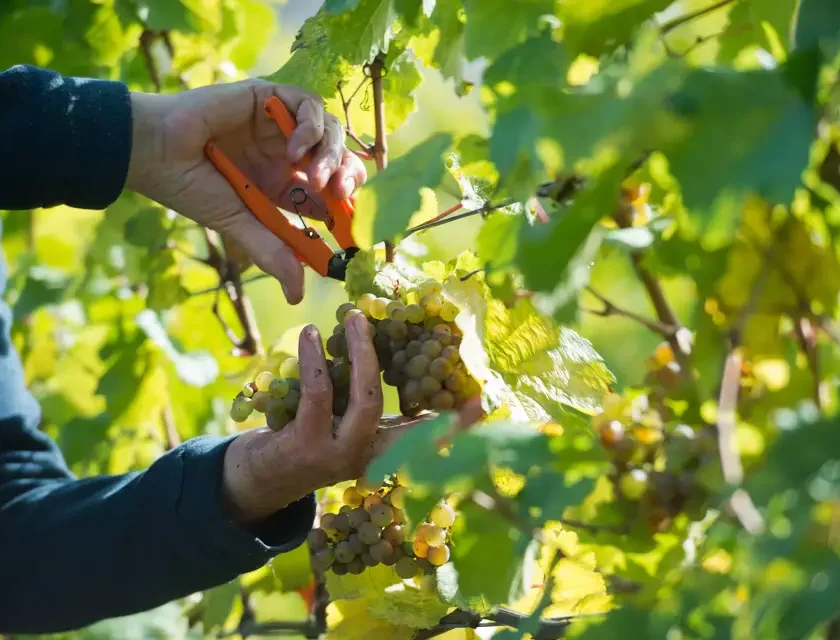
Among the actions undertaken by the Consorzio is work on the Marsala DOC production regulations. “We updated the regulations—Renda explains—trying to give more prominence to Grillo grapes, which are the foundation of our denomination.” The modifications, which came into effect in July 2025, essentially confirm the grape variety base. But they update other quality elements, such as the new minimum natural alcohol content of 13% vol (previously 12%).
“A clear indication—Benedetto Renda concludes—of the direction toward wines with greater structure and aromatic potential tied to the base grapes. Grillo, with its characteristically high natural sugar content and distinctive organoleptic properties, remains central to defining the quality of Marsala DOP.”
The Sicilia designation has also been added. “The need, in this case—he continues—was to distinguish Marsala DOC from non-European productions that use the same name. Not everyone knows, in fact, that in California they make a product called ‘Marsala.'”
WINE TOURISM IN MARSALA BETWEEN INVESTMENTS AND “AESTHETICS“
On the hospitality front, the picture remains uneven. “Unfortunately—the Consorzio president notes—not all wineries are equipped to welcome tourists and wine tourists. The positive aspect is that several producers are now starting to invest in this area as well, which can be an additional driver for Marsala sales.
“In the region—Renda concludes—there’s renewed attention, even from an ‘aesthetic’ standpoint. Many have repainted their facades or fixed their signs,” he says. Still too early, evidently, for the new institutional website of the Consorzio. But Renda is optimistic: “We’re on the rise. We’re on the rise.”