IN BREVE
- The title of Master of Wine requires rigor, analytical skills, and method, not just tasting.
- The mission of the Institute of Masters of Wine is to promote excellence and education in the wine sector.
- Becoming an MW requires commitment, three years of experience, and passing a theoretical and practical exam.
- The tasting method is based on analysis and clarity, without poetic references.
- Masters of Wine operate in various areas of the industry and follow a professional code of conduct.
In the world of wine, there is a two-letter title that allows no shortcuts. It is not enough to know how to taste, or to have a good olfactory memory. You need method. Rigor. Analytical skills. Mental clarity. Roderick “Rod” Smith, President of the Institute of Masters of Wine, made this clear from the start during the masterclass held in Belgrade during Wine Vision by Open Balkan 2025: How to Taste Wine Like a Master of Wine, or How to taste like a Master of Wine. In reality, it was a true journey into the MW system, the two letters that encapsulate the dream of many international wine professionals.
A presentation that had the merit of bringing the Master of Wine title back to its real dimension. Thanks to the modesty—natural and sincere, genuine and pure—of one of the most prominent wine experts in the world. Rod Smith managed to clarify, in a few minutes, with the candor of the greats, that those two consonants are not a trophy to be displayed. But a tool. Not a destination. But a continuous exercise in the critical reading of wine.
THE INSTITUTE OF MASTERS OF WINE: MUCH MORE THAN AN EXAM
It is no coincidence that the Institute of Masters of Wine was founded over seventy years ago to train and examine personnel in the British wine trade. Today, it is one of the most authoritative institutions in the sector globally. Since 1953, 517 people have successfully passed the MW exam. There are 421 active Masters of Wine in 2025, distributed across 30 countries. They operate in all areas of the supply chain: production, communication, education, consultancy, and trade.
The IMW’s mission is clear: to promote excellence, exchange, and education. The MW title certifies a comprehensive knowledge of wine, from the vineyard to the market, including tasting, theory, and the ability to communicate in a precise and understandable way.
WHO ARE THE MASTERS OF WINE TODAY
There is no “typical profile.” Masters of Wine can be winemakers, buyers, journalists, importers, or educators. What they have in common is the method. And adherence to a code of conduct that makes professional integrity and independence of judgment a cornerstone.
Geographically, the Institute of Masters of Wine reflects the evolution of the global wine scene. Europe remains central, but the influence of North America, Asia, and Oceania is growing. Ten new MWs joined in 2024, and five in 2025.

HOW TO BECOME A MASTER OF WINE
Rod Smith did not sugarcoat the journey. “Becoming an MW,” he explained in Belgrade, “is difficult, long, and requires a strong personal commitment. You need advanced training, at least three years of professional experience in the sector, and to pass a theoretical and practical entrance exam, as well as a qualified letter of reference. The program is divided into two stages, with international seminars, continuous assessments, and the support of an MW mentor.”
The final exam includes practical tasting tests, theoretical tests, and an individual research paper of 6,000–10,000 words. This is the notorious Research Paper (RP), an original study on a topic related to the world of wine (viticulture, oenology, market, sustainability, consumption, legislation, etc.), pre-approved by the Institute of Masters of Wine.
THE MW METHOD: TASTING WITHOUT THE LITERATURE
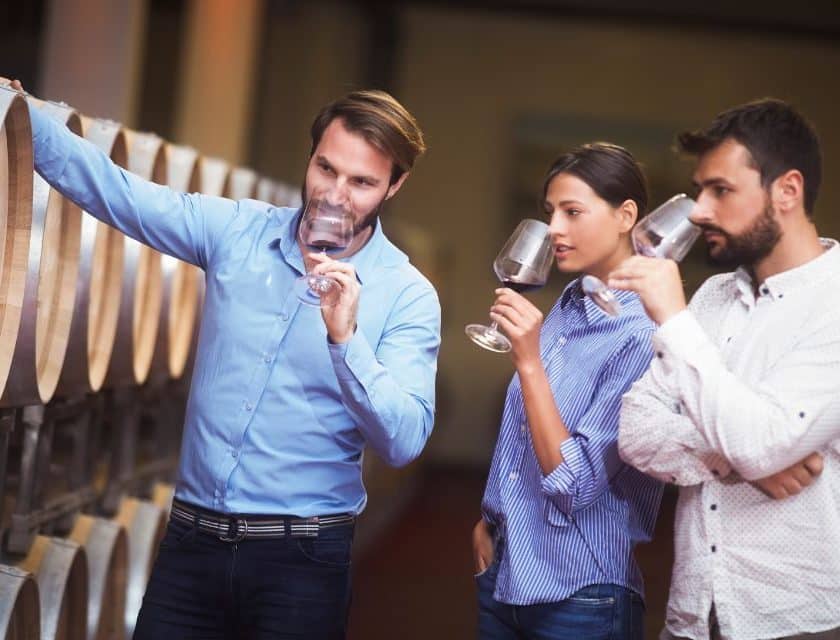
A central part of Roderick “Rod” Smith’s masterclass was the tasting method. On this front too, the President of the Masters of Wine was blunt: “No style notes, no virtuosity.” No poetry, in short. “MW tasting is analysis, not storytelling,” he specified.
Words that are enough to answer the heart of the matter: How to taste like a Master of Wine. But Smith shared other “secrets.” The evaluation system is based on thirteen factors—from alcohol to typicity, through balance, integration, and complexity—and on a guiding principle as simple as it is demanding: be clear, not brilliant. “Wine should be described for what it is, not for what you would like it to be.”
WHAT IS A MASTER OF WINE, IN 5 POINTS?
• It is the highest title in the wine world, awarded by the Institute of Masters of Wine, based in London.
• It is obtained by passing one of the most rigorous exams in the industry, which includes blind tastings, theoretical tests, and a final research paper.
• It requires cross-disciplinary skills, from viticulture to oenology, from the market to communication, to sensory analysis.
• It does not identify a single profession: Masters of Wine work as producers, buyers, journalists, consultants, and educators.
• It is based on a structured evaluation method, which prioritizes clarity, precision, and critical judgment skills.