IN BREVE
- The Pavia Court acquitted Andrea Giorgi, Alessio Gaiaschi, and Andrea Rossi after five years of investigation.
- The case focused on alleged fraud linked to cyclic diglycerin in wine batches from the Terre d’Oltrepò cooperative. The judge speaks of accidental contamination.
- The winery’s conduct, which initiated analyses and verifications, demonstrated good practices and absence of intent.
- Andrea Giorgi expresses relief at the acquittal in a letter sent to Winemag, but criticizes a media trial that influenced his reputation.
- The verdict nonetheless leaves a bitter taste for the former director, due to the failed attempt to rescue the cooperative.
After five years of investigation, hearings, and sensational headlines, the Pavia Court has closed one of the most controversial proceedings in the recent history of Lombard wine. With the verdict filed on October 30, 2025, the judge fully acquitted Andrea Giorgi, Alessio Gaiaschi, and Andrea Rossi “because the act does not constitute a crime.” A decision that overturns years of accusations, suspicions, and media interpretations about alleged “wine fraud” within the Terre d’Oltrepò cooperative.
The storm, which broke in 2021, revolved around the alleged presence of cyclic diglycerins, a chemical compound banned in winemaking, in some wine batches produced by the cooperative for the Eurospin supermarket chain. According to the prosecution, the addition was intentional and aimed at improving the product’s “body.” But the Court demolished this reconstruction. Speaking of accidental contamination and absence of intent.
THE VERDICT: NO FRAUD, TRACES “NEGLIGIBLE AND SCIENTIFICALLY IRRELEVANT“
In the reasoning, the judge acknowledged that the presence of diglycerins was indeed detected in the samples. But in quantities so minimal as to be unable to demonstrate any criminal intent. “The evidentiary elements collected lead to qualifying the facts in terms of genuine accidental contamination,” the verdict reads.
The Court emphasizes that the quantity of diglycerins found was virtually negligible, such that it could not significantly alter the wine or give it greater body. No trace, moreover, of the chemical marker typical of prohibited winemaking practices. Another element considered decisive concerns the presence of the substance only in part of the bottles from the incriminated batch. A detail that makes the hypothesis of intentional intervention illogical.
THE (VIRTUOUS) CRISIS MANAGEMENT BY TERRE D’OLTREPÒ
Decisive, finally, was the conduct of the Terre d’Oltrepò winery which, as soon as the issue emerged, independently initiated a crisis procedure and commissioned new analyses. An attitude that, according to the Court, certainly cannot be attributed to those intending to conceal fraud.
The contamination, according to the judges, occurred accidentally during the disgorgement phase of the Metodo Classico DOCG, probably following the use of a “liqueur” supplied by an external party never identified with certainty.
“WE COOPERATED WITH THE AUTHORITIES“: GIORGI’S VERSION
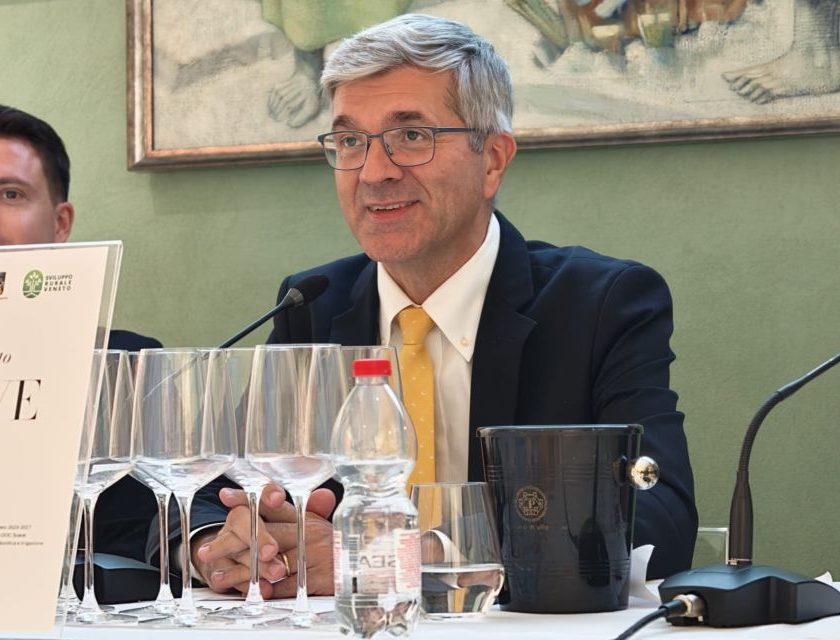
In a letter sent to Winemag.it, Andrea Giorgi, former general director of Terre d’Oltrepò, expresses relief but also bitterness. “I was fully acquitted, because the act does not exist. With me, the winemakers Alessio Gaiaschi and Andrea Rossi were also acquitted, who in recent years have shared the weight of accusations as unfounded as they were inflated by the media,” Giorgi writes.
The former executive claims the active role he and his colleagues played in clarifying matters: “We commissioned analyses, opened internal verifications, and cooperated with the authorities. In short: not exactly the typical behavior of someone wanting to hide something.”
The tone becomes more bitter when he speaks of the “media trial” that, in his view, preceded the judicial one. “La Provincia Pavese, and not only, filled pages with headlines and judgments that already seemed like verdicts, often amplified by inspired comments from some local politician too eager to jump on the bandwagon of cheap moralism.”
ANDREA GIORGI VERY HARSH: “TERRE D’OLTREPÒ’S RENEWAL SABOTAGED“
Giorgi points the finger at those who, in his view, orchestrated “a delegitimization campaign,” useful for “sabotaging a project of internal renewal of the cooperative”. “In 2021 – he attacks – an orchestrated campaign was built, piece by piece, to discredit a renewal project. All this served to get rid of an inconvenient figure. Someone who wanted to profoundly change a system that lived and thrived on opaque and less transparent practices.”
Giorgi thus refers to himself and his role as director of the Terre d’Oltrepò cooperative, first elected in summer 2016, reconfirmed in November 2020 for a new three-year term, and then ousted in January 2022. A storm that also led to his expulsion as a member of the winery.
The Court does not address these aspects. But the verdict acknowledges formal irregularities insufficient to prove intent. Quite the opposite. Evidence is found of conduct consistent with someone trying to solve a problem, not hide it. Even the relabeling of some bottles, observed by investigators, was considered compatible with good faith, since it was limited to wines verified as genuine and therefore marketable.
A CASE THAT LEAVES ITS MARK, but “SMELLS OF JUSTICE“
The Pavia Court’s decision closes a chapter, but in Andrea Giorgi’s eyes opens a broader reflection on the relationship between justice, media, and reputation. “This verdict closes a painful but also instructive page. Because, if on one hand it restores dignity and truth, on the other it leaves a bitter taste: that of a media trial that, for years, preceded and influenced the judicial one.”
The judge himself acknowledges that the prosecution did not rigorously prove the direct attribution of the products to the individual defendants. European regulatory uncertainties on the use of cyclic diglycerins made a univocal interpretation impossible, on the other hand. The acquittal “because the act does not constitute a crime” thus puts an end to a long judicial and human ordeal, which overwhelmed professionals and an entire wine-growing territory, the Oltrepò Pavese.
Today Andrea Giorgi looks ahead. “I continue to believe in work – he reveals again to Winemag.it – in seriousness and in respect for those who produce grapes conscientiously. And if someone thought they could silence an inconvenient voice, they were dead wrong. Truth, like good wine, may age, but in the end it opens and smells of justice. One question remains, and not a minor one: who tried, more than once, to sabotage my work at Terre d’Oltrepò?” Posterity will render the difficult verdict, in a land that not coincidentally struggles to take flight. Except in words.