IN BREVE
- The A7 motorway transforms the accessibility of Romanian Moldavia and the wine tourism potential of Romania.
- The A7 project connects Ploiești to Pașcani, improving the integration of wine-growing territories into tourist routes.
- Vinarium International Wine Contest, hosted in Ploiești, has been promoting Romanian wines and creating global connections for years.
- The A7 is being renamed the “Vineyard Highway,” a corridor that unites different wine regions and promotes their identity.
- The growth of itinerant tourism and the accessibility of wineries will lead to greater visibility and development for Romanian wine.
Wine Romania is entering a new phase. It is not determined by a denomination, nor a single company, but by an infrastructure: the A7 motorway, renamed the “Vineyard Highway”. An axis destined to change the accessibility of Romanian Moldavia and, with it, the country’s wine tourism potential. Alongside this scenario is an equally significant signal: the growing role of the city of Ploiești as an international wine hub, thanks to the Vinarium international wine competition.
A7 MOTORWAY, A STRATEGIC AXIS FOR MOLDAVIA
Defined as the Autostrada Moldovei, the A7 is one of the Romanian government’s priority projects to bridge the infrastructure gap in the north-eastern area. The route—which also has an Italian touch, as it was built by Impresa Pizzarotti, lead partner of the Joint Venture with Retter Projectmanagement—connects Ploiești, north of Bucharest, with Pașcani, in the Iași district, in historical Moldavia.
The prospect is for a further extension towards the Ukrainian border, in the Odessa area, after crossing the entire territory of the Republic of Moldova from west to east. Over 400 kilometers in total, divided into several lots, with various sections in advanced construction.
The goal is to make the connection between the capital and Moldavia continuous by 2026. A leap forward compared to the E85, currently the main axis but with obvious structural limits. The point is not just the road itself. The A7 addresses a historical critical issue: access to the territories.
FROM INFRASTRUCTURE DELAY TO A NEW WINE GEOGRAPHY
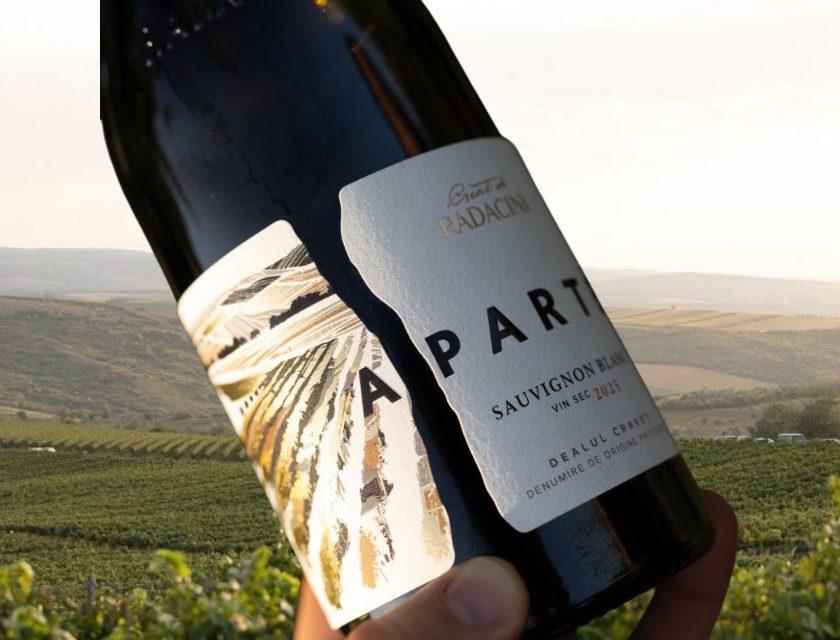
The motorway crosses a continuous wine corridor that includes the Romanian wine regions of Dealu Mare, Vrancea, Huși, Cotnari, and Iași. These are extensive, productive areas with a strong oenological identity, but until now, they have been poorly integrated into international tourist flows. The A7 does not change the value of the territories; it changes their reachability. The reduction in travel times modifies the perception of distances.
Romanian Moldavia thus enters the map of European travel, no longer as a margin, but as a traversable axis. For wine tourism, the transition is clear. Wine-growing areas become accessible stops along broader, even transnational, itineraries. The motorway acts as a gateway. The experience develops elsewhere: vineyards, wineries, hilly landscapes, rural villages. It is a widespread model, consistent with the structure of the Romanian territory.
VINARIUM, PLOIEȘTI AS AN INTERNATIONAL WINE HUB
In this context fits the Vinarium International Wine Contest, one of the main wine competitions in Eastern Europe, hosted right in Ploiești, the starting node of the A7 and the gateway to the Dealu Mare wine region. The competition is organized under the patronage of the OIV and takes place according to international standards, with juries composed of experts from numerous countries.
Participation is open to wineries from all over the world, which can enter wines conforming to the categories provided by international regulations, with samples sent for technical evaluation (here is the registration form for the 2026 edition, scheduled for late May: https://www.iwcb.ro/registration/index_en.html). Vinarium represents a connection point between local production and the global wine scene. Not just a competition, but a visibility platform for Romanian wines and the territories that produce them.
As already highlighted by the Paduraru family, promoters of the competition, the project does not end with the event. It is part of a broader vision for the development of Romanian wine, where infrastructure, territory, and promotion converge.
A7 VINEYARD HIGHWAY, A CULTURAL AND TOURIST PROJECT
Within this vision, the concept of the “Vineyard Highway” takes shape. Not just a promotional definition, but a functional interpretation of the A7—by Vinarium patron Catalin Paduraru—as a cultural and economic corridor. The axis connects a sequence of territories that, when read in continuity, build a unified narrative of Romanian wine.
From the areas of Cotnari and Iași down to Dealu Mare, passing through Vrancea and Huși. According to supporters of the infrastructure operating in the Romanian wine sector, the A7 can become the backbone of a wine tourism system capable of integrating production, hospitality, and territorial identity.
WIDESPREAD TOURISM AND THE ITINERANT MODEL
The model is one of distributed, not concentrated, tourism. Wineries, rural communities, and landscapes enter an accessible network. In this scenario, there is also room for itinerant tourism, which is growing at a European level. Campers and motorhomes intercept a demand oriented towards authenticity, nature, and local consumption. The A7 makes this flow possible along a continuous axis, parallel to the Carpathians and immersed in vineyard landscapes.
MINIMAL INFRASTRUCTURE, STRATEGIC IMPACT
Development does not require major interventions. The needs are essential: rest areas, winery hospitality, basic services. The presence of the A7 motorway reduces the distance between supply and demand. The rest depends on the organizational capacity of the territories.
The A7 does not create a destination; it makes its construction possible. Vinarium, based in Ploiești, represents its first level of international recognition. The infrastructure defines the axis. The territories provide the content. The transition is to transform a sequence of wine-growing areas into a legible system. Accessible and competitive.