IN BREVE
- Michel Rolland has passed away suddenly in Bordeaux at the age of 78, after leaving a significant mark on international oenology.
- Marco Caprai remembers Rolland as a man of courtesy and irony, highlighting his contribution to making wine finer and more elegant.
- Rolland transformed the global wine landscape between the 1980s and 2000s, helping to redefine the role of the consultant oenologist.
- His collaboration with Robert Parker in the 1970s triggered a quality revolution, pushing wineries to produce higher quality wines.
- Despite criticism regarding the potential standardization of tastes, Rolland positively influenced the evolution of the globalized wine industry.
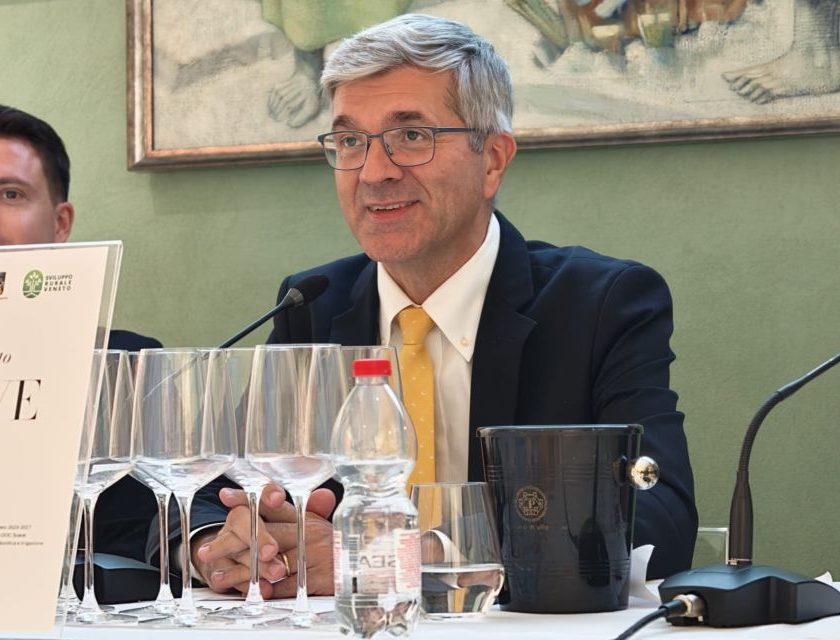
Michel Rolland died suddenly on the night between March 19 and 20 in Bordeaux. He was 78 years old. His passing closes a decisive era for international oenology. A world-renowned oenologist and consultant, born in Libourne in 1947, Rolland deeply marked the stylistic evolution of contemporary wine, from Bordeaux to the planet’s main wine-growing regions.
Among the tributes from the Italian wine world is that of Marco Caprai, who wished to remember the French consultant with personal and clear words. “Of Michel, I can remember his courtesy, his irony, his curiosity, and for me, these 11 harvests spent together are one of the dearest memories I will keep with me,” says Caprai, reached by phone by Winemag. A bond built over time, also through work on Sagrantino and Montefalco.
MARCO CAPRAI’S TRIBUTE TO MICHEL ROLLAND
In his farewell message, Marco Caprai emphasizes Michel Rolland’s historical weight in changing contemporary wine. “Michel is and will remain the man who changed the world of wine, the man who showed the way to ensure that wine was finer, more elegant, fruitier and placed consumer pleasure first.” He adds: “If today we drink such good wines produced all over the world, we owe it to Michel Rolland. The man who, more than any other, contributed to changing wine in the world has left us.”
Caprai links the personal memory to the professional one: “Personally, I cherish the memory of his courtesy, his politeness, and his sincere enthusiasm for new challenges, such as that of Sagrantino and Montefalco. Farewell, Michel.”
MICHEL ROLLAND AND THE GLOBAL WINE REVOLUTION
The figure of Michel Rolland was central to the transformation of international wine taste between the 1980s and 2000s. Trained at the Institute of Oenology in Bordeaux and raised in a family of winegrowers, he founded an analysis laboratory with his wife Dany, which became the starting point for a long consulting career.
From Bordeaux, his name quickly spread to the world’s great vineyards. The United States, Argentina, and numerous other countries relied on his vision. In this journey, Rolland helped redefine the role of the consultant oenologist, becoming one of the most recognizable figures in global oenology.
THE BOND WITH ROBERT PARKER AND BORDEAUX
One of the decisive steps in his professional trajectory was meeting Robert Parker in the early 1970s. From that relationship, a new era of quality took shape, pushing many wineries to seek more complete, more readable wines centered on consumer pleasure.
According to Marco Caprai, that partnership “gave rise to a true quality revolution, pushing us to produce ever better wines and to explore territories that were previously unthinkable.” A revolution that had its epicenter in Bordeaux, or rather in Pomerol, as Rolland himself would have specified, and which helped redraw the geography of the world’s great wines.
A DECISIVE AND DEBATED LEGACY IN INTERNATIONAL OENOLOGY
Michel Rolland’s mark was also deep on a stylistic level. The wines associated with his consultancy often embodied a model of greater concentration, softness, and expressive immediacy. A model rewarded by the market, but also debated by those who saw in it the risk of a standardization of tastes.
Beyond the debate, the fact remains that his actions accompanied, and in many cases anticipated, the evolution of the globalized wine industry. A father of two daughters and always tied to his home region, Michel Rolland leaves an indelible mark on the recent history of wine.