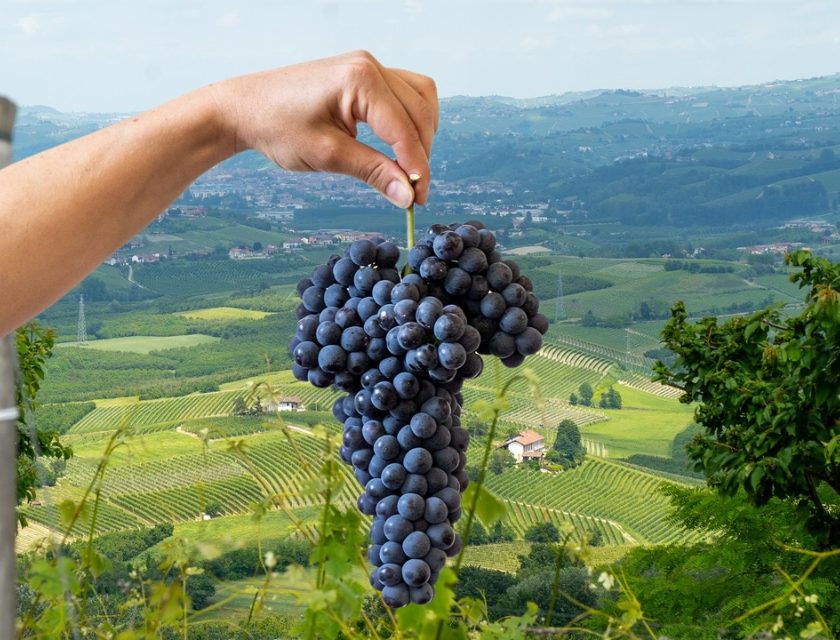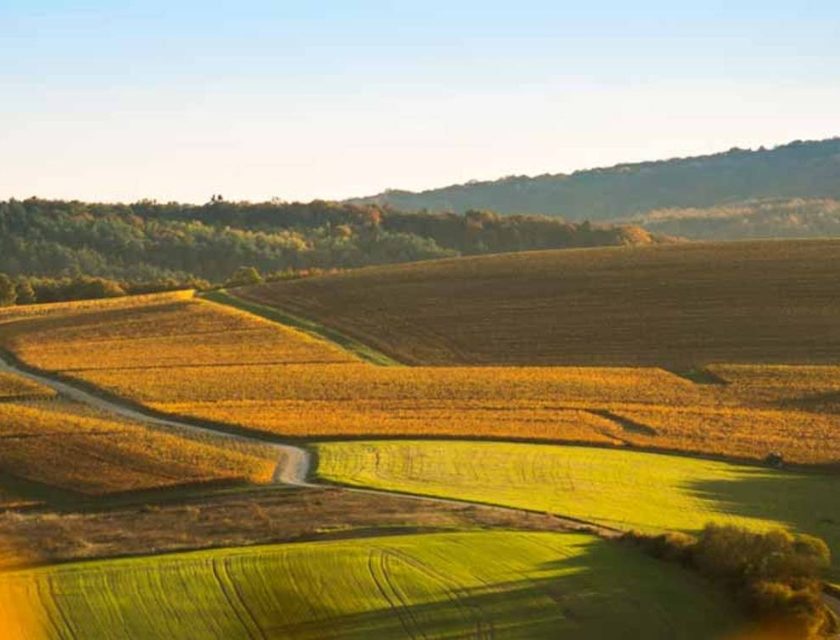
There is much talk about Alto Adige wines for their great whites and reds. Somewhat less about the region’s Cinderella: Santa Maddalena wine. A red from Alto Adige that combines elegance, freshness, and versatility. Medium-bodied with a not overly intense color, it stands out for its easy drinkability and aromas of violet, marzipan, rose, and raspberry.
Made primarily from Schiava grapes, sometimes with small percentages of Lagrein, it expresses a soft and fruity character, capable of adapting to different serving temperatures. It is more complex and velvety at 16°C and fresher and more dynamic at 12-14°C. A gastronomic versatility that allows it to accompany fish dishes, white or red meats, cheeses, and cured meats. Making it one of the most modern and enjoyable Italian reds, a symbol of the balance and winemaking tradition of Alto Adige.
Daniele Galler, Italy Sales Manager at Cantina Bolzano, outlines in his interview with Winemag the profile of Santa Maddalena on the Italian market. Its history, prospects, and limitations of a denomination that ultimately satisfies those who taste it for the first time. And convinces those who have long appreciated its characteristics.
Let’s start by defining the scope: we’re talking about Alto Adige wines
Alto Adige is a wine region that, despite representing only 0.85% of national wine production, has gained visibility far greater than its size. Despite its small impact on total production, thanks to its recognized and consistent quality, Alto Adige labels are well represented on wine lists and on the shelves of Italian wine shops. A confirmation of this region’s growing relevance in the national landscape. About twenty different varieties are cultivated, absorbed by the Italian market with very different dynamics and numbers.
Figures in constant evolution, based on consumer tastes. Correct?
In recent years, Italian wine enthusiasts have changed their consumption habits. Choices are increasingly shifting toward white grape varieties, at the expense of red wines. At the same time, there has been a shift from preferences for tannic and structured red wines to a search for greater elegance and finesse.
Awareness has grown that drinking well doesn’t require spending high amounts. Alto Adige’s aromatic and semi-aromatic white varieties remain the most sought-after. Pinot Noir maintains a position of qualitative prominence compared to other wine-growing areas in Italy. Lagrein is also gaining increasingly wider space in the national market.
Can we speak of a true “return” of Santa Maddalena wine?
Santa Maddalena is one of the most representative expressions of Alto Adige. Once mainly tied to local consumption and specific regional food pairings, today it is experiencing a slow but steady revaluation. It has all the characteristics to be a modern and successful wine on the Italian market. It presents a medium body, a not excessively deep color, and great drinkability. Qualities that make it suitable for a wide range of food pairings and different consumption occasions.
Has the denomination crossed the borders of Alto Adige?
Traditionally tied to local cuisine, Santa Maddalena is moving beyond regional borders. It is being reinterpreted in a modern key by chefs and gastronomes throughout Italy. No longer just Speck and Canederli: its pairing versatility is one of its main strengths. It allows this wine to be appreciated throughout the country.
There are numerous pairings that enhance its characteristics, even the most unexpected ones. Santa Maddalena pairs with fish soups such as Livorno-style caciucco, Vasto-style brodetto, Genoese buridda, or Trapani-style ghiotta. In these cases, it proves to be an excellent gastronomic partner, especially in recipes with tomato, where the acidic note combines perfectly with the wine’s softness.
What are the best pairings for Santa Maddalena?
Beyond fish dishes, Santa Maddalena also pairs well with tagliatelle al ragù, Bolognese pasticcio, gourmet pizzas with speck, mushrooms and sausage, and more sophisticated dishes like coq au vin. Its adaptability extends to game – pheasant, quail, poultry – and to braised or roasted meats. It is also excellent with cheeses and cured meats, proving ideal for both rustic dishes and elegant occasions.
Let’s play a bit between glass and plate: at what serving temperature?
Another advantage of Santa Maddalena is its ability to express itself best at different serving temperatures. This makes it versatile and suitable for every season. Served at 16°C in the cold months, it releases aromas of violet, marzipan, rose, and raspberry, with a soft palate. In spring and summer, at 12-14°C, it maintains a freshness that makes it pleasant even at higher temperatures.
Many Italian reds suffer when served at low temperatures: acidity and tannins become too prominent. Santa Maddalena, however, retains elegance and fruitiness even under these conditions. Few Italian wines boast such adaptability, with the exception of some Ligurian Rossese, Bardolino Classico Superiore, or Gamay from Côte de Brouilly.
What are the prospects for Santa Maddalena?
The future of Santa Maddalena looks promising. Its balanced and versatile profile meets the needs of a clientele increasingly attentive to quality, typicity, and sustainability. The quality of the wine has grown inversely proportional to the vineyard area. Many hectares, once cultivated with Schiava, now produce white wines. However, the most suitable areas remain dedicated to Santa Maddalena, where Schiava is cultivated almost exclusively.
Santa Maddalena from Alto Adige as a classy yet accessible wine?
Superior quality, combined with a long tradition, has allowed Santa Maddalena to establish itself as a high-class wine while maintaining excellent value for money. If it can make itself better known, without renouncing its elegant and versatile identity, it will be able to gain more space on wine lists and on wine shop shelves.
Santa Maddalena represents one of the greatest growth opportunities for Alto Adige in the Italian wine market. A wine destined, over time, to become a symbol of the quality and winemaking tradition of the province.
Santa Maddalena on the Italian market: history, prospects, and limitations. https://www.kellereibozen.com/it/riserva-it/moar/.