IN BREVE
- Champagne represents a model of excellence for tradition, innovation, and environmental sustainability, presenting the ‘Road to 2050’ project.
- Since 2003, there has been a significant reduction in CO₂ emissions, with the goal of achieving Net Zero by 2050.
- 90% of the vineyard is owned by growers, while 70% of the volume is marketed by maisons, highlighting an integrated collective network.
- Among the new developments is the introduction of Chardonnay Rosa from July 31, 2025
- The Comité Champagne emphasizes the importance of collective development to achieve sustainability goals, aiming to certify 100% of the vineyard area by 2030.
Champagne confirms itself as a global model of excellence in combining tradition, innovation, and environmental responsibility. Innovation that focuses primarily on environmental sustainability. The “Road to 2050” project was presented by Domenico Avolio, Director at Champagne Bureau of CIVC in Italy, during the IULM Alumni Day on October 24 on the occasion of Champagne Day.
CHAMPAGNE: LIMITED PRODUCTION, GLOBAL RESONANCE
With just 0.5% of the world’s vineyard area, Champagne represents 8% of consumption of sparkling wines by volume and 34% by value, confirming itself as the world’s leading wine appellation by economic value. In 2024, shipments reached 271.7 million bottles, with 57% destined for export to 190 countries.
Growers now own 90% of the vineyard, while maisons market 70% of the total volume. A widespread network that demonstrates the collective and integrated dimension of the Champagne model.
CHAMPAGNE, PIONEERING REGION FOR SUSTAINABILITY
With the Road to 2050 project, Champagne strengthens its role as a global laboratory for sustainable viticulture. The French region is the first to have adopted sexual confusion on a large scale, a technique that has made it possible to almost completely eliminate insecticide treatments. It is also the region with the largest fleet of electric straddle tractors, a concrete example of low-impact mechanization.
Thanks in part to this, since 2003 CO₂ emissions have decreased significantly. A concrete step toward the goal of climate neutrality by 2050. Among the symbolic initiatives is also the first transatlantic crossing by sail for the transport of Champagne, which took place in 2017.
A THREE-PRONGED ENVIRONMENTAL STRATEGY
The environmental impact reduction plan, launched in 2001, is developed along three lines: water, biodiversity, and CO₂ emissions. The first environmental assessments made it possible to develop collective action plans, with the participation of 16,300 vignerons, 125 cooperatives, and 390 Champagne maisons.
EMISSIONS BREAKDOWN AND THE NET ZERO GOAL
According to 2018 data, CO₂ emissions mainly derive from packaging (32%), transport (19%), and viticulture (15%). From 2003 to 2025, emissions have been reduced by approximately 30%. The goal is to reduce them by 75%, to reach Net Zero in 2050. The plan provides for residual emissions of 25%, with 7% storage and offsets for the remaining 18%.
RESEARCH, INNOVATION, AND CIRCULAR ECONOMY
Emissions reduction involves six areas: sustainable viticulture and winemaking, efficient facilities, low-impact transport, circular economy, and environmental governance. Research and development focuses on new vineyard management systems, varietal innovation, and biogenic carbon.
Among the key projects is Qanopée, a partnership between scientific research aimed at strengthening the fight against viral diseases, enhancing existing biodiversity, and developing new rootstocks. The goal is clear: to develop new sustainable production models.
CHARDONNAY ROSA AND NEW PROSPECTS
Alongside emissions reduction, research is being conducted on the possibility of including some resistant varieties (VIFA) in the regulations, on an experimental basis, to test new viticulture models in response to climate change.
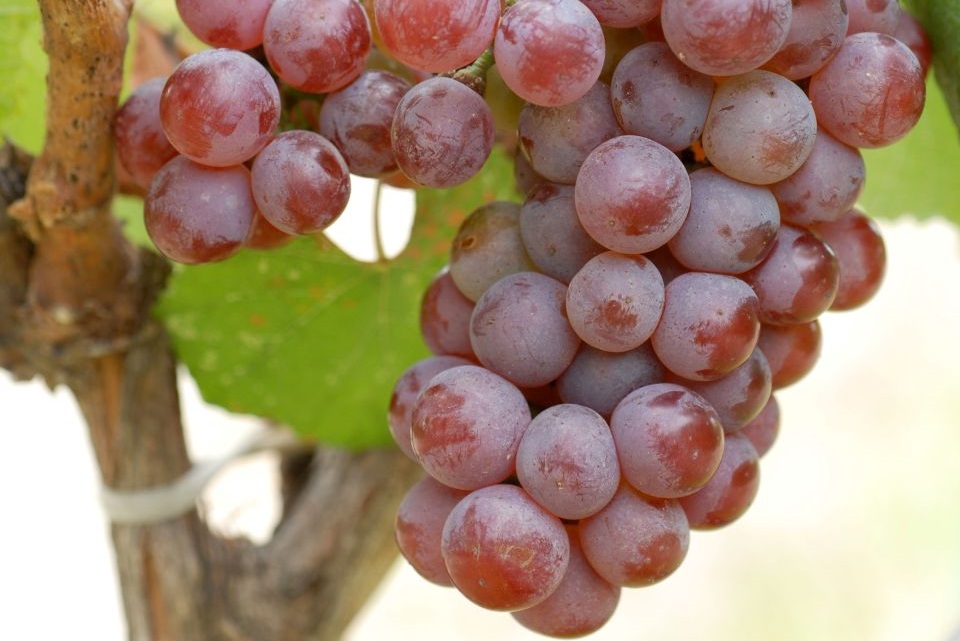
From July 31, 2025, Chardonnay Rosa has been included in the regulations, a natural mutation of white Chardonnay identified in 1900. The variety will help preserve the genetic heritage and open up new blending possibilities.
HERBICIDE REDUCTION AND ENVIRONMENTAL CERTIFICATIONS
Between 2006 and 2021, the Treatment Frequency Index (IFT) decreased by 50%, thanks to the adoption of biocontrol solutions. Today, 68% of the vineyard area is certified, with the goal of reaching 100% by 2030. Active certifications include Viticulture Durable en Champagne (VDC), HVE, and organic viticulture.
TANGIBLE RESULTS AND COLLECTIVE DIMENSION
The results speak for themselves: -50% herbicides, 90% of industrial waste sent for recycling, 100% of effluents treated, and a doubling of grassed surface area. The reduction in bottle weight, from 900 to 835 grams, has also enabled a cut of 17,000 tons of CO₂ per year.
At the heart of everything is the motto shared by the Comité Champagne: “The progress of all is more effective than the achievements of a few.” A summary that reflects the collective and inclusive nature of the sustainability model adopted by the region.