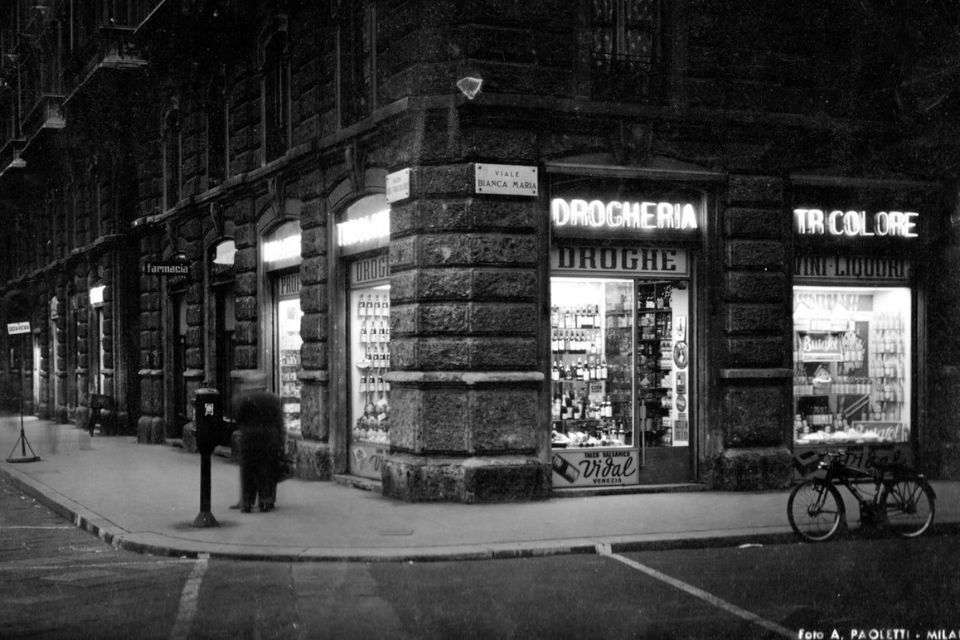
“When I first tried to sell my early bottles in Milan, the most important place was Drogheria Gaboardi, in Piazza del Tricolore. There they sold Barolo at 990 lire for three bottles. I had the audacity to sell them Franciacorta at 770 lire. Per bottle. I still remember very clearly what happened. They asked me if I was crazy. And they reminded me that I came from Brescia (not from the Langhe, editor’s note). My first encounter with the Milanese market wasn’t very easy.”
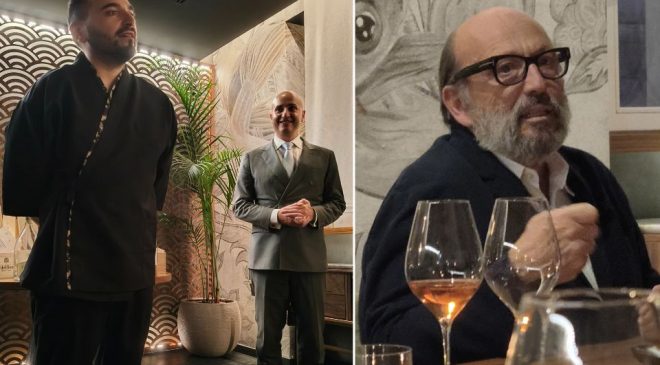
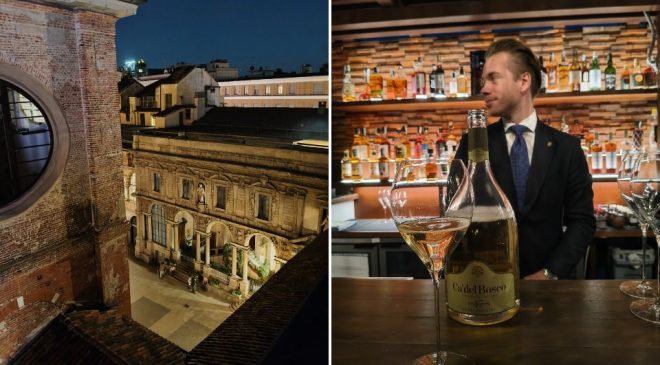
Maurizio Zanella swirls two sushi chopsticks energetically as he recounts one of the episodes that led him to become a major name in Italian wine history, with Ca’ del Bosco. A journey down memory lane that tastes of vindication. The sommelier at Sachi on Via Orefici, an elegant Japanese restaurant on the fourth floor of Palazzo Cordusio, has just poured the Franciacorta Cuvée Prestige Rosé Edition 46 from the Erbusco maison into the glasses. Against the backdrop of the private room, arranged down to the smallest detail for the special Wine Dinner, the sun sets, kissing the spires of the Duomo.
FRANCIACORTA MEMORIES: MAURIZIO ZANELLA AND THE SECRETS OF THE DENOMINATION
Drogheria Gaboardi closed its shutters for good some time ago, swallowed up along with so many other neighborhood shops by an increasingly globalized and international Milan. On the contrary, Franciacorta and Franciacorta wine have become global Italian phenomena. A success owed to the genius and entrepreneurial spirit of Brescians like Maurizio Zanella. People who went, in fifty years or so, from being considered crazy and pretentious, to far-sighted and visionary.
“Franciacorta is an unprecedented project in Europe. Many similar things have been done, in a relatively short time, in the United States. In Europe it has never happened that someone has achieved such quality and renown in just 50 years. That’s why I like to say that Franciacorta is not beautiful because it’s young, but it’s beautiful because it’s beautiful.
We were able to realize this project very quickly mainly for two reasons. First, there were no cooperatives or industries in the area, only farmers who had vineyards. Second, we decided to use the Champagne regulations as a basis for inspiration, but made them even stricter, to do things right from the start and set quality ‘benchmarks’.”
FRANCIACORTA IN THE SIXTIES
Even around Brescia, however, things haven’t always been smooth sailing. “Before the 1960s – Zanella recalled – local wine was destined almost exclusively for nobles and friars. The change was favored by the arrival of producers with new ideas, who transformed an Italian viticulture that until then had been oriented toward quantity and low prices, into a production devoted to quality.”
Zanella emphasized that until the late 1970s, oenology was not taught in Italian universities: “Schools trained agronomists, not oenologists. They were taught how to produce a lot and maximize costs by reducing them.” The shift to viticulture more focused on quality marked the beginning of what Zanella calls the “oenological Renaissance of our country.” A leap forward due, painfully, also to methanol, “which helped us understand that our philosophy devoted to quality, not quantity, was not madness.”
THE FRANCIACORTA UGAs
Meanwhile, Franciacorta had been granted Controlled Designation of Origin (DOC) status in 1967. Almost a decade after the methyl alcohol scandal, in 1995, came the promotion to Controlled and Guaranteed Designation of Origin (DOCG). Twenty years later, the area is preparing to welcome yet another upgrade. The Board of Directors of the Brescian wine consortium has given the green light to the Franciacorta UGAs, or Additional Geographical Units. There will be 134.
“The maps – explained Maurizio Zanella – are by Alessandro Masnaghetti. Alessandro spent three years on it and told us it was the easiest of all the similar projects he’s done. He’s already worked on UGA projects in other renowned areas, like Barolo, Barbaresco, Napa Valley, Sauternes. According to him, Franciacorta was the most beautiful and also the simplest, because he could start from solid, pre-existing foundations.”


Which ones? “We started from the Napoleonic cadastre. Napoleon created a cadastre in Franciacorta in 1800. This made everything much simpler for Masnaghetti, because those maps even indicated the type of cultivation present in each parcel. There was no need to invent anything or ask old farmers the names of the hills, as in other regions.”
The UGAs will appear on the label only on vintage Franciacorta and Franciacorta Riserva, whose grapes must come at least 90% from the indicated parcel. It will take years, presumably 5 or 6, before seeing the first Additional Geographical Units on bottles. “All the bureaucratic steps need to be completed – emphasized the patron of Ca’ del Bosco – with approval from the Ministry in Rome and the European Union in Brussels. And then production times must be considered. For a vintage it takes at least five years, considering the 48 months on the lees required in Franciacorta.”
MAURIZIO ZANELLA AND THAT NOD TO LAMBRUSCO
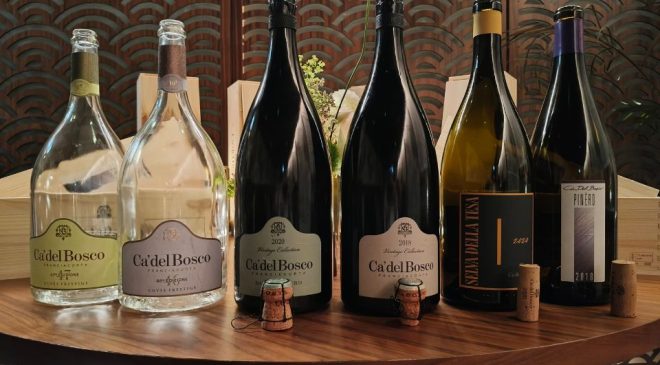
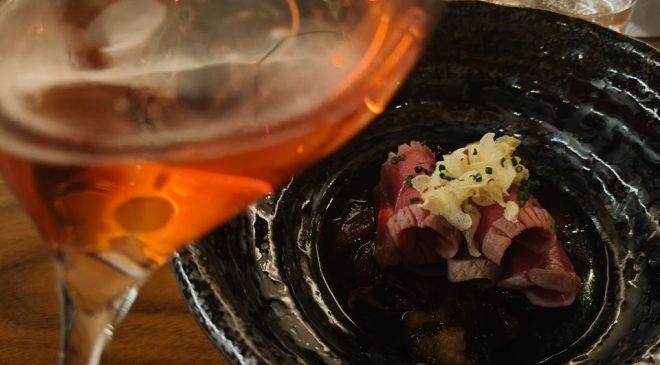
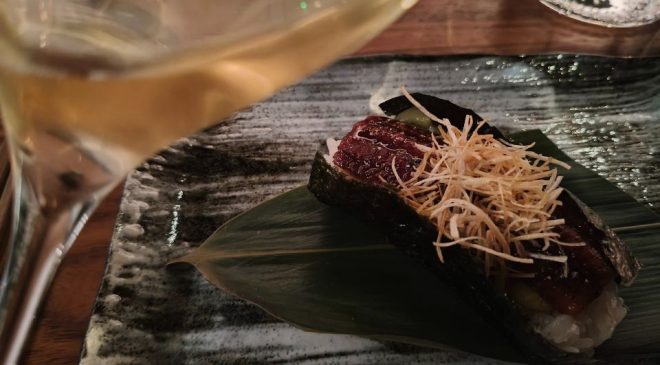
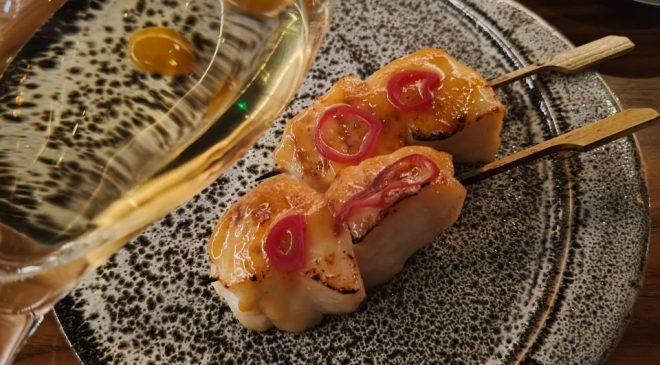
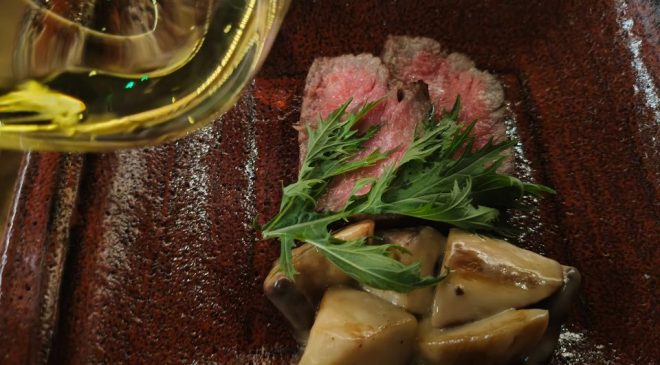
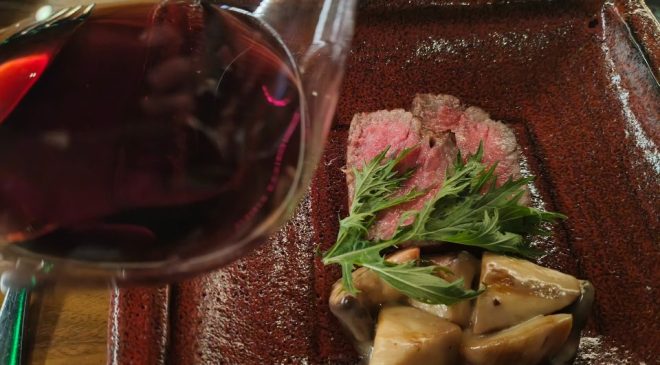
Also during the Wine Dinner at Sachi Milan, with pairings of 6 Ca’ del Bosco labels (all magnum format) with dishes by chef Anthony Calò expertly matched by sommeliers Alessandro Celegato and Raffaele Silvestre, there was also room for a curious moment. Answering the question: “Where would you invest today?“, Maurizio Zanella surprised everyone by answering: “In Lambrusco.”
“It’s a wine that gives joy, a pleasant, extraordinary wine that no one else has – commented the patron of Ca’ del Bosco – unfortunately threatened by massive productions, in some cases undrinkable. But, if of quality, it’s the best wine there is, wonderful, joyful.” From here to a reflection on industry communication, the step was short. “We need to make wine a simpler thing. We’ve turned it into a monster that scares people, instead we should bring them closer. The more pretentious we are, the more we alienate the consumer.”
An appeal like many others, which will perhaps fall on deaf ears. To be remembered, maybe, roughly, in 50 years. When everything will be different. Just as the Franciacorta of the 1960s was different, in that Milanese grocery store from which Zanella left “crazy.” But even more proudly “Brescian” than when he entered.
Maurizio Zanella, Franciacorta Memories. Dreaming of Lambrusco. https://www.cadelbosco.com/it/. https://sachirestaurants.com/it/milan-2/.