IN BREVE
- Sarajevo is an ideal destination for a summer city break, combining culture, events, and nature.
- The city hosts major cultural events, such as the Sarajevo Film Festival and Kultura na ulice!
- Sarajevo presents a rich cultural diversity, visible among mosques, churches, and synagogues.
- The War Childhood Museum offers a glimpse into the history of childhood during the siege of Sarajevo.
- Easily accessible from Italy, Sarajevo combines cultural heritage and natural beauty, with quick access to Mount Trebević.
Just over an hour and a half by plane from Milan and Rome, Sarajevo offers itself as a destination for a summer city break featuring culture, events, and nature. The capital of Bosnia and Herzegovina strengthens its tourism offering with a calendar of widespread cultural events and an urban heritage that interweaves different identities.
During the summer, the city hosts some of the country’s main cultural events. Between June and September, Kultura na ulice! returns, a festival that brings music, theater, and performances to urban spaces. In July, Baščaršijske noći brings the historic center to life with outdoor events and shows. From August 14 to 21, 2026, the Sarajevo Film Festival is scheduled, considered one of the main film events in southeastern Europe.
A CITY BETWEEN EAST AND WEST
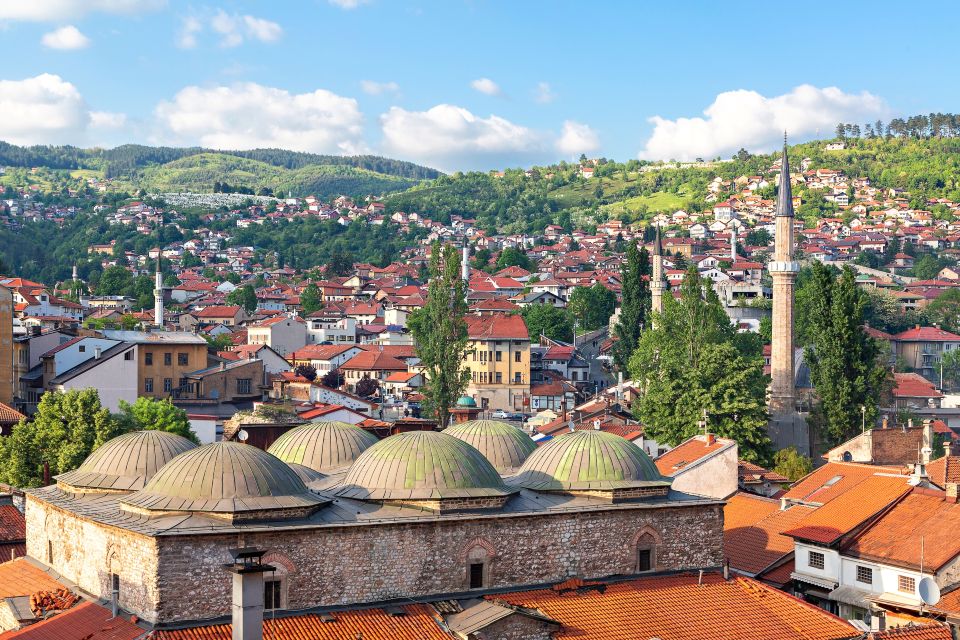
Often called the “Jerusalem of Europe,” Sarajevo preserves a cultural coexistence visible in the very structure of the city. Within minutes, you encounter mosques, churches, synagogues, and cathedrals, among Ottoman architecture and Austro-Hungarian buildings.
The “Where Cultures Embrace” route passes through some of the city’s main places of worship, offering visitors a direct reading of the cultural diversity that characterizes Sarajevo. Through initiatives like “Sarajevo through stories,” tourists and residents connect through personal narratives, guided tours, and encounters with artists and local inhabitants.
Among the city’s symbolic places is the War Childhood Museum, dedicated to childhood experienced during the siege of Sarajevo. The museum collects personal objects, testimonies, and stories related to the war of the 1990s.
FROM THE OTTOMAN HEART TO TWENTIETH-CENTURY SYMBOLS
Sarajevo develops as a compact city, easily explored on foot. In the historic center, Baščaršija preserves the Ottoman soul of the capital with artisan shops, traditional cafés, and small restaurants. Not far away, Ferhadija Street leads toward the Austro-Hungarian area, marking one of the most evident transition points between East and West.
Among the city’s symbols are also the Vijećnica, the former National Library rebuilt after the war, and the Latin Bridge, linked to events that marked twentieth-century European history. The city also tells its story through local gastronomy. With ćevapi, pita, and traditional dishes from the aščinice, Sarajevo offers a cuisine influenced by Ottoman, Austro-Hungarian, and contemporary culture.
TREBEVIĆ AND THE RELATIONSHIP WITH NATURE
Completing the urban experience is the direct relationship with nature. From the city center, you can reach the cable car to Trebević, Sarajevo’s symbolic mountain, in just a few minutes.
Built in the 1950s, made famous during the 1984 Winter Olympics, and destroyed during the war, the cable car was rebuilt and reopened in 2018. Today it connects the center to the mountain in less than ten minutes, offering access to hiking trails, green areas, and panoramic viewpoints.
Sarajevo is easily accessible from Italy thanks to direct connections from Milan Bergamo and Rome Fiumicino operated by Ryanair and Wizz Air. The Bosnian capital thus confirms itself as an alternative urban destination, capable of combining cultural heritage, major events, and nature within a short distance from the center.