IN BREVE
- Etna wines could obtain DOCG status in 2026 if the Ministry receives the necessary signatures: 100.
- Support from 51% of producers is needed to move from DOC to DOCG, with about a hundred signatures still to be collected.
- DOCG guarantees stricter controls and a State seal for each bottle, improving quality and traceability.
- Mayors and academics agree on the need for unified governance to develop a stronger Etna Wine System.
- The conference addressed vital topics such as opening a branch of the Oil and Wine Institute and interest in the Brazilian market.
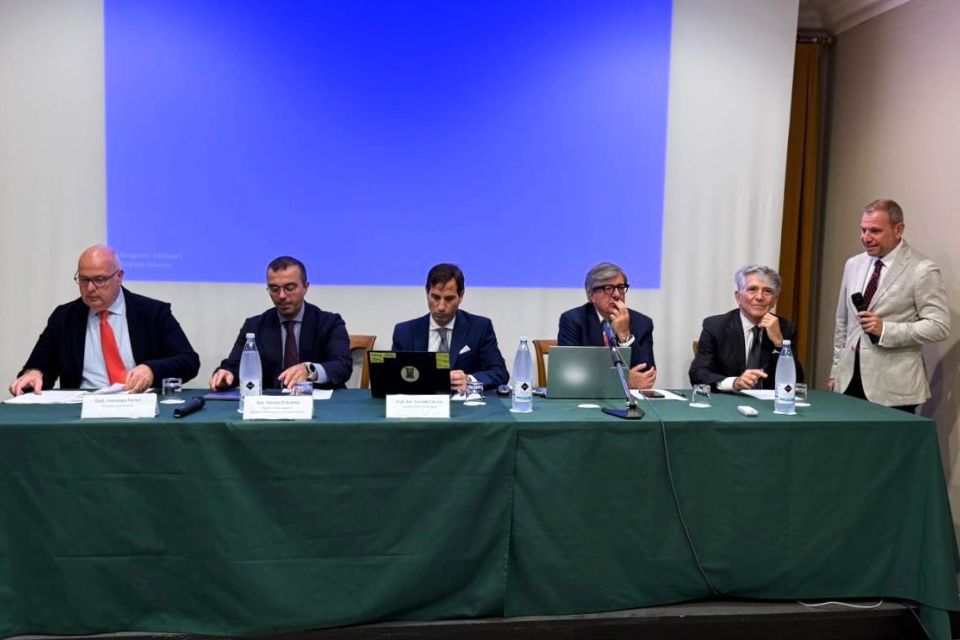
“Etna wines could have the new DOCG designation already in the vineyard in 2026. If the Ministry receives the signatures by December, advancing the procedure quickly is a difficult but not impossible goal.” This was stated by Patrizio D’Andrea, Deputy Chief of Staff at MASAF, during the conference “Opportunities and tools for the growth of the Etna Wine system”, held in Catania on October 30.
ONE HUNDRED SIGNATURES NEEDED FOR DOCG
To obtain the transition from DOC to DOCG, the request must be supported by 51% of producers, also representing 51% of the vineyard area. A threshold that still requires about a hundred signatures. In just over ten years, Etna winegrowers have nearly doubled: from 203 in 2013 to 474 in 2024.
SMALL PRODUCERS AND UNIFIED GOVERNANCE
“The Etna territory is fragmented into micro-productions and fractional contributions – explained Marco Nicolosi, councilor of the Etna DOC Protection Consortium –. We already have the minimum area to request DOCG status, but now we need to involve small farmers, collect documents, and send everything to the Ministry by 2025.”
DOCG entails stricter controls during production and a numbered State seal for each bottle. A guarantee tool for quality, traceability, and economic value of the territory.
Also present were the director of Di3A Unict, Mario D’Amico, and the rector of the University of Catania, Enrico Foti. “We are creating the University Foundation, which will involve several private entities – said Foti –. It will be a more streamlined tool, dedicated to professional training, but always with the Unict brand as a quality guarantee.”
THE MUNICIPALITIES: “NETWORKING FOR ETNA”
Mayors of Etna municipalities participated in the debate, united by the goal of building a shared territorial system. “Only together can we develop strategic interventions to solve urgent problems and aim for excellence,” declared Alfio La Spina, mayor of Sant’Alfio. Concetto Stagnitti, mayor of Castiglione di Sicilia, emphasized the need for inter-municipal synergies.
Of the same opinion is Luca Stagnitta, mayor of Linguaglossa: unified governance is needed for a stronger and more structured Etna Wine System, capable of addressing local challenges – from waste to water management – and creating territory-wide events.
ARCHITECTURE, MARKETS AND NEW OPPORTUNITIES FOR ETNA
The focus, organized by Mada Vinea with Daniele Cianciolo, hosted academics and industry representatives, including professors Corrado Caruso, Bruno Caruso and Salvatore Barbagallo, and the president of Coldiretti Sicilia, Francesco Ferreri.
Architect Filippo Bricolo highlighted the importance of architectural design as a narrative of the territory: “Thinking of the winery as a project means telling how wine dialogues with the landscape.”
The final roundtable addressed crucial topics: the opening in Mascalucia of an Etna branch of the Regional Oil and Wine Institute, interest in the Brazilian market, and the enhancement of supply chain professionals. With the regional department’s commitment to accelerate development programs.