IN BREVE
- On June 29, 1936, the AOC Champagne was officially born, establishing the exclusive right to use the appellation.
- The history of Champagne protection began in the 19th century, with the Syndicat du commerce et des vins de Champagne created in 1882.
- The 1936 decree established clear rules regarding geographical origin and production practices for AOC Champagne.
- Over the years, the rules have evolved, including environmental measures and climate adaptations, while maintaining the fundamental principles.
- Today, over 130 countries legally protect the Champagne appellation, with a collective strategy to defend its identity.
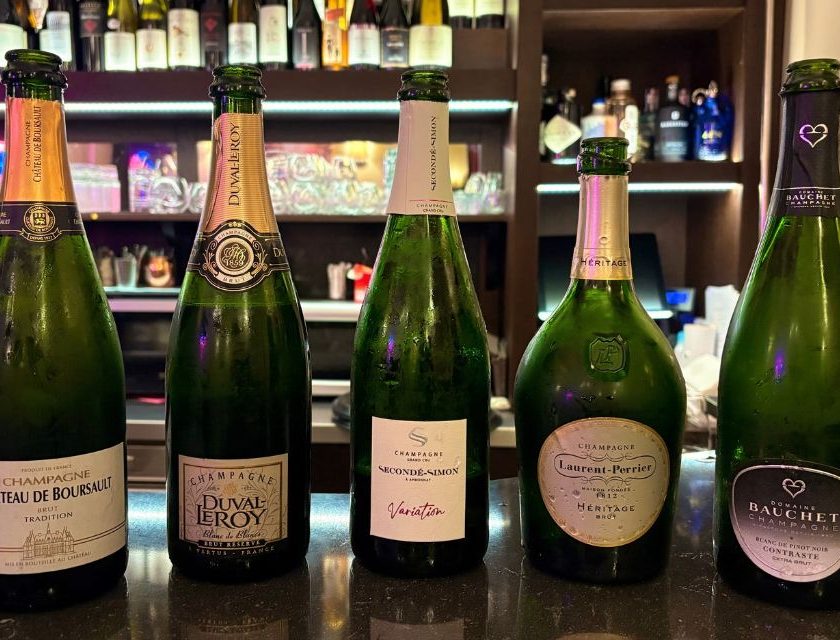
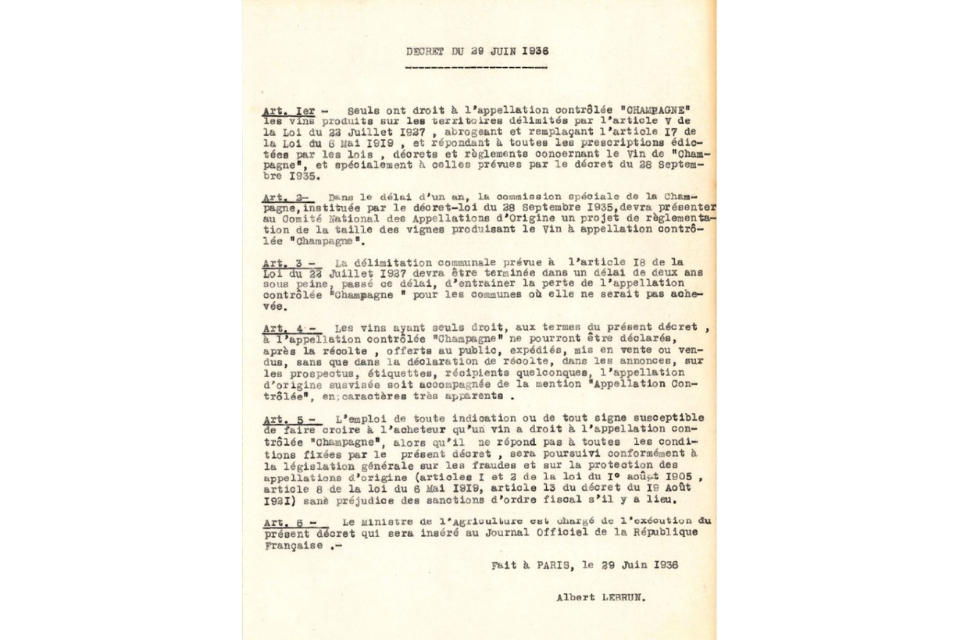
On June 29, 1936, the AOC Champagne was officially born. The decree signed by French President Albert Lebrun concluded a process lasting over twenty years and enshrined in law the exclusive right to use one of the world’s most recognized appellations. In 2026, the Syndicat Général des Vignerons de la Champagne celebrates the 90th anniversary of that historic milestone, emphasizing its collective nature: a shared construction by vignerons and Maisons to protect the region’s origin, quality, and heritage.
The decree did not invent Champagne, nor did it initiate its protection from scratch. It brought order to a legal and production system developed over decades, transforming Champagne into one of France’s first Appellation d’Origine Contrôlée. The AOC, now also part of the European AOP framework, links a product to a defined area and verifiable production rules.
CHAMPAGNE: THE DEFENSE OF THE NAME BEGAN IN THE 19TH CENTURY
The Champenois had begun defending the name almost a century before official recognition. As early as 1845, a decision by the French Court of Cassation marked a fundamental milestone against improper use of the word Champagne. In 1882, the Syndicat du commerce et des vins de Champagne was established, later becoming the Union des Maisons de Champagne. In 1904, the federation of wine growers’ unions was formed, from which the current Syndicat Général des Vignerons would emerge.
The delimitation of the vineyard proceeded in stages: administrative in 1908, judicial in 1919, and legislative in 1927. In 1935, production conditions were defined, paving the way for the following year’s decree. The date of June 29, 1936, therefore represents the culmination of a long dispute over grape origin, regional boundaries, and commercial use of the name.
Behind the 90th anniversary celebration lies a history far from peaceful. Champagne’s international reputation had attracted imitations and generic uses of the term. Defending the origin meant protecting producers’ work, but also preventing any sparkling wine from appropriating a name built in a specific territory.
WHAT THE DECREE OF JUNE 29, 1936 ESTABLISHED
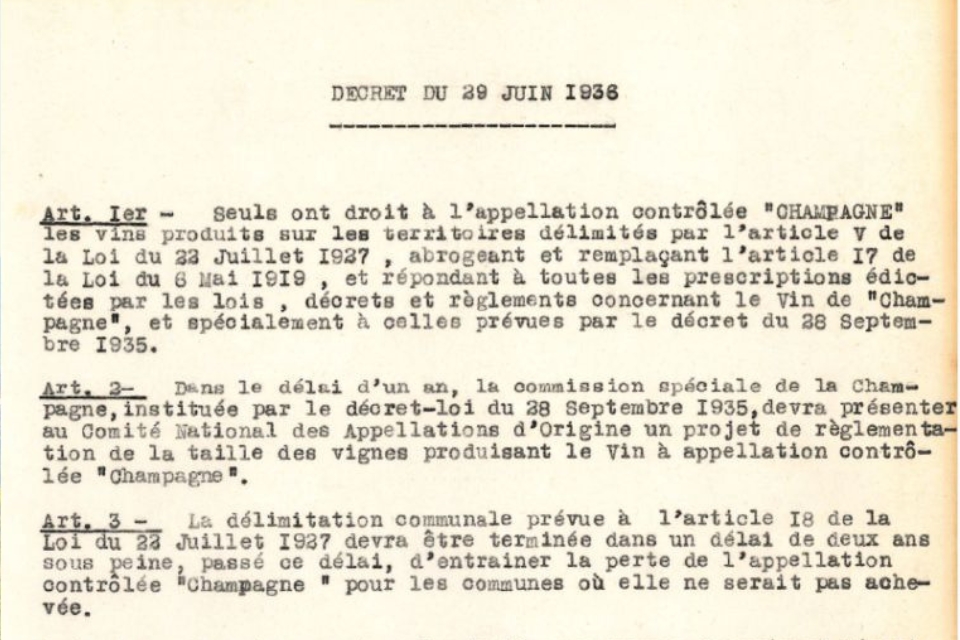
The first article reserved the Appellation Contrôlée Champagne for wines from territories delimited by the 1927 law and compliant with production standards already introduced. The right to the name therefore depended on two inseparable conditions: geographical origin and compliance with the rules.
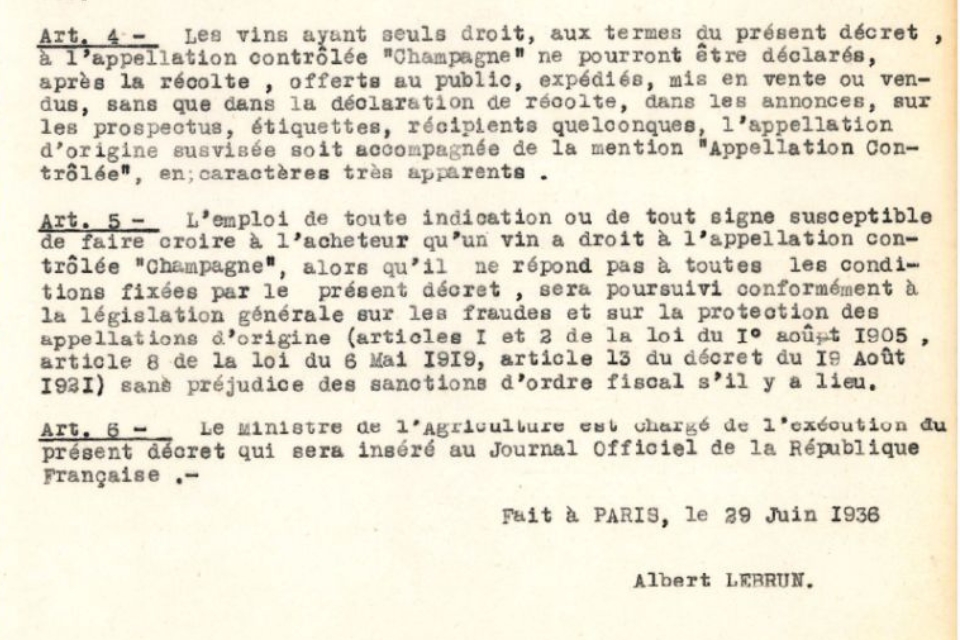
Subsequent articles entrusted competent bodies with completing municipal delimitation and defining viticultural practices. The decree also regulated how the appellation should appear in harvest declarations, commercial offers, advertising, shipping documents, labels, and containers.
Article 5 was particularly significant. The provision targeted any indication or sign capable of leading the buyer to believe that a wine was entitled to the AOC Champagne when it did not meet the required conditions. A principle that anticipated the modern battle against imitations, evocations, translations, and commercial formulas designed to indirectly exploit the appellation’s reputation.
The 1936 text was brief. Its strength lay in its clarity: Champagne did not indicate a generic production method or even a category of sparkling wine. It identified a wine from Champagne obtained according to common specifications.


FROM THE DECREE TO THE MODERN PRODUCTION RULES
The rules have been updated multiple times, without abandoning the principles introduced in 1936. The current production rules control the geographical area, permitted grape varieties, pruning systems, yields per hectare and pressing yields, minimum potential alcohol content, second fermentation in bottle, and mandatory aging periods.
Manual harvesting, transport of whole bunches, and regulated pressing contribute to defining a system in which the name can only be claimed after compliance with the entire production process. A bottle does not become Champagne simply by being sparkling through second fermentation.
Even climate adaptation goes through the production rules. In 2023, new environmental measures were introduced, including winter vegetation cover between rows, hot water treatment of plant material, and greater flexibility in planting densities. The resistant variety Voltis is permitted experimentally and with very strict limits: up to 5% of the estate’s surface area and 10% of the blend. Observation will continue until 2033.
The ninety years of the AOC therefore do not tell the story of an immobile system. Continuity concerns the link between wine, territory, and common rules; techniques and specifications can instead evolve in response to new environmental conditions.
PROTECTION THAT BECAME GLOBAL
The 1936 decree operated on French territory. Defense of the name has taken on an international dimension over time. As documented by Winemag, over 130 countries now recognize legal protection of the Champagne appellation, and approximately 500 new actions against imitations and improper uses are initiated each year.
Protection concerns wine, but can also extend to commercial uses that exploit the name’s reputation in other sectors. The strategy followed by the industry considers the appellation a collective heritage, unavailable to individual companies and jointly defended by growers and Maisons.
Markets remain where protection is not complete. The United States and Russia have long represented two of the most complex cases, while numerous bilateral agreements have progressively extended recognition in Latin America, Asia, and other international markets.
THE LESSON OF CHAMPAGNE’S 90 YEARS
In the wine world, Champagne has become synonymous with prestige also thanks to this architecture. The value accumulated by the appellation rests on established boundaries, shared rules, controls, and the ability to intervene when the name is used improperly.
The decree of June 29, 1936, did not merely celebrate an already existing tradition. It established who could claim it and under what conditions. Ninety years later, the image published by the Syndicat Général des Vignerons highlights those six typewritten provisions. Behind one of the most powerful words in the wine world remains a legal text that prevents that word from becoming generic.