IN BREVE
- The Concours des Grands Vins du Monde in Macon saw a disappointing turnout with only 245 wines entered for as many as 84 judges.
- The wine evaluation methodology appeared superficial and lacked technical depth, with no clear scoring scale.
- During the tasting, judges were free to discuss among themselves, influencing each other amidst confusion regarding the samples being tasted.
- The competition claims to be international, but the official language used is exclusively French, limiting the effectiveness of communication between organizers and judges.
- The self-referential approach of the organizers raises questions about the event’s utility during a period of great difficulty for the sector.
In a wine world seeing plummeting consumption, within an international context that will reshape the viticultural landscape and the map of wineries in major global wine regions, some wine competitions continue to appear arrogant. Detached from the real problems of the sector. And, above all, driven by an irrepressible and incomprehensible spirit of self-referentiality. Proof of this is the first edition of the Concours des Grands Vins du Monde, held in Macon, Burgundy, on November 14, 2025.
This is the “international” spin-off—almost exclusively in its premise—of the better-known Concours des Grands Vins de France, an event that has taken place in France for seventy years. I had the opportunity to participate as an Italian judge at the Concours des Grands Vins du Monde in Macon. What I saw deserves to be told with extreme honesty and my usual spirit of service toward all those wineries—Italian and otherwise—that sent samples to the competition, or are considering doing so for future editions.
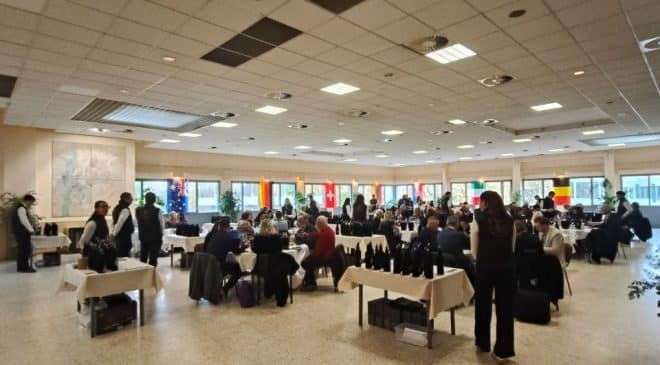
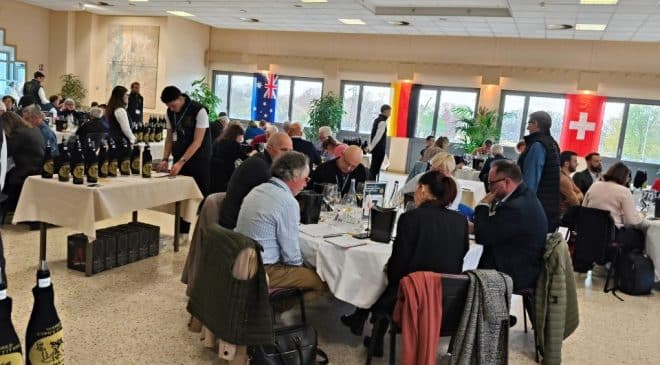
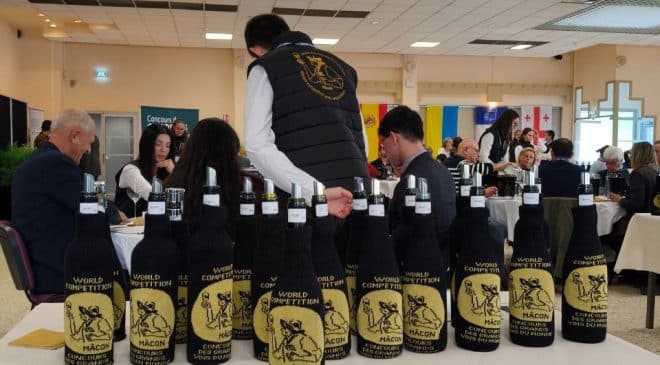
In truth, there were few entries in 2025. Only 245 wines were registered in total, compared to (no less than) 84 judges invited from 18 countries, some of whom stated they received no expense reimbursement or attendance fee. You read that correctly. Only two hundred and forty-five wines for eighty-four tasters. Divided into tables of 6 or 7 members.
The first edition of the “World’s Great Wines Competition” in Macon: THE AMBASSADORS
These numbers already give an idea of how the Concours des Grands Vins de France could be defined, at the very least, as a sui generis wine competition. Seventy years of experience in organizing the main French competition were not enough to ensure a large turnout for the first edition of the “international” contest.
Sample collection was also entrusted to the goodwill of several “ambassadors” identified in various countries. Among these is an Italian “digital communicator” who dislikes being called an influencer—preferring “wine educator”—despite operating mainly on social media with a community she describes as “very large and loyal.” Once I arrived at the tasting table, I realized that there were only 18 wines to be tasted for the entire morning.
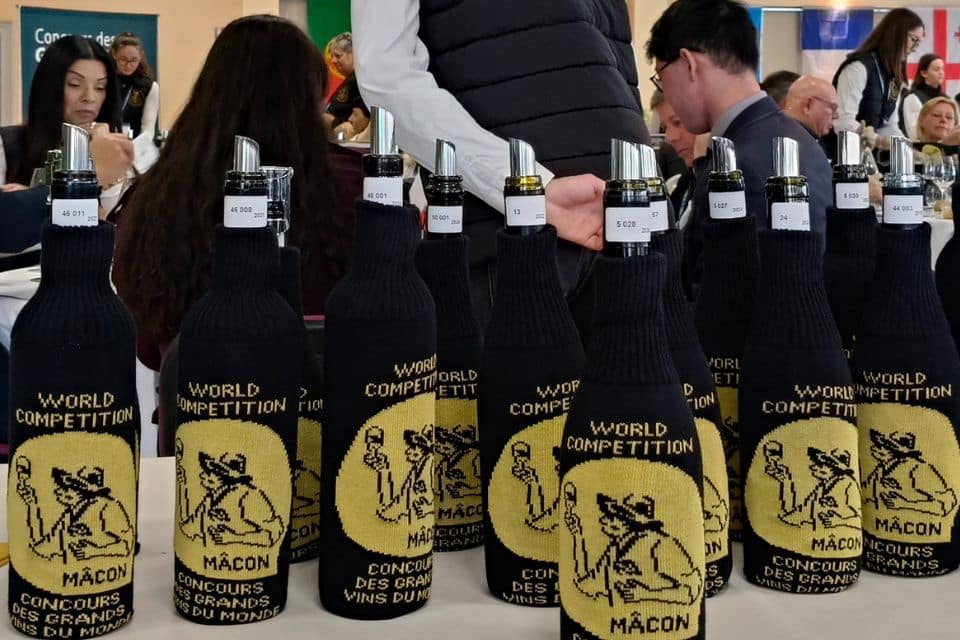
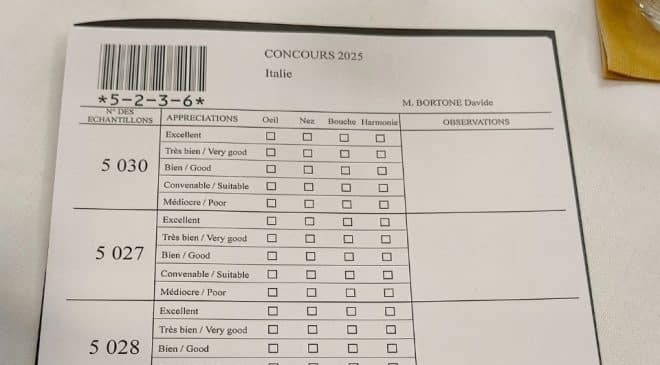
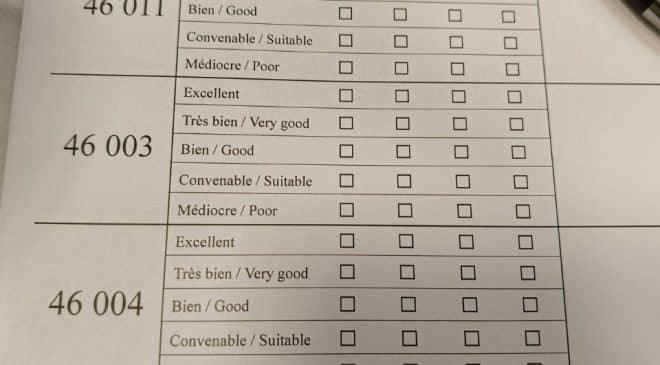
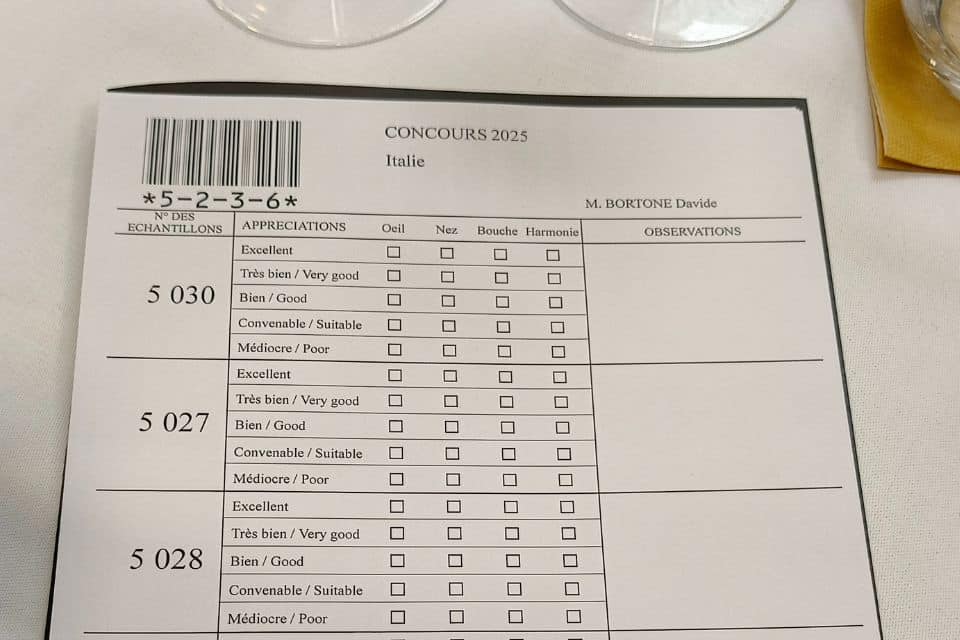
Only eighteen wines for me and the other 6 jurors sitting at table number 5, over a very long period: from 9:30 AM to 1:00 PM. But the most shocking thing was the “evaluation sheet” provided by the organizers of the Concours des Grands Vins du Monde in Macon to each juror. It was anything but the classic international competition format, which allows—among other things—for providing producers with complete feedback on the merits and any organoleptic defects of the wines submitted, as well as a score out of 100 that determines whether a medal is awarded.
HOW ARE WINES JUDGED AT THE Concours des Grands Vins du Monde in Macon?
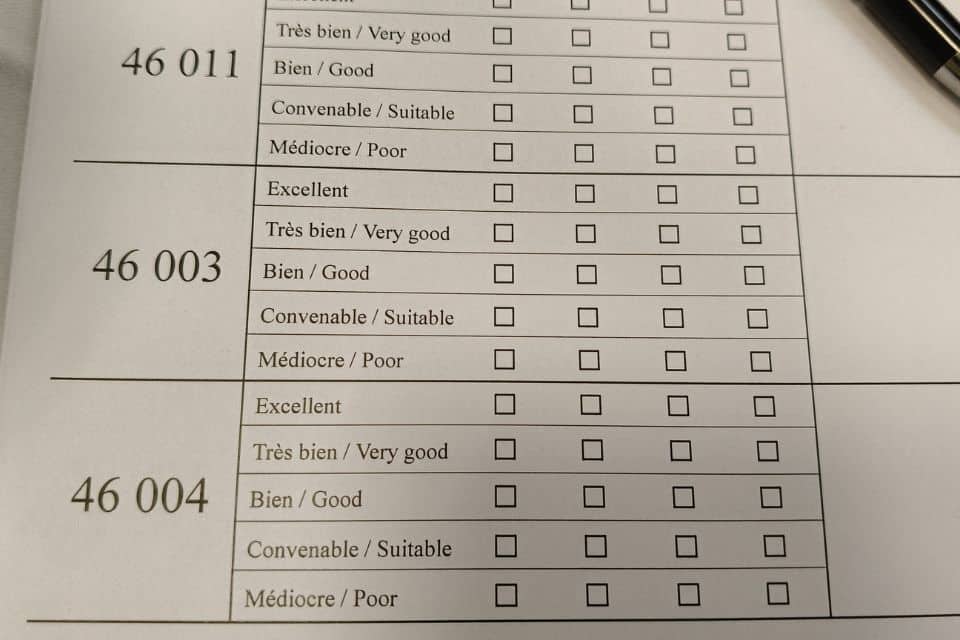
Each wine had to be tasted according to a very basic scheme including “Appearance”, “Nose”, “Palate”, “Harmony”. Parameters were evaluated, with equally little technicality, as “Excellent”, “Very Good”, “Good”, “Acceptable”, or “Mediocre”. There was no possibility to assign a score out of 100 or on any other scale. However, the jury president was provided with the country of origin, vintage, and appellation. These details were communicated to the rest of the tasters before the tasting. At my table, some confusion led the president to present—with great conviction—the first three samples as Gavi DOCG. Only to later discover they were French wines.
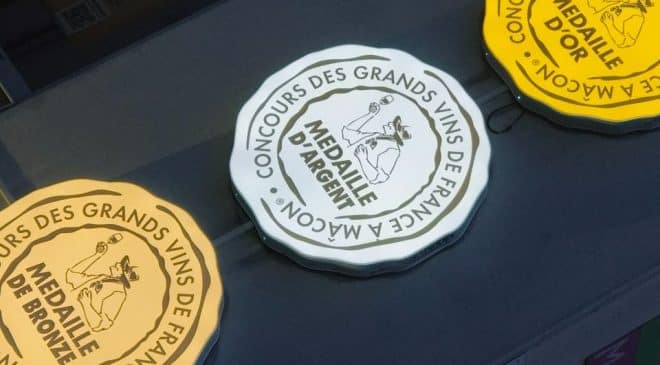
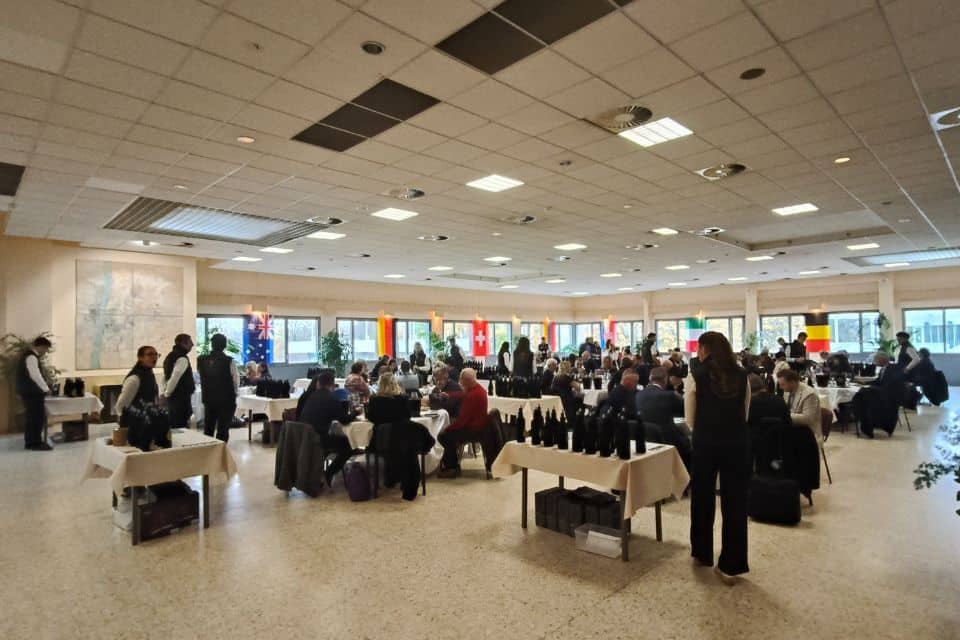
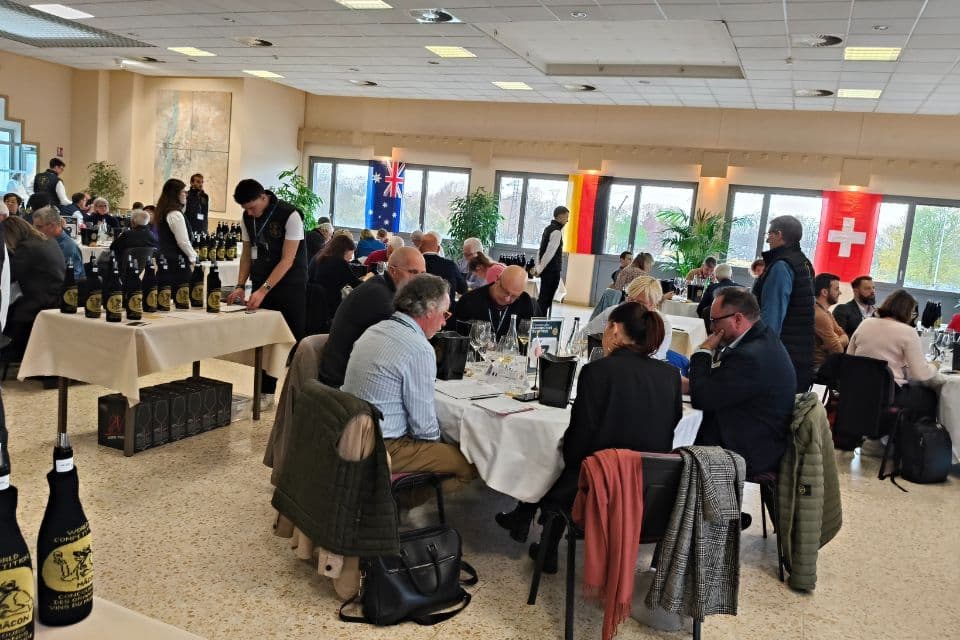
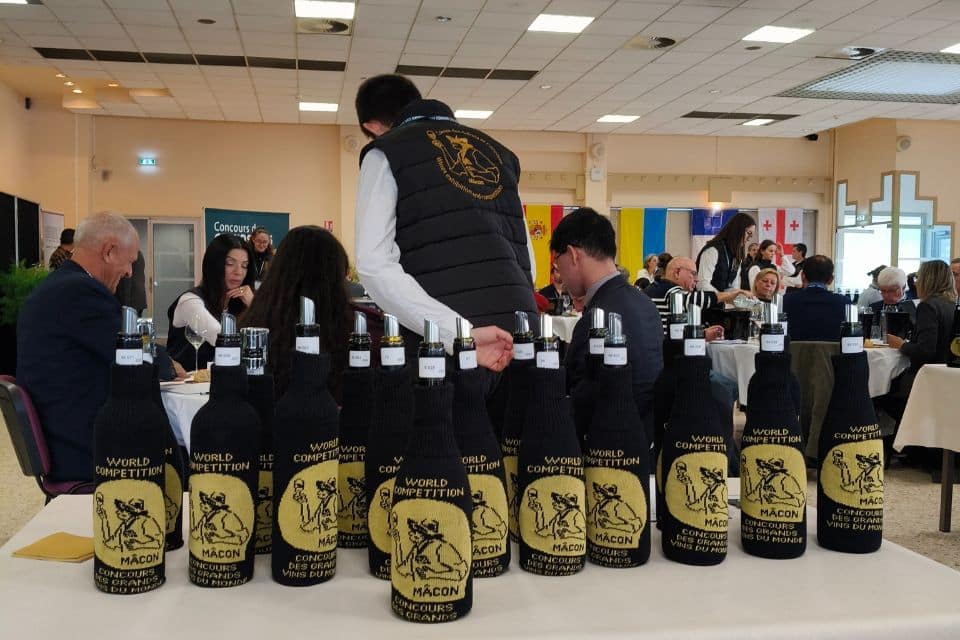
THE MEDALS OF THE CONCOURS DES GRANDS VINS DU MONDE IN MACON
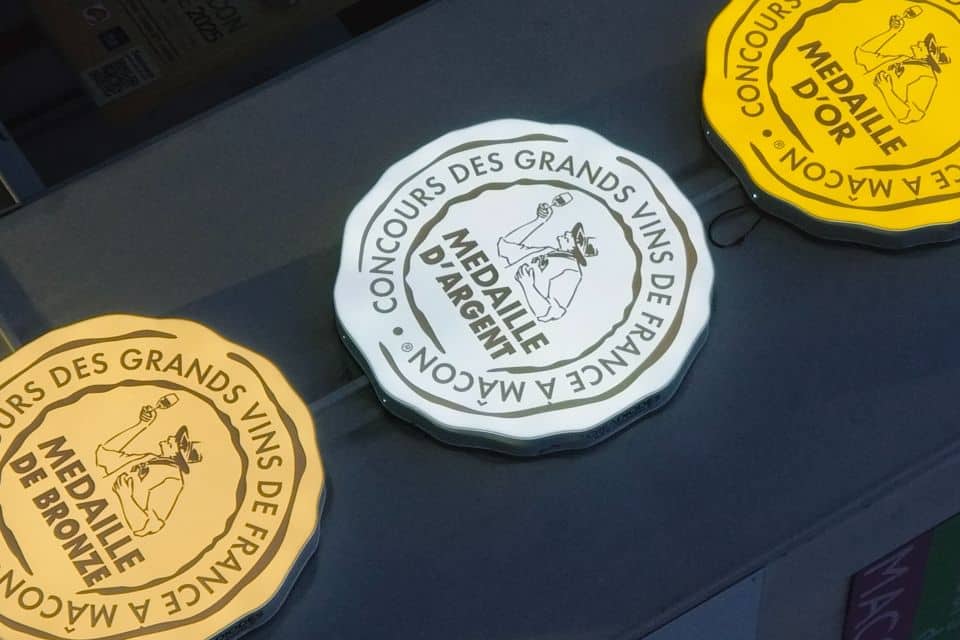
Without a real scale of values, how are medals awarded at the Concours des Grands Vins du Monde in Macon? The question remains rather vague, as in the opening speech by the organizers—members of the Comité des Salons et Concours de Mâcon—no reference was made to the medal assignment methodology.
“Gold, silver, and bronze medals are awarded,” the jury president replied to my specific question, “by running the individual judges’ sheets through a scanner, simply based on the wine profile defined by ‘Appearance’, ‘Nose’, ‘Palate’, and ‘Harmony’, judged as ‘Excellent’, ‘Very Good’, ‘Good’, ‘Acceptable’, or ‘Mediocre’.” This is a rather amateurish level of judging precision. It is decidedly far from international standards, which require much more technical and precise evaluation sheets.
NO SECOND BOTTLE: BUT ON SOCIAL MEDIA, THE COMPETITION IS A “HUGE SUCCESS”
There’s more. At the “World’s Great Wines Competition” in Macon, judges are free to chat among themselves during the analysis of the wines, even before judging them personally. This leads to influencing one another, often in a very obvious and tacky way. The president of my own table, an Italian, frequently misrepresented certain Italian wine regions—specifically the Veneto of Prosecco and Oltrepò Pavese—laughing and joking with the other judges about the “mass-produced, low-quality wines” from these regions, which were in the glasses at that very moment. Something incredible, unacceptable, and disrespectful toward the producers who placed their trust in the credibility of the Macon Competition.
What is certain is that each table, at the end of the tasting, had the task of identifying the 5 best wines tasted in the panel to bring them to the lunch scheduled for the tasters at 1:00 PM. All this while on social media, from the early morning hours, enthusiastic comments about the competition began to appear, accompanied by photos and selfies of the dozens of judges who arrived in Macon. A version that seemed pathetic in its bias. A far cry from what was actually happening in one of Burgundy’s symbolic locations. Shocking for any (true) professional with even a minimum of experience in the sector.
FORGIVE US IF WE ONLY TELL THE TRUTH ON WINEMAG…
The model of journalism and the strict editorial line of Winemag, which I have pursued for years despite a thousand attempts to discredit me that reach my ears daily, compel me to tell producers, readers, and all stakeholders in the wine world what really happens at the Concours des Grands Vins du Monde in Macon.
A competition where, upon requesting a second bottle due to a doubt about a possible organoleptic deviation in the first sample served, some Italian judges were told: “No, we do not serve a second sample unless there are obvious defects, such as cork taint.”
Who, then, are the second bottles requested from producers for?! Who really benefits from this international competition? Why should producers send more than one sample if judges are not free to taste a second bottle in case of doubt?
A LAPSE IN STYLE FOR FRANCE AND BURGUNDY
The Macon event is a competition, I’ll add in closing, that proclaims itself “international,” but where few of the judges present—as well as the organizers and, believe it or not, the ambassadors appointed by the Comité des Salons et Concours de Mâcon—speak even “decent” English. The official language at the tasting tables and the masterclass organized in the afternoon is French. And only French.
I participate as a juror in dozens of very serious national and international competitions where professionalism is absolute, Mundus Vini being a prime example. Based on this experience, I assure you that what happened in Macon was a total shock. A pitiless lapse in style for a great wine-producing country like France, which for 24 hours felt like the provinces rather than the beating heart of the international wine world. An unacceptable slip-up that took place in a prestigious wine region like Burgundy, the queen of the world’s best wine lists.
These details won’t matter to the many who use these types of events as a personal showcase to assert their existence and (presumed) “value” in the sector, with selfies and smiles that feel like a mockery of hundreds of wine producers, often unaware of how things really go in these contexts. To them—the winemakers and producers—goes my Santé. And an invitation to the power of three: select, select, select.
Concours des Grands Vins du Monde in Macon: What No One Will Tell You. https://concoursvinsmonde.com/.