IN BREVE
- Riccardo Cotarella criticizes new trends in the wine world, such as aging at sea, considering them “misguided gimmicks.”
- The president of Assoenologi emphasizes the role of the modern winemaker as guardian of quality and protagonist in wineries.
- The winemaker is no longer just a technician, but a communicator who brings stories and products to the outside world.
- Aging wines at sea is growing, with particular conditions that could favor a gradual evolution of the wine, different from traditional “cellar” aging.
- There is a lack of comparative data on the real organoleptic impact of the sea, but the sector continues to experiment and seek ways to stand out.
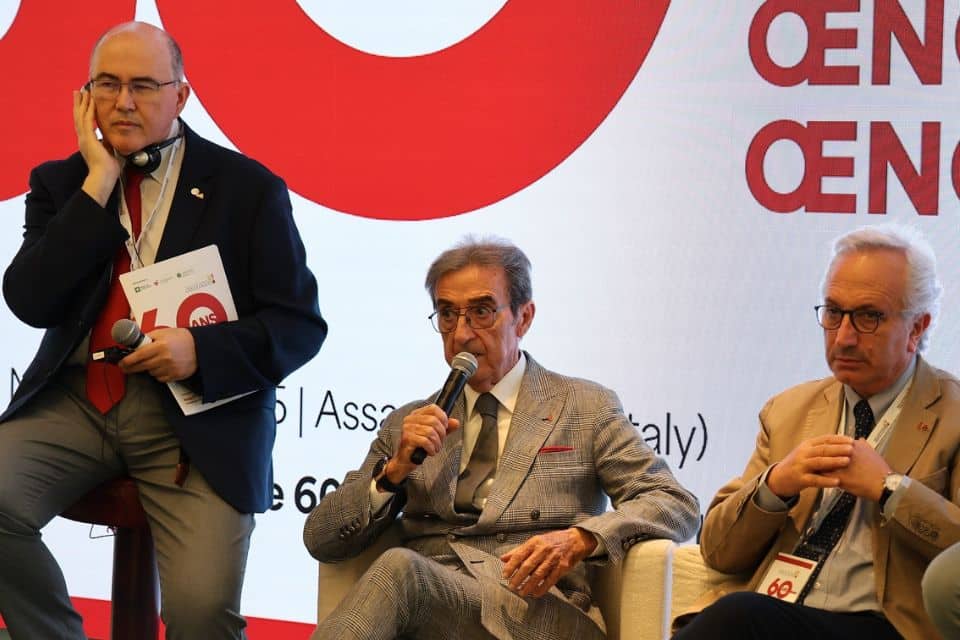
Wines aged at sea, whether off the coast of Portofino or in mountain lakes? For Cotarella, they are simply “misguided gimmicks.” The president of Assoenologi defined one of the latest Italian wine trends this way, speaking yesterday morning at the conference for the 60th anniversary of the Union Internationale des Œnologues, held at the Hotel Royal Garden in Assago (Milan).
“We must counter drifts like natural wines, which don’t exist and are understood ideologically, or misguided gimmicks like putting wine to soak in the sea. Things that have nothing to do with European territorial identity. We must warn consumers: these phenomena only serve to capture attention.” An outburst from Riccardo Cotarella that preceded his analysis of the role of the modern winemaker.
THE ROLE OF THE MODERN WINEMAKER
“Today’s winemaker is the moral and material guardian of quality. Italy – added the head of Assoenologi – is a continuous garden of grape varieties and terroirs: every town has its wine, its tradition, its culture. This didn’t exist decades ago. The land is still the same. What has changed is the human and professional approach. And we are proud and responsible for this. We must give more and more space and love to wine.”
“In the past – Cotarella continued – the winemaker was just a cellar technician, wearing an apron, focused on practical aspects. Today he has become a protagonist in wineries, often the first communicator, the one who brings content, stories, and products to the outside world. After the events of 1986, the world understood that more science was needed, not just practice. That crisis gave winemakers new responsibilities. And it allowed them to show results useful to everyone. If Italy today boasts biodiversity, production diversity, and a unique heritage, it’s because space was given to research. Otherwise we would have remained in the times when people only talked about ‘white’ and ‘red.'”
WINES AGED AT SEA AND COTARELLA’S HARSH CRITICISM
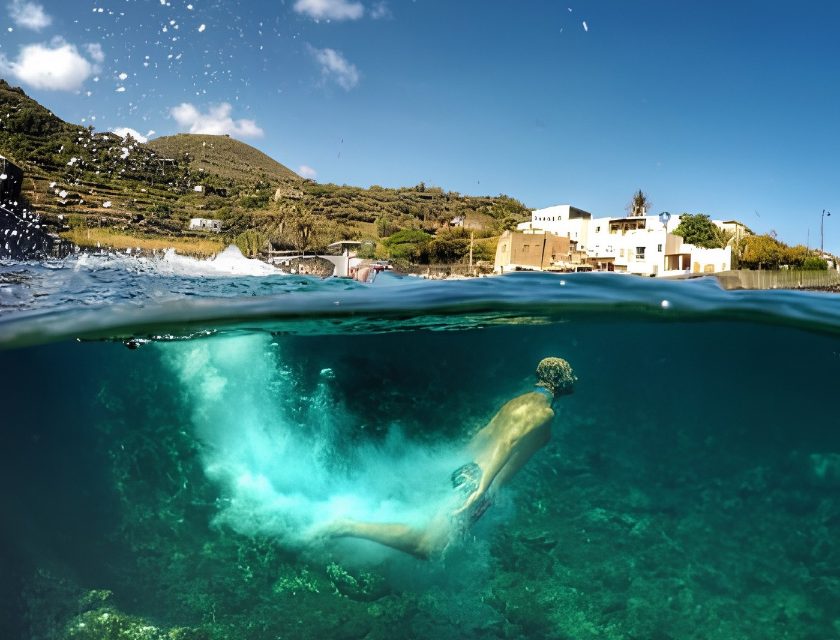
Aging wines at sea is now a recognizable practice in various Italian coastal areas. The wineries that adopt it focus on the particular conditions of the seabed: constant darkness, stable temperatures, high pressure. Elements that, according to those experimenting, favor a more gradual evolution of the wine compared to the traditional cellar. The first trials mainly involved sparkling wines and whites, but today there are also reds and, in some cases, spirits left to rest underwater for months.
What drives this phenomenon is not just technical research. Bottles recovered from the seabed – often encrusted with marine organisms – become powerful narrative objects, capable of attracting attention from an audience seeking different experiences. Some companies have created true underwater storage areas, monitored and “certified.” Transforming the recovery of bottles into a spectacular and media-worthy moment.
The discussion remains open on the real organoleptic impact of the sea, to which Riccardo Cotarella himself seemed to refer during his speech at the conference for the 60th anniversary of the Union Internationale des Œnologues. Many winemakers emphasize that there is still insufficient comparative data to demonstrate clear advantages. At the same time, the growing number of sea-aged wine projects demonstrates how willing the sector is to push beyond traditional methods. Just to stand out. Combining experimentation and marketing, even if not always winning the hearts of industry professionals.