IN BRIEF
- Maximilian Riedel, the eleventh generation of the glassware dynasty, celebrates 270 years of history through engaging and provocative masterclasses.
- Riedel emphasizes the importance of the glass in selling wine, transforming tasting into a collective and participatory ritual.
- He uses the Performance line to demonstrate that glasses are “loudspeakers for wine,” emphasizing the difference between vessels.
- His glass-related training and the mix of Bohemian and Murano traditions influence the design of Riedel products.
- Riedel is meticulous in choosing a restaurant: for him, the choice of glass precedes that of the wine and food.
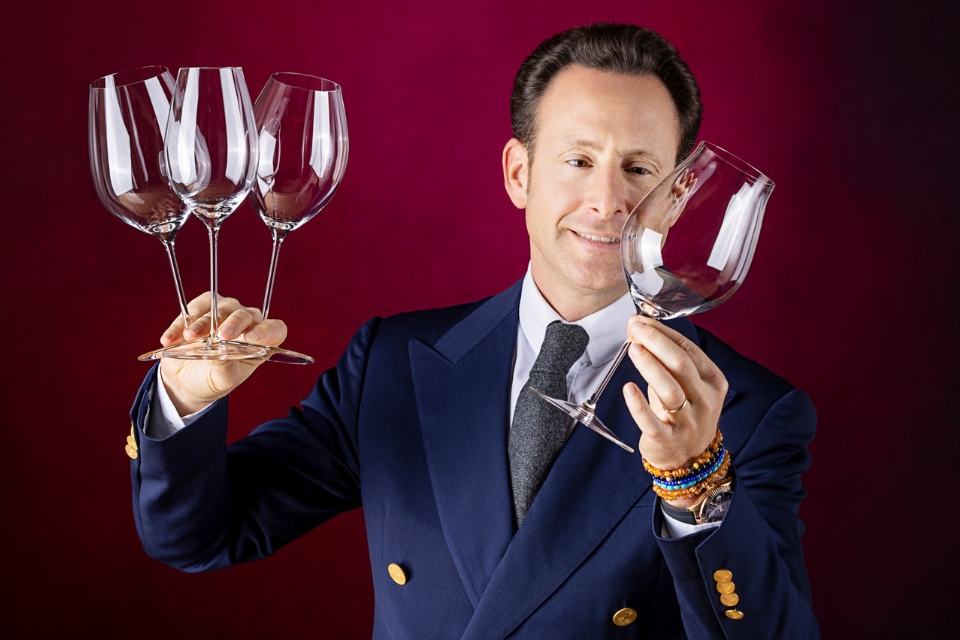
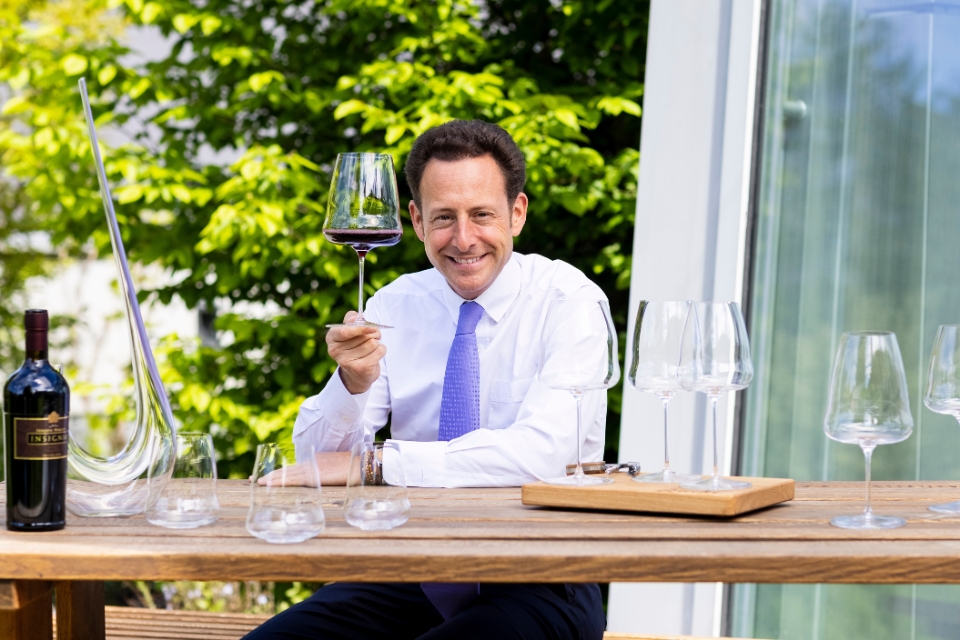
“A Riedel glass without wine is a dust collector.” Maximilian Riedel can afford to dismiss the object around which the family business revolves in this way. The eleventh generation of the Austrian glassware company, which celebrates 270 years of history in 2026, alternates jokes, personal memories, and provocations during his masterclasses. The wine moves from one shape to another. He holds it all together: technical explanation, instructions to the floor, and the salesman’s craft.
Commercial interest also comes without beating around the bush. “If the world stops drinking wine, I close down.” In front of producers and service professionals, Riedel declares his goal: to help them sell wine. The glass is the means. To prove it, he has them smell, taste, and change vessels. Go back. From the beginning. His idea of tasting requires participation. It continues. And he dictates the tempo.
“GOOD?” MAXIMILIAN DICTATES THE RHYTHM
“Good?”. The question returns constantly. It marks a step and prepares for the next. Maximilian speaks in English, inserting Italian words. He indicates which glass to pick up and which to leave on the table. The sequence is precise. First prepare the “vessel,” then smell. Finally, drink. He asks to be followed. The group, after all, must move with him: glass one, glass two, then the first one again.
It starts with Sauvignon Blanc. The nose enters the glass: inhale, exhale, inhale again: “This is our morning yoga session,” he jokes, but only half-joking. The olfactory exercise becomes a small collective ritual. Shortly after, the same wine ends up under scrutiny in another shape: Riedel invites guests to look for the fruit, observe the texture of the sip, and compare sensations.
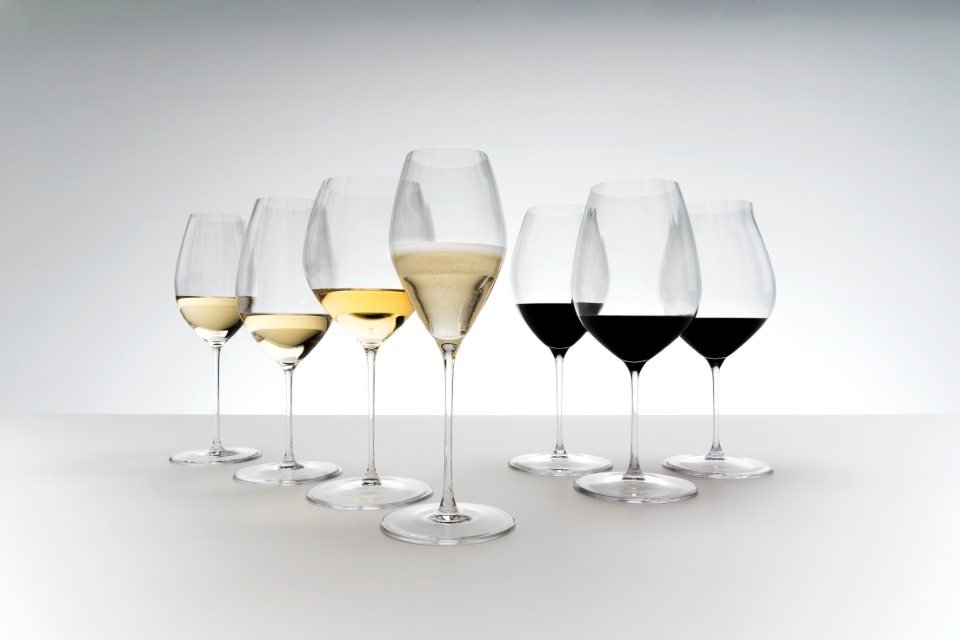
The Performance line glasses are the tools of the test. The host gives them a voice: he calls them “loudspeakers for wine.” And he chooses to compare vessels from his own brand, so as to focus the demonstration on the shape. A brief aside is enough to turn even this detail into a headline: “I don’t need competitors. For me, they don’t exist.” Then he returns to the tasting. “Good?”.
WATER IS FOR FISH AND SOMMELIERS ARE WARNED
When describing a sip that dries the mouth and makes one look for water, the jab is ready: “Water is very bad for our business, ladies and gentlemen.” Then the joke: “Water is for fish. Wine should be for us.” The provocation accompanies the sensory comparison and allows him to involve even those who, at that moment, are drinking from the vessel next to them: that useless glass of water, precisely.
Riedel observes the reactions and brings them into the discourse. During the Chardonnay test, those looking for water become, in his interpretation, a confirmation of the sensations just described. He addresses the room directly, calling out a participant who is smirking. He insists on the difference between one glass and another. He keeps the dialogue open even when the answers come through a gesture.
With the sommeliers in the room, the tone heats up further. The habit of using the same glass for Chardonnay and Pinot Noir, both linked to Burgundy, makes him flare up. A swear word in English slips out. “Sorry, but I get carried away.” Then he brings it home to the family: “I believe the origin of using a single glass for Burgundy lies in a mistake by my grandfather.” The reference is to the regional name given to that shape. Kinship offers few mitigating circumstances.
THE GENOESE GRANDMOTHER, LAMBORGHINIS, AND MURANO
At a certain point, between Sauvignon Blanc, Chardonnay, and Nebbiolo, a Genoese grandmother and Lamborghinis appear. The Italian names of the collections lead him to his grandmother, originally from Genoa, whom he says he never met. “We have Italian blood.” Then he makes a second link explicit, the one with cars: Lamborghini, Superleggero, Veloce. The passion for wine coexists with that for Italian cars. And it even ends up in the vocabulary of the glasses.
The most personal story comes when talking about Murano. “When I was sixteen, my father told me: you’re doing poorly at school, now go to work.” This is how he introduces the period spent learning glassmaking, linking that experience to the taste for color and the organic shapes of his decanters.
In Maximilian Riedel’s narrative, the Bohemian tradition has essential and clean lines; the Murano tradition brings roundness, movement, and color. He is interested in bringing them together. “I am the first generation trying to combine the two.”
HE WANTS A SHOW AT THE RESTAURANT
His ideal terrain remains the restaurant. Here, the request he often makes to the sommelier on duty is singular: “Serve me the wine as I have never drunk it before.” Handing over an iPad with the wine list, in his idea of hospitality, leaves the job half-done. Riedel wants a person who tells a story, prepares the bottle, and takes care of temperature and service.
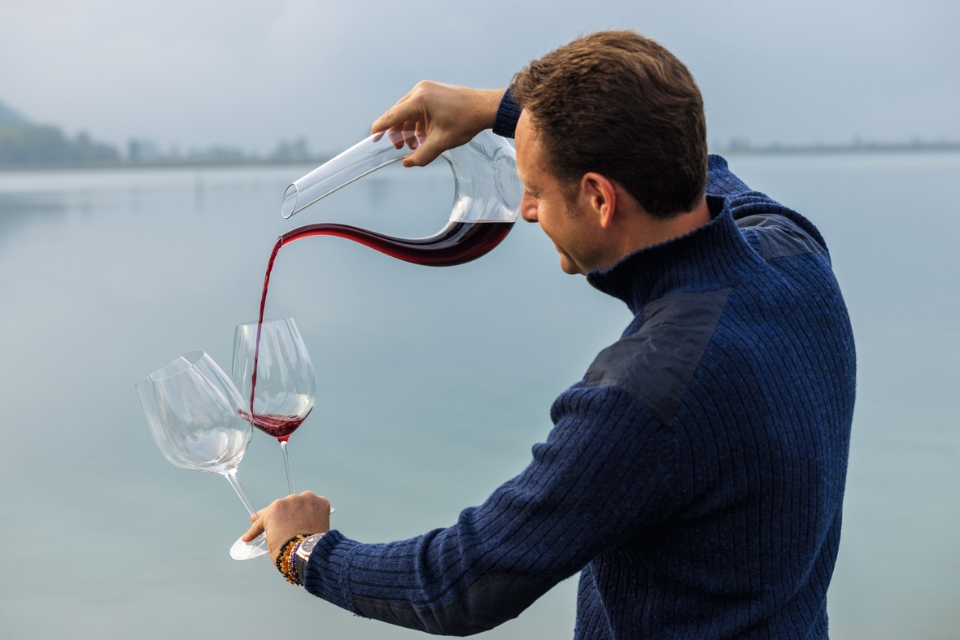
“We want the show, we want to be entertained.” He says this while explaining why decanting must be part of the relationship with the customer. To the function of the gesture, he adds its value in the dining room: the time dedicated to a bottle, the attention that the sommelier makes visible. The possibility of explaining what they are doing, which becomes an opportunity. Uncorking, setting down the wine, and leaving with a “ciao, ciao” would be a “lost opportunity.”
When we ask him what he looks at first when entering a restaurant, the answer follows this logic perfectly: “I ask to be shown the available glasses. The choice of wine will follow accordingly.” He specifies that he also wants to support the establishment’s clients and looks for a match between the shapes present and the varieties to be drunk. The hierarchy is declared: “First the glasses, then the wine, finally the food.”
WRITE TO ME ON INSTAGRAM BUT WITHOUT IMPATIENCE
The relationship with the public continues beyond the tasting. In closing, Riedel invites people to write to him directly on Instagram and promises “personal replies within twenty-four hours.” Here too, he puts the practical reason first: from the questions, he better understands what people want to know.
He does this, he explains, while managing the company and the family. The invitation comes with a final instruction on timing: “I need at least twenty-four hours. Don’t be impatient.” A bit like those wines that, to open up, don’t just need time. But, often, above all the right glass.