IN BREVE
- European wine risks being hit by a new tariff measure in the United States linked to forced labor.
- The European Union could face a 10% tariff, without direct accusations against the wine industry regarding forced labor.
- The U.S. Wine Trade Alliance is mobilizing actions to avoid damage to the American and European wine sectors.
- The proposed tariffs are not only aimed at European producers: they could also damage the American economy as a whole.
- Uncertainty regarding tariffs can already slow down orders, complicating the market for Italian wineries in the United States.
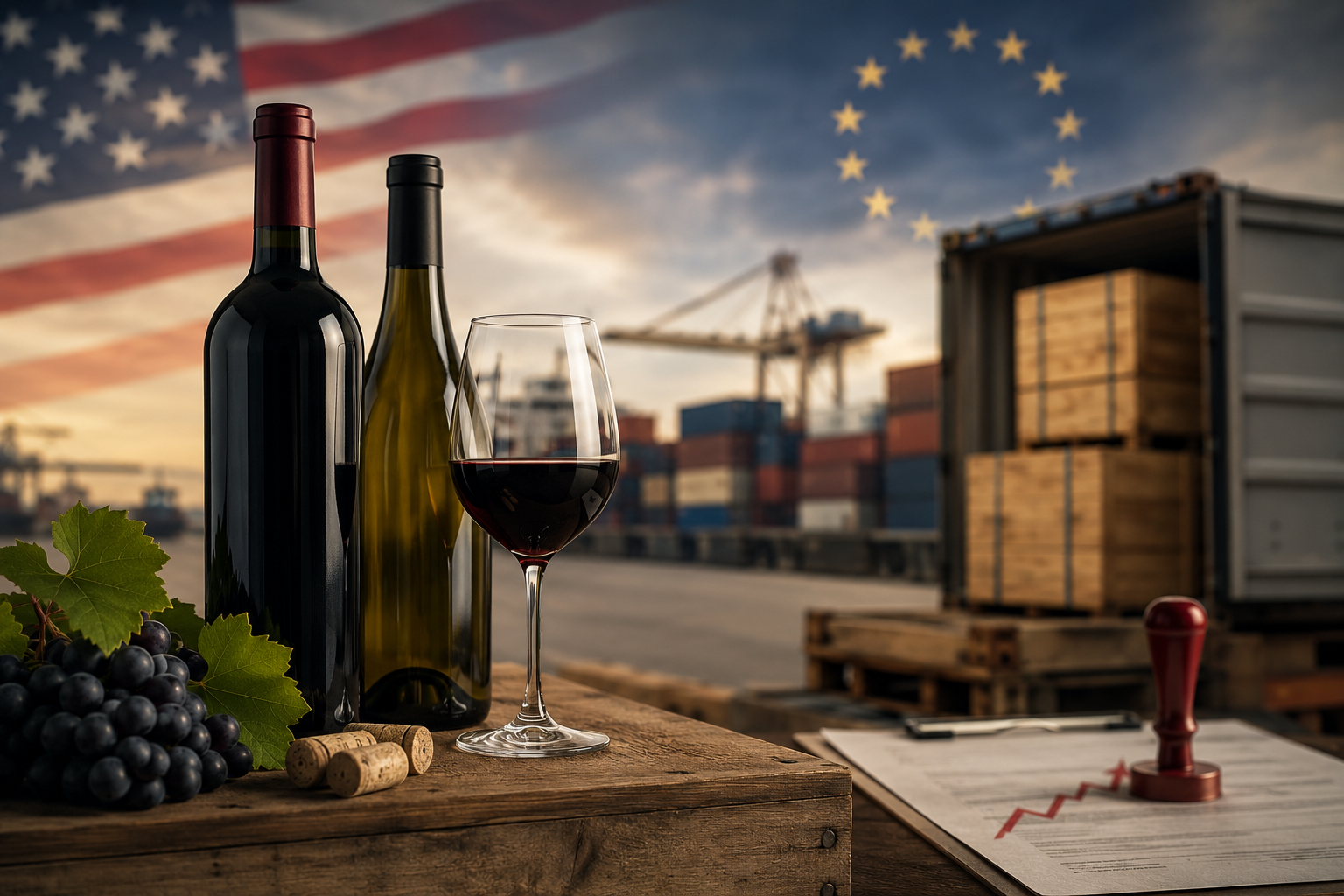
European wine is back under pressure in the United States. It risks ending up within a new tariff measure built around the issue of forced labor, despite no direct accusations against the wine industry on this front. The dossier stems from Section 301 investigations launched by the USTR, the Office of the United States Trade Representative, into policies adopted by 60 foreign economies against the importation of goods produced with forced labor.
The investigation does not concern wine, but rather the ability of foreign governments to effectively impose and enforce an import ban on goods produced, in whole or in part, through forced labor. According to the USTR, the European Union is among the economies that have a ban, but would not apply it effectively enough. Hence the American proposal: additional tariffs on products from the economies involved in this operational flaw, except for specific customs exclusions.
For the European Union, the indicated rate is 10%. This is the concrete risk for European wine and, consequently, for Italian wine. Not a targeted tariff against Italian, French, or Spanish bottles. Rather, a possible additional tariff that could also hit wine as a side effect of a trade procedure born on different grounds.
THE PARADOX OF SECTION 301
European wine is not identified as a product linked to forced labor. However, the USTR proposal speaks of tariffs on all products from the investigated economies, except those excluded in Annex A of the notice. Annex A does not save countries or geographic areas. It lists excluded product categories: products already subject to other tariff regimes, certain raw materials, goods whose taxation could create supply problems in the United States, informational materials, donations, accompanied baggage, and other specific items.
Wine, at the moment, is not generally excluded. This is why the sector is taking action. The goal is not to contest the fight against forced labor, but to prevent a measure designed for a global issue from ending up hitting a supply chain that is not at the center of the investigation. This is the political and commercial crux of the dossier: would taxing European wine really serve to correct the practices contested by the USTR? Or would it only produce new damage for American businesses, importers, distributors, restaurants, wine shops, and consumers?
It is on this second line that the U.S. Wine Trade Alliance is positioned, already a protagonist in recent months of mobilizations against tariffs on European wine. A position consistent with the appeals already followed by Winemag.it: imported wine is not just an item of European exports. It is also part of the American economy.
THE MESSAGE FROM BEN ANEFF
In the message sent to importers and distributors, Ben Aneff, president of the U.S. Wine Trade Alliance, calls for rapid action. The USTR is collecting comments on the proposed tariffs, the rates, the products to be included or excluded, and the feasibility of the measures relative to the investigation’s objectives. Those requesting exclusions are invited to explain if the tariffs could cause supply disruptions or broader damage to the U.S. economy.
Hence the USWTA request: collect signatures among wine and spirits sales representatives across the United States. Not a generic letter from associations or companies, but a stance taken by the professionals who sell wine every day on American soil. The letter must explain in concrete terms how imported wine supports jobs, compensation, business relationships, and economic activity in local communities.
Aneff asks member importers and distributors to circulate the letter among their sales teams, collecting the name, city, and state of the signatories. Submissions must be sent by July 3 to Ethan Reznick of the Akin Gump law firm, who is coordinating the initiative. The official deadline for comments to the USTR is instead set for July 6, 2026.
The meaning of the operation is clear. USWTA wants to show that tariffs on imported wine would not only harm European producers. They would also hit American workers, commissions, client portfolios, restaurants, retailers, distributors, and consumers. In other words, the association is trying to transform European wine from a foreign problem into an internal American issue.
THE HEARING IN WASHINGTON
The mobilization will not stop at the letter. USWTA will also participate in the USTR hearing in Washington. Aneff announces testimony built along the entire economic chain of wine. Neil Rosenthal will speak as a U.S. importer. Tim Mondavi will speak from the perspective of an American producer. Kevin Parks, a sales representative for Grassroots Wine in South Carolina, will instead bring the voice of local distribution and sales.
The choice of witnesses is significant. USWTA does not want to present the dossier as a battle of Europeans against American tariffs. It wants to demonstrate that wine importation fuels an economic ecosystem in the United States. In the American three-tier system, a European bottle passes through importers, distributors, sales networks, restaurants, wine shops, and retail outlets. If the price rises or orders slow down, the effect is distributed across the entire chain.
It is the same mechanism already seen in previous chapters of the war on wine tariffs in the USA. Threats of tariffs have prompted American operators to suspend orders, pull forward stock, or reduce exposure to European wines. The problem is not just the final price on the shelf or the wine list. It is the loss of predictability.
An importer does not plan in the same way if they do not know what the customs cost will be in a few weeks. They do not invest with the same strength in a portfolio exposed to new tariffs. A seller cannot guarantee commercial continuity if price lists and margins change due to political decisions.
WHAT IS AT RISK FOR ITALIAN WINE
For Italian wine, the United States remains a strategic market. A new additional 10% tariff would have a different impact depending on price brackets, channels, and existing contracts. The most exposed bottles would be those with tighter margins, greater shelf competition, and less capacity to absorb increases along the supply chain.
The risk does not only concern the large denominations already strong on the American market. It also touches medium-small wineries, specialized importers, regional distributors, and Italian dining in the United States. In many cases, Italian wine does not only compete with other European wines, but with local, Chilean, Argentine, Australian, or New Zealand alternatives. A tariff burden can shift purchasing choices, promotions, wine list placements, and product rotation.
Then there is a less visible but equally concrete effect: uncertainty. Even before a tariff comes into force, the mere possibility that it might be applied can slow down orders. Operators wait, reduce risk, and postpone decisions. For Italian wineries, this means facing a less linear market precisely at a stage where consumption, costs, and international competition demand greater commercial attention.