IN BREVE
- The 2025 harvest in Germany shows often high quality, but variable yields due to weather and local conditions.
- The 2025 vintage represents a strong recovery after the small 2024 harvest, with an estimated production of 780,000 hectoliters.
- In the Ahr valley, damage to Pinot Noir vineyards is reported, but grape quality is excellent with a sharp increase compared to 2024.
- In Baden and Franken, the harvest shows good results despite drought conditions and yields below the ten-year average.
- Pfalz and the rest of Germany record high quality, despite reductions in overall yields compared to 2024.
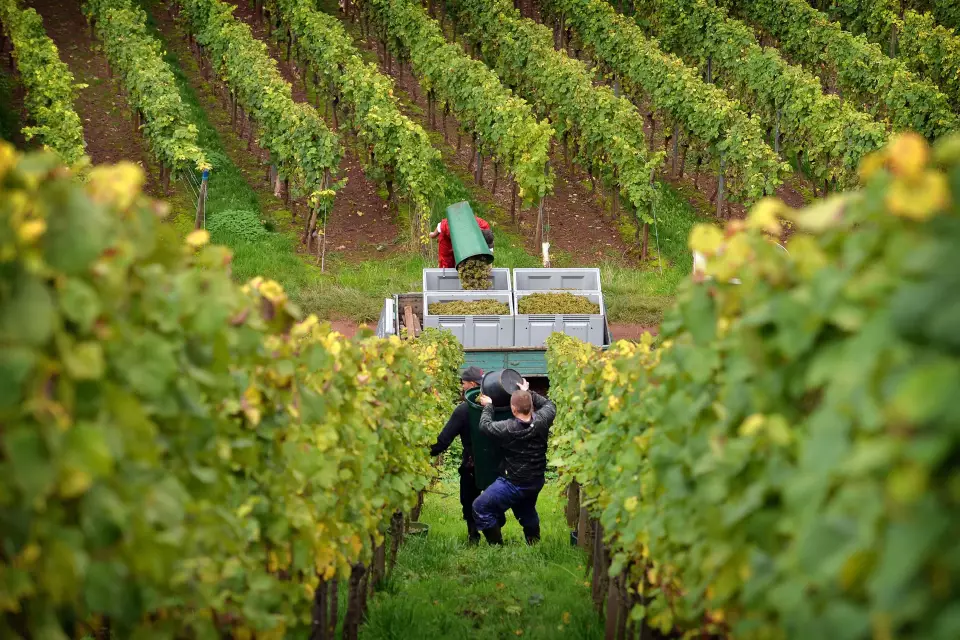
The Deutsches Weininstitut (DWI) assesses the 2025 harvest in Germany. A complex picture: often high quality, fluctuating quantities. High-quality Pinot and red grapes; however, yields are very variable depending on weather conditions and local characteristics.
AHR: “FRUITY WINES WITH INTENSE COLOR”
In the Ahr valley, the vintage was marked by significant damage from wild boar to the Pinot Noir vineyards. “But that was the only negative aspect,” says Hubert Pauly, president of the Ahr Winegrowers Association. The region experienced a “happy autumn,” with excellent grapes and an estimated 39,000 hectoliters, 144% more than in 2024.
The harvest began in mid-August, with Pinot Noir at around 100° Oechsle. According to Lukas Sermann, the clusters featured small berries with high aromatic yield. Favorable conditions, the result of cool nights, moderate rainfall, and low fungal pressure. Pauly predicts “fruity wines with intense color,” especially from reds also intended for Blanc de Noir.
BADEN: SOLID QUALITY, YIELDS BELOW AVERAGE
In Baden, the harvest is larger than in 2024, but still below the ten-year average. Heat and drought between June and July resulted in small, thick-skinned berries: “The clusters were good, but the berries were quite small,” explains Holger Klein of the Baden Winegrowers’ Association. The harvest began on September 9, with excellent grapes for sparkling wine bases. Positive expectations for fruity whites with moderate alcohol. Pinot Blanc is a highlight. Müller-Thurgau and Gutedel were penalized by the small berries.
FRANKEN: REDS AHEAD, YIELDS LOWER THAN EXPECTED
A very rapid harvest in Franken. “We have fantastic wines across the board,” summarizes president Artur Steinmann. The reds show intense color and ripe tannins; the whites benefit from reduced yields. The estimate is 432,000 hectoliters, higher than 2024 but only slightly above the historical average. Drought required irrigation of young vines in spring. Silvaner is in excellent shape; Riesling was more sensitive to humidity, requiring selection.
HESSISCHE BERGSTRASSE: “ABSOLUTELY TOP”
A very early vintage. “Absolutely top” musts, reports Johannes Bürkle. Harvest for the sparkling base began as early as the penultimate week of August to avoid excessively high alcohol levels. September rains slowed down the work, necessitating selection especially for Riesling, which is traditionally harvested last. Estimated production: 27,590 hectoliters. Aromatic grapes and promising reds.
MITTELRHEIN: NORTH AHEAD, SOUTH STRUGGLING
An early and complex vintage in Germany’s smallest region. The north benefited from drier conditions, with very healthy and aromatic Riesling; the south suffered intense rain and heavy selection. “A particularly grueling harvest,” says Maximilian Hendgen. Estimated production is 23,000 hectoliters, below average but well above 2024. Pinot and early varieties are in excellent shape. Riesling between 80 and 90° Oechsle in the best sites.
MOSEL: EARLY HARVEST
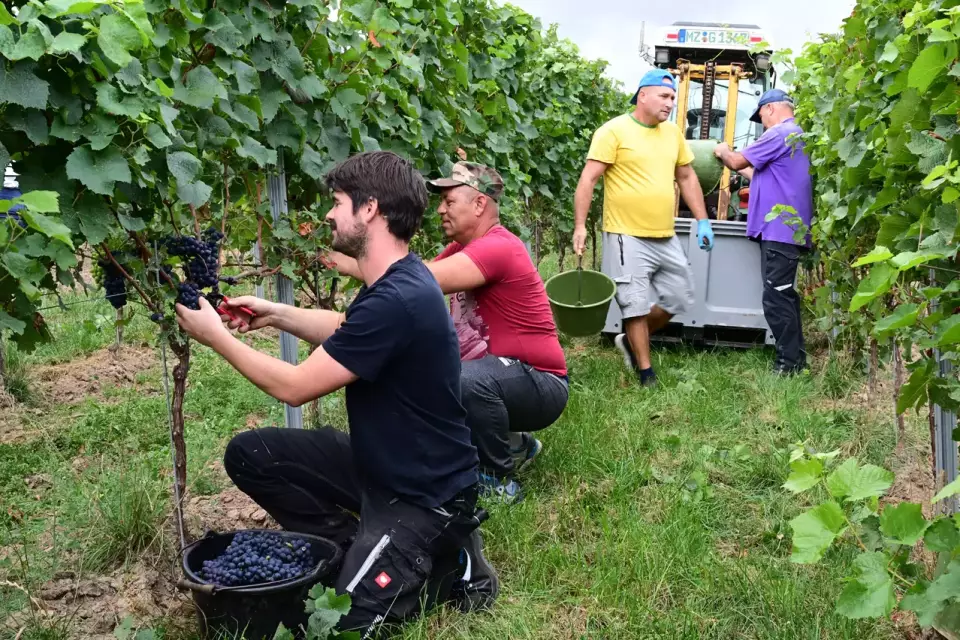
After the small 2024 harvest, 2025 shows a strong recovery. September rains accelerated the picking, described as a “turbo harvest.” Pinots and early varieties show very good yields. Riesling with variable results: good yields in vineyards hit by frost in 2024, low yields but high quality elsewhere, with selections up to 75% on steep slopes. Estimated production: 780,000 hectoliters, +52% on 2024.
NAHE: HIGH QUALITY, YIELDS BELOW EXPECTATIONS
One of the fastest harvests ever. “It has never happened before that a winegrower could go on vacation during the autumn holidays,” says Harald Sperling. Rains on September 23/24 reduced yields to 246,000 hectoliters. Quality, however, is very high, with musts even exceeding 100° Oechsle. Satisfaction for Riesling, Pinot Gris, Pinot Blanc, and reds.
PFALZ: SMALL BERRIES, GREAT AROMATIC PROFILES
Germany’s second-largest region, Pfalz, records 1,850,000 hectoliters, -17% on 2024. Small berries, due to early drought, concentrated aromas and raised alcohol levels. “Autumn arrived surprisingly quickly,” observes Boris Kranz. Very high quality, with particularly promising reds. Harvest already closed by September 23.
RHEINGAU: THE EARLIEST RIESLING SINCE 1955
Early harvest for Riesling, due to the climate and the need to avoid rain. Solaris was harvested as early as the first week of August. Estimate: 179,000 hectoliters, with Riesling yields below average. Russell: “What I have tasted so far are excellent, fruity, and well-structured wines.” Auslese and Trockenbeerenauslese above 200° Oechsle were also recorded.
RHEINHESSEN: THE GREATEST LOSS IN YIELDS
The largest region records the most significant loss: 1,930,000 hectoliters, -26% on 2024. Tough skins and little juice reduced the harvest. Quality, however, is very high. “Blessed are those who started the harvest in time,” says Jens Göhring. Aromatic musts and very ripe Dornfelder.
SAALE-UNSTRUT: RECOVERY AFTER THE 2024 FROST
Late and intermittent harvest. New resistant varieties gave excellent results: “We managed to keep them healthy until the end,” says Andreas Clauß. Production in strong recovery: 39,000 hectoliters, +129% on 2024. Predicted wines are light and typical of the region.
SACHSEN: SOLID GROWTH, CHALLENGES WITH DROSOPHILA FLY
A stable vintage with 30,000 hectoliters, above the ten-year average. Cherry fruit fly affected some early red varieties. Pinot and Traminer are highlights, with 85–90° Oechsle. Resistant varieties like Souvignier Gris and Sauvignac are growing. “The new wines are exactly what we want,” says Felix Hößelbarth.
WÜRTTEMBERG: HIGH QUALITY DESPITE YIELDS
Beautiful grapes and rapidly ripening musts. “I don’t remember ever having grapes so beautiful to look at,” says Hermann Morast. Estimated production: 720,000 hectoliters, below average but higher than 2024. Very high quality in both intense reds and rosés. Fresh and fruity Riesling.