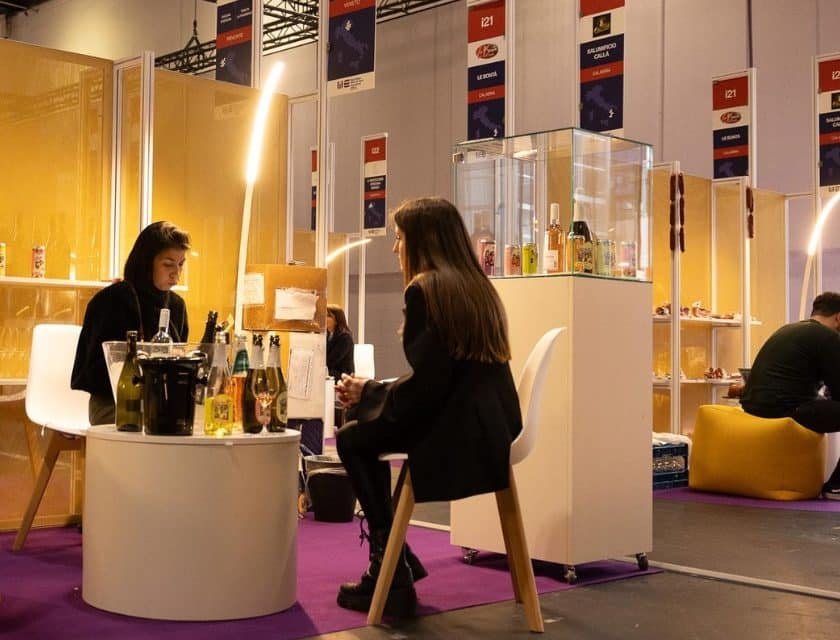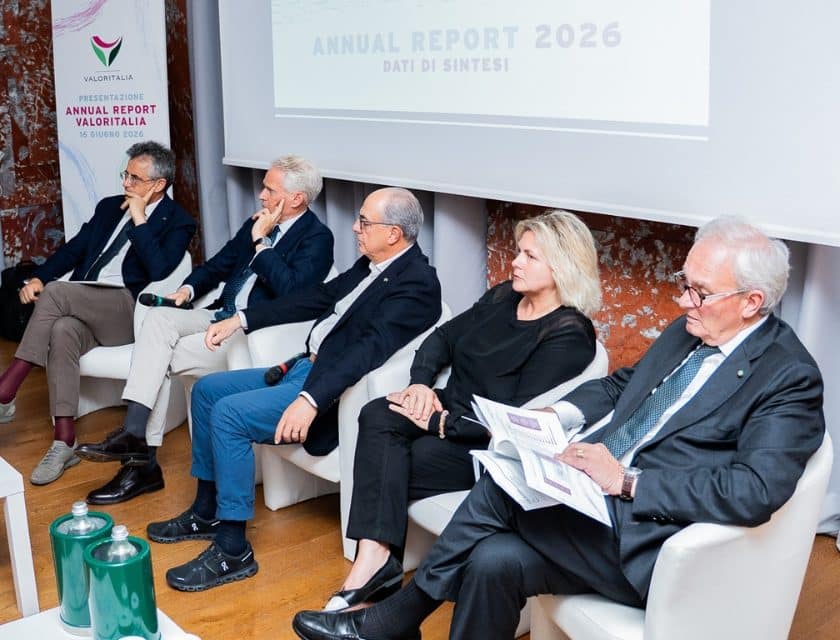
With nearly 400 samples entered, the 2026 edition of Grow du Monde, held in Moravia—the production heart of Riesling Italico in the Czech Republic—will be remembered as a record-breaking one. Records in numbers, participation, and attention from the public and professionals: sommelier, buyers, producers, and journalists arrived from various countries to measure the state of the art of a variety that Central-Eastern Europe is learning to promote with growing conviction.
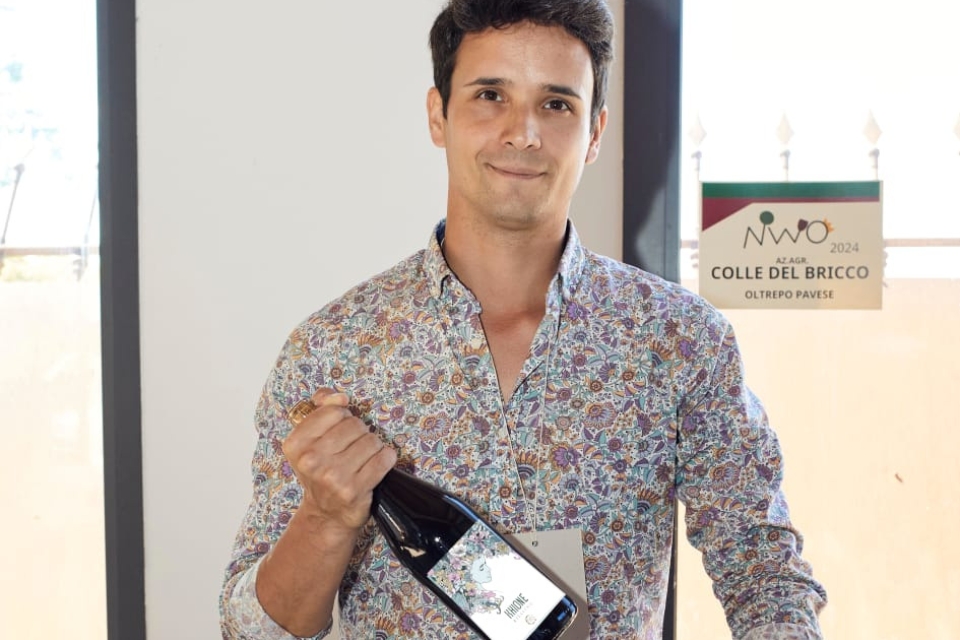
For Oltrepò Pavese, however, the opportunity was almost missed. After the haul of medals obtained in Hungary two editions ago, the region entered just three wines into the competition. Three samples, three medals. A result that should have prompted reflection. Even more so because among these medals is the gold won by Matteo Maggi, owner of the Colle del Bricco winery in Stradella, with Khione 2024.
An important award, coming from a competition that is anything but a “medal factory” supported by public funds, unlike others. Important not only for the producer but for the entire Oltrepò Pavese. Because it demonstrates, once again, that this variety can compete at a high level if interpreted seriously. And if it is judged seriously, by international industry professionals, including Masters of Wine, in a blind tasting.
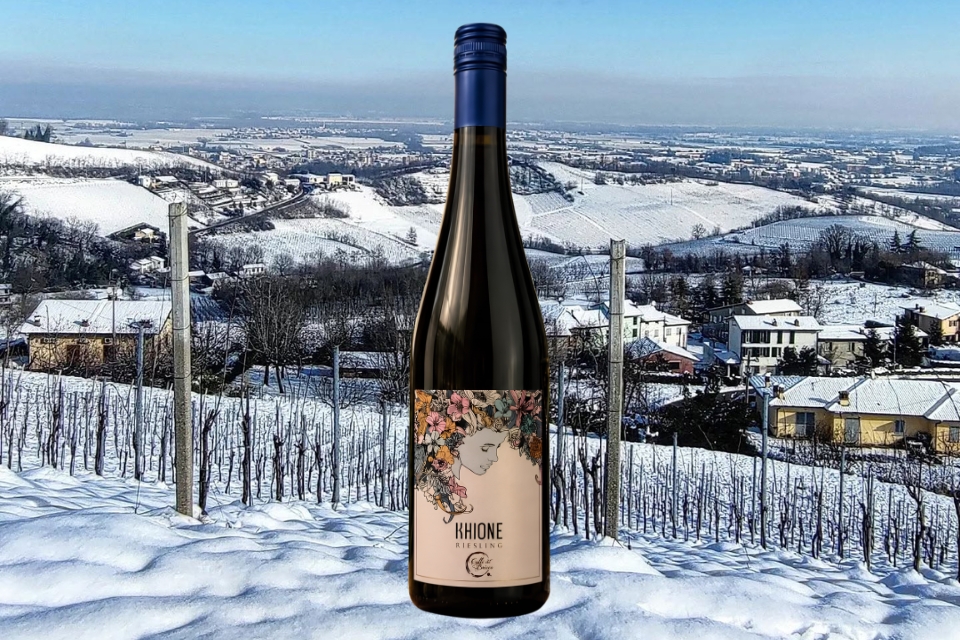
KHIONE 2024 BY COLLE DEL BRICCO AND THE GOLD AT GROW DU MONDE 2026
Matteo Maggi, along with his father and sister, has been working on Riesling Italico for thirteen years. He does so in a region that, for a long time, treated this variety as a secondary wine, intended for a simple interpretation. Often sparkling, for quick consumption.
«I have always believed in Riesling Italico from the very beginning – Maggi says -. When I started producing it, in Oltrepò it was downgraded to a cheap sparkling wine to be sold within the year, without giving it a shred of dignity. Even today I am one of the few making it still: in all of Oltrepò there are perhaps twenty of us».
The data already paints a clear picture. In one of the Italian regions most closely linked to Riesling Italico by history, distribution, and vineyard presence, very few producers try to build a still, identity-driven interpretation capable of escaping the logic of generic wine. And yet, there is no shortage of Riesling Italico hectares: there are over a thousand. Where do they end up?
Maggi had to work almost alone. Without a consolidated production literature. Without a shared stylistic model. Without a region willing to act as a system.
«Over the years – he explains – I tried to build my own experience, because there was almost nothing historical about the variety. Everyone said: I harvest it, I bottle it immediately, and it becomes sparkling. For many, Riesling Italico was this, period. No one tried to understand if over-ripening, full ripening, early harvesting, or another approach was better».
RIESLING ITALICO IN OLTREPÒ PAVESE, AN IMMOBILE CONSORTIUM
The point is all right here. Riesling Italico in Oltrepò Pavese has not just been undervalued. It has been deprived of technical and cultural reflection. Placed in the large container of denominations, often confused with Rhine Riesling, with which it can easily be blended, without the need to explain it or write it on the label, because “Riesling Italico” cannot even be mentioned. Ultimately: a variety rarely communicated for what it is.
Over the years, Maggi has found his own production balance. Also through double harvesting, which has become necessary with climate change. «At the beginning – he specifies – a normal harvest was enough. In recent years it is no longer possible. I am very satisfied with Khione 2024 because, tasting it, I recognized a difference. I thought it could have something extra».
The gold in Moravia for the Riesling Italico Khione 2024 confirms that feeling. But it also opens a wound. Because if an Oltrepò Pavese wine can achieve a result of this level in an international competition dedicated to Riesling Italico, the absence of a regional strategy becomes even more incomprehensible.
«I am saddened by the fact that in Oltrepò people don’t believe in this product», Maggi states. «Not even the Consortium provides the foundation to push and communicate it. Even today, Riesling Italico remains a generic product in the chaos of Oltrepò Pavese DOCs, without any enhancement».
OLTREPÒ PAVESE CONSORTIUM, PINOT NOIR AND FORGOTTEN VARIETIES
The issue does not only concern Riesling Italico. It concerns the overall direction taken by Oltrepò Pavese. In recent years, the official narrative seems focused almost exclusively on Pinot Noir. A choice that may have a commercial logic—positioning it lower than other more prestigious denominations for the Classic Method—but which risks narrowing the story of a complex region to a single variety.
Oltrepò Pavese is not just Pinot Noir. It is Croatina, Barbera, Riesling Italico, Buttafuoco, Sangue di Giuda, Bonarda. Varieties and denominations that tell a deep local history. Yet many of these names have disappeared from the center of institutional communication.
Maggi says it bluntly: «We are moving more and more towards the promotion of Pinot Noir at the expense of everything else. No one talks about Croatina anymore, no one talks about Barbera, no one talks about Riesling, no one talks about Buttafuoco or Sangue di Giuda. In my opinion, it’s a mistake».
It is a mistake because Pinot Noir is already a market. It already has international codes, strong references, and regions that have dominated it for decades. Entering it means joining an already defined competition. Working on Riesling Italico, however, would require more time, more courage, and more vision. But it would offer Oltrepò Pavese a different possibility: that of building its own path, less imitative and more rooted.
RIESLING ITALICO AND RHINE RIESLING, CONFUSION ON THE LABEL
The main problem remains communication. Today, consumers struggle to understand what they have in their glass. Riesling Italico and Rhine Riesling coexist under a name that generates misunderstandings. And the Italico variety ends up crushed by the international prestige of its German namesake.
«Even today they ask me if my wine is Rhine or Italico», Maggi says. «Someone, while tasting it, says: I don’t smell the petrol notes. It’s obvious they don’t: it’s Italico. But people don’t understand this difference because it isn’t communicated. For them, there is only one Riesling, because Italico has never been explained».
It is a decisive issue. Riesling Italico must not imitate Rhine Riesling. It cannot and must not. It has a different profile, a different grammar, a different potential. Expecting it to speak the language of Rhine Riesling means condemning it to a flawed comparison. It needs a new identity. Even a new name.
THE SERBIA MODEL AND THE NAME CHANGE OF RIESLING ITALICO
In Serbia, the problem was addressed decisively. The variety was renamed Grašac, eliminating any reference to Italy and Italico. A choice similar, in terms of communication logic, to that made in other countries of the Balkan and Central-Eastern area, where Graševina and related denominations have built an autonomous narrative.
The result was concrete. Several Serbian wineries, after the name change was made clear on the label, started selling the entire vintage’s production in just a few months. Without changing a single thing from an oenological point of view compared to the past. It was enough to remove the weight of a name perceived as weak from the label to generate attention, curiosity, and a market.
Oltrepò Pavese should observe that case seriously. Because the variety needs to be freed from two deadweights: the reference to Italico, often perceived as diminutive or marginal, and the nominal coexistence with Rhine Riesling.
Maggi does not rule out this path. «Riesling Italico – he observes – has a namesake with a fame that is too invasive. Perhaps it would benefit from a name change to find its own way. Oenologically, the variety has remarkable dignity. If changing its name can help to enhance it, then so be it».
OLTREPÒ PAVESE AND COLLI TORTONESI, THE LESSON OF TIMORASSO
The comparison with Colli Tortonesi comes naturally between two neighboring regions. Timorasso has become one of the most significant cases in contemporary Italian white wine because someone had vision, persistence, and storytelling ability. Walter Massa believed in a variety when almost no one else did. He built a trajectory. He provided a production and cultural perspective.
Maggi highlights exactly this point: «If there were an enlightened mind like Walter Massa, he would understand the potential of Riesling Italico and would promote it in the right way. I am sure that if it had been a native of Colli Tortonesi, we would probably be talking about a different Italico today».
That of the young Oltrepò winemaker—who shares with Massa a love for the screw cap, which also seals Khione 2024—is a provocation. But not entirely. Because Oltrepò Pavese has often had the grapes, the numbers, the pedoclimatic conditions, and the history. But it hasn’t always had the ability to transform all this into storytelling, value, and market presence.
Riesling Italico is one of the most obvious cases. A variety present in a significant way, linked to the region, capable of producing fresh, savory, gastronomic, and contemporary wines. A variety that responds to contemporary consumption trends, oriented towards whites that are more tense, less alcoholic, and more drinkable, but not trivial.
OVER A THOUSAND HECTARES OF RIESLING ITALICO DEMAND A STRATEGY
The most serious data is the forward-looking one. In Oltrepò Pavese, there are over a thousand hectares of Riesling Italico. A huge heritage. Yet without a change of course, these vineyards risk losing value, being uprooted, or continuing to end up in anonymous productions without any recognizability.
The Consortium, fundamentally, did not support the Grow du Monde initiative. It allowed Oltrepò Pavese to present itself in Moravia with only three wines. Three wines that obtained three medals and were tasted by various professionals and local wine lovers during the public day following the competition. The signal is clear: the potential is there, but the collective will to invest in it is missing.
Producers also bear responsibility. For the umpteenth time, they have shown that they don’t truly believe in this variety, or at least not in an international event that could have put them in the spotlight. It is an unnatural stagnation. And one day Oltrepò Pavese might regret not having worked seriously not only on a stylistic definition of Riesling Italico, but not even on the recognition of a minimum oenological dignity.
The 2026 edition of Grow du Monde therefore leaves mixed feelings. On one hand, the joy and pride for the work of an international group of tasters who, in countries like Serbia, Croatia, Hungary, and the Czech Republic, are helping to give centrality to this variety. On the other, the disappointment in witnessing the void of Oltrepò Pavese, which studies by the National Research Council (CNR)—the only ones internationally on the variety—indicate as a key genetic area for the history of the variety.