IN BREVE
- The first ProWein Sparkling Report shows that the sparkling wine market continues to grow, with an expected value of $54.7 billion by 2025.
- Sparkling wines are establishing themselves in new consumption occasions, moving from celebratory moments alone to contexts such as aperitifs and mixology.
- Premiumization plays a key role, with growing demand for quality sparkling wines that tell the story of their origin and territorial identity.
- The alcohol-free sparkling wine category is growing rapidly, marking a new trend in the market, especially in Germany.
- ProWein is focusing on the Sparkling Report as a guide for the industry, emphasizing the importance of positioning and perceived quality in the global sparkling wine market.
The global wine market is slowing down, but sparkling wines are not. Or at least they’re holding up better than many other categories. This is the picture emerging from the first Sparkling Report published by ProWein, a new market analysis dedicated to the global sparkling wine sector and made available free of charge by the organizers of the Düsseldorf trade fair. The document outlines trends, production areas, consumption occasions, and growth prospects for a sector that, despite economic uncertainty and changing consumer habits, continues to show above-average vitality compared to wine overall.
According to the report, the global sparkling wine market is expected to reach a value of approximately $54.7 billion in 2025. This figure confirms the centrality of the category during a complex phase for wine, marked by declining consumption in several mature markets and greater selectivity among consumers. Sparkling wines, however, seem to benefit from a competitive advantage: they are increasingly less tied to celebratory moments alone and increasingly present in new consumption occasions, from aperitifs to mixology, to informal moments and low- and no-alcohol formats.
Premiumization and New Regions
One of the central points of the Sparkling Report is the push toward premiumization. In the world of sparkling wines too, growth is not only about volumes, but increasingly about the ability to build value, territorial identity, and stylistic recognition. International demand rewards quality sparkling wines capable of telling a story of origin and not just a production method.
The report analyzes the main established appellations and categories: Prosecco, Champagne, Crémant, Cava, German and Austrian Sekt, Franciacorta, and Lambrusco. Alongside the historic names, however, ProWein also highlights the consolidation of new production areas, including the United Kingdom, Hungary, California, and Tasmania, regions that are seeking to establish their own identity in the international sparkling wine landscape.
Among the most dynamic segments, Crémant stands out, identified as a category experiencing strong growth and capable of reaching record volumes. Prosecco, for its part, continues to strengthen its international leadership, confirming itself as one of the most recognizable and high-performing appellations in the global market. At the same time, interest is growing in high-end, terroir-driven sparkling wines with a more precise narrative.
The Boom in Alcohol-Free Sparkling Wines
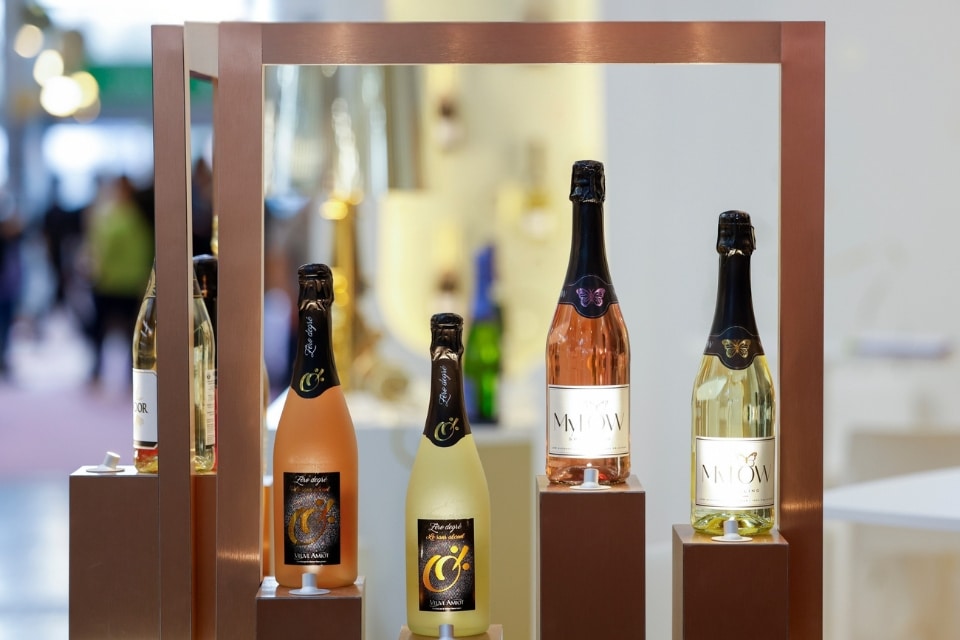
The real acceleration, however, comes from the alcohol-free world. ProWein defines alcohol-free sparkling wines as one of the fastest-growing categories in the entire wine industry. The German case is particularly indicative: according to the report, over 22 million bottles of alcohol-free sparkling wine were recently sold in Germany.
The phenomenon is no longer just about a health-focused niche, but intercepts broader demand: young consumers, alcohol moderation, everyday consumption occasions, and the search for credible alternatives to traditional wine. Analysts cited by ProWein predict double-digit growth rates for the sector in the coming years, a sign that the category could become a strategic area even for producers and brands previously focused exclusively on classic sparkling wines.
ProWein Focuses on Year-Round Content
With the Sparkling Report, ProWein strengthens its role as a permanent information platform for the international wine industry, beyond the trade fair calendar. The publication is part of the path initiated with Sparkling Visions, a format presented for the first time at ProWein 2026, and ideally anticipates the themes that will be at the center of the next edition of the event, scheduled in Düsseldorf from March 7 to 9, 2027.
“The global sparkling wine market is undergoing an exciting transformation,” emphasizes Frank Schindler, Director of ProWein Düsseldorf, highlighting the emergence of new markets, new styles, and new consumption occasions. The report, Schindler explains, was created with the aim of offering the sector a concise yet comprehensive guide to ongoing developments.
The document was conceived and produced by A2 Wine & Things under the direction of journalist Alexandra Wrann. For the industry, the message is clear: sparkling wines remain one of the most vibrant laboratories in the global wine world. But the competition will increasingly be played out not on simple effervescence, but on positioning, perceived quality, territorial identity, and the ability to intercept new consumption styles.